 中文
中文 English
MOSFET Selection for High-Voltage Power Applications: STF28N60DM2, STD3NK60ZT4 vs. China Alternatives VBMB165R20S, VBE165R04
Number of views:9999
 Back to previous page
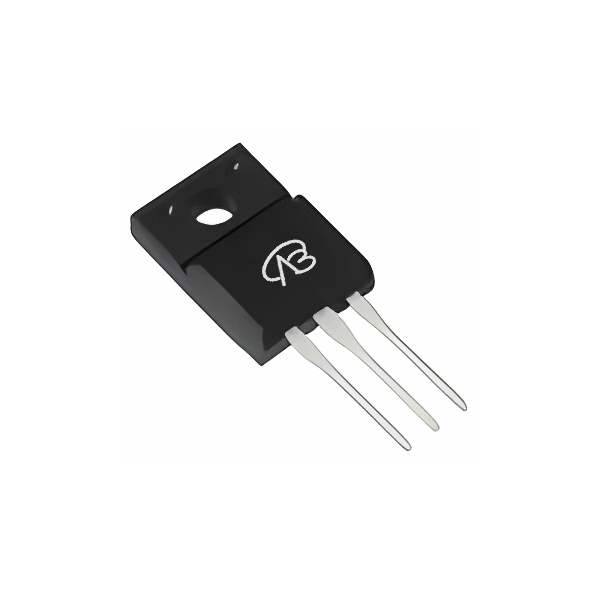
In today's landscape of high-voltage power design, selecting the optimal MOSFET involves a critical balance between voltage rating, conduction loss, switching performance, and cost. This is not a simple drop-in replacement but a strategic decision impacting reliability and efficiency. This article takes two representative high-voltage MOSFETs from STMicroelectronics—STF28N60DM2 (TO-220FP) and STD3NK60ZT4 (DPAK)—as benchmarks. We will delve into their design cores, application contexts, and perform a comparative evaluation with two domestic alternative solutions: VBMB165R20S and VBE165R04. By clarifying their parameter differences and performance orientations, we aim to provide a clear selection guide for your next high-voltage design.
Comparative Analysis: STF28N60DM2 (N-channel, TO-220FP) vs. VBMB165R20S
Analysis of the Original Model (STF28N60DM2) Core:
This is a 600V, 21A N-channel MOSFET from ST, featuring the advanced MDmesh DM2 technology in a TO-220FP package. Its design core focuses on achieving low conduction loss and robust performance in high-voltage applications. Key advantages include a low typical on-resistance (RDS(on)) of 0.13 Ohm (160mΩ @10V max) and a continuous drain current rating of 21A. The MDmesh DM2 technology optimizes the trade-off between RDS(on) and gate charge, making it suitable for efficient switching.
Compatibility and Differences of the Domestic Alternative (VBMB165R20S):
VBsemi's VBMB165R20S is a direct pin-to-pin compatible alternative in the TO-220F package. It offers a higher voltage rating (650V vs. 600V) and similar maximum on-resistance (160mΩ @10V). Its continuous current rating is slightly lower at 20A compared to the original's 21A. A key differentiator is its SJ_Multi-EPI (Super Junction Multi-Epitaxial) technology, which can offer favorable switching characteristics and ruggedness.
Key Application Areas:
Original Model STF28N60DM2: Ideal for high-voltage, medium-to-high current switching applications requiring a robust through-hole package. Typical uses include:
Switched-Mode Power Supplies (SMPS): PFC stages, hard/soft-switched converters.
Motor Drives: Inverters for appliances and industrial controls.
Lighting: High-power LED drivers and ballast control.
Alternative Model VBMB165R20S: Well-suited as a reliable alternative for 600V-650V systems where the slightly lower current rating is acceptable, or where the higher voltage margin and potential cost benefits are valuable. Suitable for similar SMPS, motor control, and lighting applications.
Comparative Analysis: STD3NK60ZT4 (N-channel, DPAK) vs. VBE165R04
This comparison shifts focus to compact, high-voltage switching solutions. The original model emphasizes a balance of voltage withstand and switching capability in a space-saving package.
Analysis of the Original Model (STD3NK60ZT4) Core:
This 600V, 2.4A N-channel MOSFET from ST uses the SuperMESH™ technology in a TO-252 (DPAK) package. Its design pursues high dv/dt robustness and reliable performance for low-power, high-voltage switching. Key parameters include a 600V drain-source voltage, 2.4A continuous current, and an on-resistance of 3.6Ω @10V. The SuperMESH™ technology ensures stable operation in demanding environments.
Compatibility and Differences of the Domestic Alternative (VBE165R04):
VBsemi's VBE165R04, also in a TO-252 package, serves as a potential alternative with enhanced current capability. It offers a higher voltage rating (650V) and a significantly higher continuous current rating of 4A. However, its on-resistance is notably higher (2200mΩ @10V vs. 3.6Ω @10V), indicating it is designed for different application points—likely where lower current but higher voltage margin is needed, or as a functional replacement in less conduction-loss-sensitive circuits.
Key Application Areas:
Original Model STD3NK60ZT4: Its strength lies in compact, high-voltage auxiliary circuits, snubbers, or low-power switching where its proven robustness is key. Applications include:
Auxiliary Power Supplies: Startup or bias circuits in main SMPS.
Snubber & Clamp Circuits: For managing voltage spikes.
Low-Power AC-DC Converters: For appliances and smart meters.
Alternative Model VBE165R04: More suitable for applications requiring a higher current rating (up to 4A) within the 650V range, potentially where the original's 2.4A is limiting, but where the higher RDS(on) can be tolerated. Useful in certain relay replacements or low-frequency power switches.
Conclusion:
This analysis reveals two distinct substitution scenarios:
For medium-to-high current, 600V applications requiring a through-hole package like TO-220FP, the original STF28N60DM2 offers a strong balance of 21A current and low RDS(on). Its domestic alternative VBMB165R20S provides a highly compatible option with a 650V rating and similar RDS(on), making it a viable choice for direct replacement or new designs seeking higher voltage margin.
For compact, high-voltage, lower-current switching in surface-mount DPAK packages, the original STD3NK60ZT4 excels with its optimized SuperMESH™ technology for robust performance. The domestic alternative VBE165R04 takes a different approach, offering significantly higher current (4A) and voltage (650V) ratings but with much higher on-resistance. It is not a direct parametric substitute but can be considered for applications where current capability is the primary constraint over conduction loss.
The core takeaway is that selection hinges on precise requirement matching. Domestic alternatives like VBMB165R20S and VBE165R04 provide valuable options for supply chain diversification, offering different performance trade-offs (voltage margin, current rating) that can enhance design flexibility and cost-effectiveness in specific high-voltage application contexts.

Download PDF document
 Download now


