 中文
中文 English
MOSFET Selection for High-Voltage Power Applications: STF20N95K5, STL13N60DM2 vs. China Alternatives VBMB19R20S, VBQA165R05S
Number of views:9999
 Back to previous page
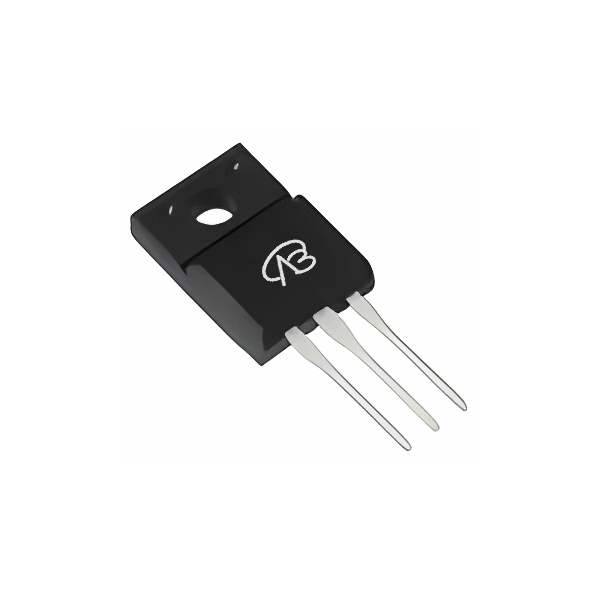
In high-voltage power conversion and switching designs, selecting a MOSFET that balances voltage rating, conduction loss, and thermal performance is a critical engineering challenge. This involves careful trade-offs among ruggedness, efficiency, cost, and supply chain diversity. This article takes two representative high-voltage MOSFETs from STMicroelectronics—STF20N95K5 (950V) and STL13N60DM2 (600V)—as benchmarks. It delves into their design cores and application scenarios, while providing a comparative evaluation of two domestic alternative solutions from VBsemi: VBMB19R20S and VBQA165R05S. By clarifying parameter differences and performance orientations, we aim to offer a clear selection guide to help you find the most suitable power switching solution in the complex component landscape.
Comparative Analysis: STF20N95K5 (950V N-Channel) vs. VBMB19R20S
Analysis of the Original Model (STF20N95K5) Core:
This is a 950V N-channel MOSFET from STMicroelectronics, utilizing the MDmesh K5 superjunction technology in a TO-220FP package. Its design core is to achieve high breakdown voltage with low conduction loss in offline power applications. Key advantages include: a high drain-source voltage (Vdss) of 950V, a continuous drain current (Id) of 17.5A, and a typical on-resistance (RDS(on)) as low as 0.275Ω. Its robust TO-220FP package ensures good thermal dissipation for a power rating up to 40W.
Compatibility and Differences of the Domestic Alternative (VBMB19R20S):
VBsemi's VBMB19R20S is a pin-to-pin compatible alternative in a TO-220F package. The main differences lie in the electrical parameters: VBMB19R20S has a slightly lower voltage rating (900V vs. 950V) but offers a comparable continuous current rating of 20A and a very similar on-resistance of 270mΩ (@10V). It employs a SJ_Multi-EPI (Superjunction Multi-Epitaxial) process.
Key Application Areas:
Original Model STF20N95K5: Its high voltage rating and low RDS(on) make it ideal for high-voltage, medium-power switching applications. Typical uses include:
Switch-Mode Power Supplies (SMPS): PFC (Power Factor Correction) stages, flyback, or forward converters in AC-DC power supplies.
Industrial Motor Drives: Inverters for appliances or low-power industrial motors.
Lighting: High-voltage ballasts or LED driver circuits.
Alternative Model VBMB19R20S: A suitable domestic alternative for applications where a 900V rating is sufficient, offering similar current handling and conduction loss. It's a viable option for cost-optimized or supply-chain-diversified designs in similar SMPS and motor drive scenarios.
Comparative Analysis: STL13N60DM2 (600V N-Channel) vs. VBQA165R05S
This comparison focuses on a 600V MOSFET in a compact PowerFLAT (VDFN-8) package, where the design pursuit is a balance of voltage capability, switching performance, and space savings.
Analysis of the Original Model (STL13N60DM2) Core:
This 600V N-channel MOSFET from ST uses MDmesh DM2 technology in a space-saving PowerFLAT 5x6 HV package. Its core advantages are:
Good Voltage Rating: 600V Vdss suitable for many offline and industrial applications.
Compact Power Package: The VDFN-8 (PowerFLAT) package offers a low-profile footprint with good thermal performance for its size.
Balanced Performance: With 8A continuous current and 370mΩ RDS(on) (@10V), it provides a solid performance package for medium-current applications.
Compatibility and Differences of the Domestic Alternative (VBQA165R05S):
VBsemi's VBQA165R05S is offered in a DFN8(5x6) package, which is typically compatible with the PowerFLAT footprint. Key parameter differences exist: VBQA165R05S has a 650V voltage rating, a lower continuous current of 5A, and a higher on-resistance of 1000mΩ (@10V). It also uses a SJ_Multi-EPI process.
Key Application Areas:
Original Model STL13N60DM2: Its combination of 600V rating, 8A current, and compact package makes it suitable for space-constrained, medium-power applications. Examples include:
Compact AC-DC Power Adapters: Primary-side switching.
Auxiliary Power Supplies (AUX): In servers, telecom, or industrial equipment.
Motor Control Modules: For smaller fans, pumps, or tools.
Alternative Model VBQA165R05S: This alternative is more suitable for applications where the higher 650V voltage rating is beneficial, but the lower current (5A) and higher RDS(on) are acceptable. It fits scenarios with lower power demand within the same compact footprint, potentially offering a cost advantage.
Conclusion
In summary, this analysis reveals two distinct selection paths for high-voltage applications:
For 950V-class applications like SMPS and motor drives, the original STF20N95K5 offers a robust combination of very high voltage (950V), 17.5A current, and low RDS(on). Its domestic alternative VBMB19R20S provides a highly competitive option with slightly lower voltage (900V) but similar current and RDS(on) performance, making it a strong candidate for diversification and cost-sensitive designs.
For 600V-class applications in compact spaces, the original STL13N60DM2 delivers a balanced profile of voltage, current (8A), and package size. Its domestic alternative VBQA165R05S shifts the balance, offering a higher 650V rating but with lower current capability and higher conduction loss, positioning it for different, often lower-power, points within the application spectrum.
The core conclusion is that selection hinges on precise requirement matching. In the context of supply chain diversification, domestic alternatives like VBMB19R20S and VBQA165R05S not only provide viable backup options but also present different parameter trade-offs. This gives engineers greater flexibility and resilience in design optimization and cost control. Understanding the design philosophy and parameter implications of each device is essential to maximize its value in the circuit.

Download PDF document
 Download now


