 中文
中文 English
MOSFET Selection for High-Voltage Power Applications: STF20N65M5, STD2LN60K3 vs. China Alternatives VBMB165R20S, VBE165R02
Number of views:9999
 Back to previous page
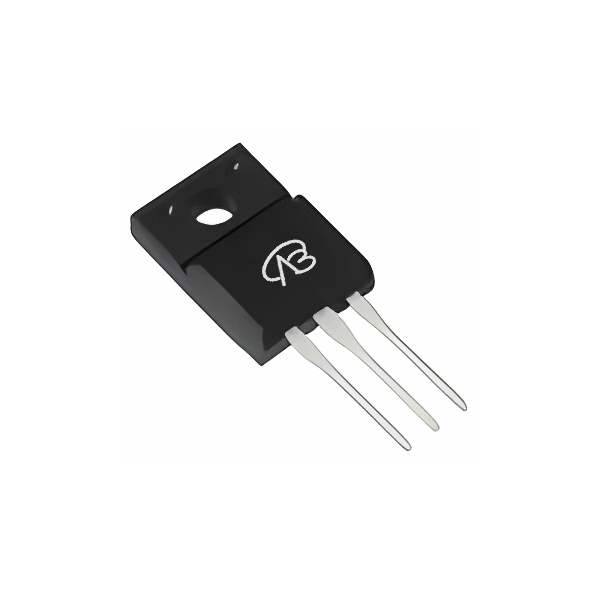
In high-voltage power conversion and switching applications, selecting a MOSFET that balances voltage rating, conduction loss, and ruggedness is a critical engineering challenge. This involves careful trade-offs among performance, cost, and supply chain security. This article uses two representative high-voltage MOSFETs from STMicroelectronics—STF20N65M5 (TO-220) and STD2LN60K3 (DPAK)—as benchmarks. We will analyze their design cores, application scenarios, and perform a comparative evaluation of two domestic alternative solutions: VBMB165R20S and VBE165R02. By clarifying parameter differences and performance orientations, we aim to provide a clear selection map for your next high-voltage design.
Comparative Analysis: STF20N65M5 (N-channel, TO-220) vs. VBMB165R20S
Analysis of the Original Model (STF20N65M5) Core:
This is a 650V N-channel MOSFET from STMicroelectronics, utilizing the MDmesh M5 technology in a TO-220FP package. Its design core is to deliver high voltage capability with low conduction loss and robust switching performance in a standard through-hole package. Key advantages are: a low typical on-resistance (RDS(on)) of 160mΩ, a continuous drain current (Id) of 18A, and a 650V drain-source voltage (Vdss) rating. This combination makes it suitable for demanding high-power applications.
Compatibility and Differences of the Domestic Alternative (VBMB165R20S):
VBsemi's VBMB165R20S is offered in a TO-220F package and serves as a functional pin-to-pin compatible alternative. The main differences lie in the electrical parameters: VBMB165R20S offers a comparable 650V voltage rating and a slightly higher continuous current rating of 20A. Crucially, its specified on-resistance is 160mΩ @ 10V gate drive, matching the typical performance of the original part, while potentially offering benefits from its SJ_Multi-EPI technology.
Key Application Areas:
Original Model STF20N65M5: Its high voltage rating and good current handling make it ideal for high-power offline switch-mode power supplies (SMPS), power factor correction (PFC) stages, motor drives, and industrial inverters where 650V breakdown and efficient conduction are required.
Alternative Model VBMB165R20S: Suitable for the same high-voltage applications as the original, particularly where a direct replacement with matched or slightly enhanced current capability (20A vs. 18A) is needed. Its Super Junction Multi-EPI technology aims for low RDS(on) and good switching performance.
Comparative Analysis: STD2LN60K3 (N-channel, DPAK) vs. VBE165R02
This comparison focuses on a lower-current, high-voltage MOSFET in a surface-mount DPAK package, where the design pursuit is a balance of high voltage withstand, compact size, and sufficient current for control/auxiliary circuits.
Analysis of the Original Model (STD2LN60K3) Core:
This is a 600V N-channel MOSFET from STMicroelectronics, featuring SuperMESH™ technology in a DPAK package. Its core advantages are: a high 600V drain-source voltage rating, very low gate charge, and enhanced avalanche ruggedness. It is designed for high-efficiency and high-reliability applications despite its relatively lower continuous current rating of 2A.
Compatibility and Differences of the Domestic Alternative (VBE165R02):
VBsemi's VBE165R02 comes in a TO-252 (DPAK) package and is a pin-to-pin compatible alternative. The key differences are: VBE165R02 has a higher voltage rating of 650V (vs. 600V). However, its on-resistance is significantly higher (4300mΩ @ 10V vs. 4.5Ω @ 10V for the original, noting 4.5Ω = 4500mΩ), and it shares a similar 2A continuous current rating. This indicates it is tailored for applications where the higher voltage margin is prioritized over ultra-low conduction loss at this current level.
Key Application Areas:
Original Model STD2LN60K3: With its optimized SuperMESH structure for low RDS(on) and high dynamic performance, it is well-suited for compact, high-efficiency auxiliary power supplies, lighting ballasts, and low-power offline converters where 600V rating and DPAK footprint are required.
Alternative Model VBE165R02: More suitable for applications requiring a 650V rating in a DPAK footprint, particularly where the operating current is low (around 2A) and the circuit can tolerate a slightly higher conduction loss. It serves as a viable alternative when voltage margin is critical.
Conclusion:
In summary, this analysis reveals two distinct selection paths for high-voltage applications:
For high-power, 650V applications in a TO-220 package, the original STF20N65M5, with its 18A current and low RDS(on), is a proven choice for main power stages. Its domestic alternative VBMB165R20S offers a direct replacement with comparable (160mΩ) or potentially better RDS(on) and a higher 20A current rating, making it a strong, performance-matched alternative.
For compact, high-voltage switching in a DPAK package, the original STD2LN60K3 excels with its 600V rating and optimized low on-resistance for its current class (2A). The domestic alternative VBE165R02 shifts the priority, offering a higher 650V voltage rating but with a higher on-resistance, positioning it for scenarios where voltage ruggedness is paramount over minimal conduction loss.
The core conclusion is that selection hinges on precise requirement matching. In the context of supply chain diversification, domestic alternatives like VBMB165R20S and VBE165R02 provide not only feasible backup options but also specific parameter enhancements or trade-offs, offering engineers greater flexibility in design optimization and cost control. Understanding the specific parameter implications of each device is key to leveraging its full value in the circuit.

Download PDF document
 Download now


