 中文
中文 English
MOSFET Selection for High-Voltage Power Applications: STD9N65DM6AG, STP9NM40N vs. China Alternatives VBE16R10S, VBM15R13
Number of views:9999
 Back to previous page
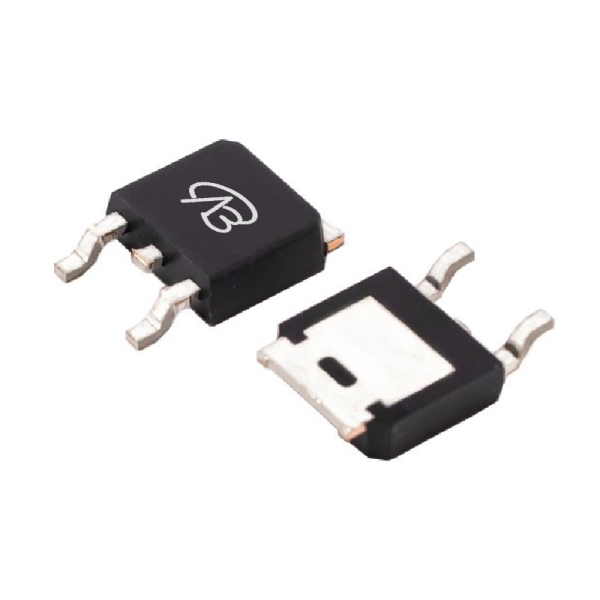
In high-voltage power conversion and motor control designs, selecting a MOSFET that balances voltage rating, conduction loss, and ruggedness is a critical task for engineers. This goes beyond simple part substitution, requiring careful consideration of performance, cost, and supply chain stability. This article uses two representative high-voltage MOSFETs, STD9N65DM6AG and STP9NM40N, as benchmarks. We will delve into their design cores and application scenarios, and provide a comparative evaluation of two domestic alternative solutions, VBE16R10S and VBM15R13. By clarifying their parameter differences and performance orientations, we aim to offer a clear selection guide to help you find the optimal power switching solution for your next high-voltage design.
Comparative Analysis: STD9N65DM6AG (N-channel) vs. VBE16R10S
Analysis of the Original Model (STD9N65DM6AG) Core:
This is an automotive-grade N-channel 650V MOSFET from STMicroelectronics, featuring the MDmesh DM6 technology in a DPAK package. Its design core focuses on high-voltage switching efficiency and reliability for automotive environments. Key advantages include: a high drain-source voltage (Vdss) of 650V, a continuous drain current (Id) of 9A, and a typical on-resistance (RDS(on)) as low as 365mΩ (440mΩ max @10V). Its high power dissipation rating (89W) ensures robust performance in demanding applications.
Compatibility and Differences of the Domestic Alternative (VBE16R10S):
VBsemi's VBE16R10S is offered in a TO-252 package, which is functionally similar and often pin-compatible with DPAK, making it a viable alternative. The key differences are in the electrical parameters: VBE16R10S has a slightly lower voltage rating (600V vs. 650V) and a marginally higher on-resistance (470mΩ @10V vs. 440mΩ max). However, it offers a higher continuous current rating of 10A.
Key Application Areas:
Original Model STD9N65DM6AG: Its high voltage rating, good current handling, and automotive-grade ruggedness make it ideal for demanding high-voltage applications.
Automotive Systems: Used in engine control units (ECUs), electric power steering (EPS), and other 48V or high-voltage automotive subsystems.
Industrial SMPS: Serves as the main switch in offline flyback or forward converters for industrial power supplies.
PFC Circuits: Suitable for power factor correction stages in mid-power applications.
Alternative Model VBE16R10S: A strong alternative for applications where a 600V rating is sufficient, and the higher 10A current capability or cost/supply chain advantages are prioritized. Suitable for industrial power supplies, motor drives, and UPS systems within its voltage range.
Comparative Analysis: STP9NM40N (N-channel) vs. VBM15R13
This comparison focuses on a standard TO-220 packaged high-voltage MOSFET, where the balance between voltage, current, and conduction loss is key.
Analysis of the Original Model (STP9NM40N) Core:
This STMicroelectronics N-channel MOSFET in a TO-220 package offers a good balance for general-purpose high-voltage switching. Its core advantages are:
High Voltage Capability: A drain-source voltage (Vdss) of 400V.
Standard Performance: A continuous drain current (Id) of 5.6A and an on-resistance (RDS(on)) of 790mΩ @10V.
Package Versatility: The TO-220 package provides good thermal performance and is widely used.
Compatibility and Differences of the Domestic Alternative (VBM15R13):
VBsemi's VBM15R13, also in a TO-220 package, represents a significant "performance-enhanced" alternative. It achieves substantial improvements in key parameters: a higher voltage rating (500V vs. 400V), more than double the continuous current (13A vs. 5.6A), and a significantly lower on-resistance (660mΩ @10V vs. 790mΩ). This translates to lower conduction losses and higher power handling capability in most applications.
Key Application Areas:
Original Model STP9NM40N: Its standard ratings make it a reliable choice for classic, cost-sensitive high-voltage applications.
Consumer SMPS: Main or auxiliary switch in AC-DC adapters, TV power supplies.
Lighting: Used in electronic ballasts and LED driver circuits.
Appliance Control: Motor control and relay replacement in home appliances.
Alternative Model VBM15R13: Ideal for upgrade scenarios or new designs requiring higher efficiency, greater current capacity, or a higher voltage margin. Suitable for higher-power offline SMPS, industrial motor drives, and UPS systems where its enhanced parameters provide a performance and thermal headroom advantage.
Conclusion
In summary, this analysis reveals two distinct selection strategies for high-voltage MOSFETs:
For 650V-class automotive or rugged industrial applications, the original model STD9N65DM6AG, with its high voltage rating, good current handling, and automotive-grade qualification, remains a top-tier choice where utmost reliability is required. Its domestic alternative VBE16R10S offers a compelling, often pin-compatible solution with a higher 10A current rating, making it an excellent choice for applications where 600V is sufficient and cost or supply chain diversification is a priority.
For 400V-500V class general-purpose applications, the original model STP9NM40N provides a proven, cost-effective solution. However, the domestic alternative VBM15R13 delivers remarkable "performance enhancement" with its higher voltage (500V), much higher current (13A), and lower on-resistance, making it a superior choice for efficiency-driven upgrades or new designs seeking higher power density.
The core takeaway is that selection is driven by precise requirement matching. In the context of supply chain diversification, domestic alternatives like VBE16R10S and VBM15R13 not only provide reliable backup options but can also offer superior performance in key parameters, giving engineers greater flexibility and resilience in their design and cost optimization efforts. Understanding the specific demands of your voltage, current, and loss budgets is essential to unlocking the full value of these components in your circuit.

Download PDF document
 Download now


