 中文
中文 English
MOSFET Selection for Industrial Power Applications: STD95N4LF3, STD11N60DM2 vs. China Alternatives VBE1405, VBE16R10S
Number of views:9999
 Back to previous page
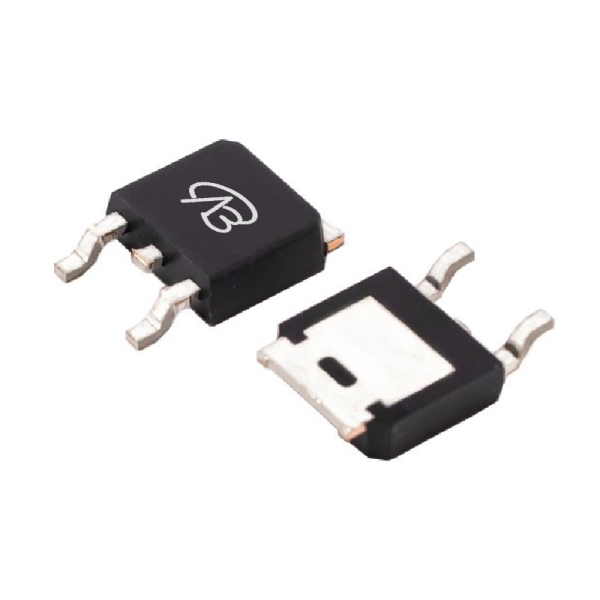
In industrial power designs, selecting a MOSFET that balances robust performance, reliability, and cost is a critical engineering decision. This goes beyond simple part substitution—it requires careful consideration of voltage ratings, current handling, switching efficiency, and thermal management. This article takes two established industrial MOSFETs from STMicroelectronics, the STD95N4LF3 (low-voltage high-current) and STD11N60DM2 (high-voltage), as benchmarks. We will analyze their design cores and typical applications, then evaluate the domestic alternative solutions VBE1405 and VBE16R10S from VBsemi. By clarifying parameter differences and performance orientations, we provide a clear selection guide to help you find the optimal power switching solution.
Comparative Analysis: STD95N4LF3 (N-channel, 40V) vs. VBE1405
Analysis of the Original Model (STD95N4LF3) Core:
This is a 40V N-channel MOSFET from STMicroelectronics in a DPAK package. It belongs to the STripFET™ III generation, designed for high-current, low-loss switching. Its key advantages are: a very low on-resistance of 5mΩ (typical) at 5V gate drive, and a high continuous drain current rating of 80A. This combination makes it ideal for applications demanding minimal conduction loss under high current.
Compatibility and Differences of the Domestic Alternative (VBE1405):
VBsemi's VBE1405 is also offered in a TO-252 (DPAK) package, providing direct pin-to-pin compatibility. The key differences are in the electrical parameters: VBE1405 specifies an on-resistance of 6mΩ @4.5V and 5mΩ @10V, which is competitive with the original part. Its continuous current rating is 85A, slightly exceeding the original's 80A. This positions VBE1405 as a performance-equivalent or slightly enhanced alternative.
Key Application Areas:
Original Model STD95N4LF3: Excels in low-voltage, high-current switching scenarios. Typical applications include:
Synchronous rectification in high-current DC-DC converters (e.g., for servers, telecom).
Motor drives and solenoid control in 12V/24V automotive or industrial systems.
High-efficiency power switches in uninterruptible power supplies (UPS) and inverters.
Alternative Model VBE1405: Suitable for the same high-current, low-voltage applications, offering a reliable alternative with potentially lower conduction losses due to its slightly lower RDS(on) at 10V drive.
Comparative Analysis: STD11N60DM2 (N-channel, 600V) vs. VBE16R10S
This comparison shifts to high-voltage power conversion, where the design focus is on balancing breakdown voltage, switching loss, and cost.
Analysis of the Original Model (STD11N60DM2) Core:
This is a 600V N-channel MOSFET from ST's MDmesh™ DM2 series in a DPAK package. It is engineered for high-voltage switching with good efficiency. Its core advantages are: a 600V drain-source voltage rating, a continuous current of 10A, and a typical on-resistance of 370mΩ (420mΩ @10V per datasheet). The MDmesh™ technology aims to reduce switching losses and improve dv/dt capability.
Compatibility and Differences of the Domestic Alternative (VBE16R10S):
VBsemi's VBE16R10S is a pin-to-pin compatible alternative in a TO-252 package. The parameters show a close match: the same 600V rating and 10A continuous current. The on-resistance is specified at 470mΩ @10V, which is slightly higher than the original's datasheet value but remains in a comparable range for many applications. It utilizes a Super Junction Multi-EPI process.
Key Application Areas:
Original Model STD11N60DM2: Ideal for medium-power off-line switching applications. Typical uses include:
Power Factor Correction (PFC) stages in SMPS.
Flyback or forward converter primary-side switches (e.g., in AC-DC adapters, LED drivers).
Inverter circuits for motor drives operating from rectified AC mains.
Alternative Model VBE16R10S: Serves as a viable alternative for similar 600V switching applications where a domestic supply chain option is desired, particularly suitable for cost-sensitive designs with moderate current requirements.
Conclusion:
This analysis reveals two distinct substitution scenarios:
1. For high-current, low-voltage (40V) applications, the original STD95N4LF3 sets a high standard with its 5mΩ RDS(on) and 80A capability. The domestic alternative VBE1405 not only matches its form factor but offers competitive, even slightly superior, electrical parameters (5mΩ @10V, 85A), making it a strong performance-driven alternative for upgrades or new designs.
2. For medium-power, high-voltage (600V) applications, the original STD11N60DM2 provides a reliable solution with its MDmesh™ technology. The domestic alternative VBE16R10S offers direct compatibility with closely matched voltage and current ratings (600V, 10A). While its on-resistance is marginally higher, it presents a practical alternative for diversification and cost optimization.
The core takeaway is that selection is driven by precise application needs. In the landscape of supply chain diversification, domestic alternatives like VBE1405 and VBE16R10S provide not just backup options but, in some cases, performance enhancements or cost benefits. Understanding the parameter trade-offs allows engineers to make informed decisions that optimize performance, reliability, and supply chain resilience.

Download PDF document
 Download now


