 中文
中文 English
MOSFET Selection for Automotive and High-Voltage Applications: STD86N3LH5, STP12NK30Z vs. China Alternatives VBE1303, VBM165R18
Number of views:9999
 Back to previous page
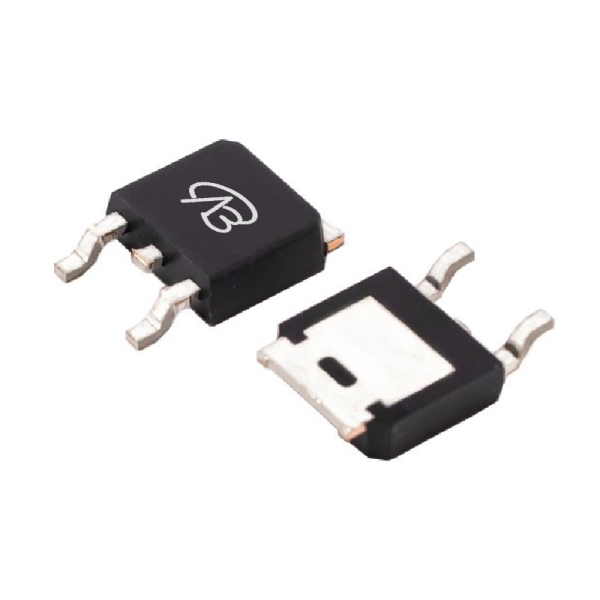
In automotive and industrial power systems, selecting a MOSFET that balances ruggedness, efficiency, and cost is a critical engineering challenge. It’s not just about finding a pin-to-pin replacement, but a strategic decision involving performance, reliability, and supply chain stability. This article takes two representative MOSFETs—STD86N3LH5 (low-voltage, high-current) and STP12NK30Z (high-voltage)—as benchmarks, analyzes their design cores and application scenarios, and evaluates their domestic alternatives, VBE1303 and VBM165R18. By clarifying parameter differences and performance orientations, we provide a clear selection guide to help you find the optimal power switching solution.
Comparative Analysis: STD86N3LH5 (N-channel) vs. VBE1303
Analysis of the Original Model (STD86N3LH5) Core:
This is an AEC-Q101 qualified automotive-grade N-channel MOSFET from STMicroelectronics in a TO-252 (DPAK) package. Its design core is to deliver very high current handling with minimal conduction loss in a compact power package. Key advantages include: a very low on-resistance of 5mΩ (max @10V, 40A), a high continuous drain current rating of 80A, and a 30V drain-source voltage rating. It utilizes ST's STripFET H5 technology, optimized for high efficiency and robustness in demanding environments like automotive motor drives or power distribution.
Compatibility and Differences of the Domestic Alternative (VBE1303):
VBsemi's VBE1303 is also offered in a TO-252 package and serves as a direct pin-to-pin compatible alternative. The key differences are in electrical parameters: VBE1303 offers significantly lower on-resistance at 2mΩ (@10V) compared to the original's 5mΩ, and a higher continuous current rating of 100A versus 80A, while maintaining the same 30V voltage rating. This indicates a potential for lower conduction losses and higher current capability.
Key Application Areas:
Original Model STD86N3LH5: Ideal for automotive and industrial low-voltage, high-current switching where reliability and efficiency are paramount.
Automotive Systems: Solenoid drivers, motor control (e.g., fans, pumps), and high-current load switches in 12V/24V battery systems.
Power Distribution: High-side or low-side switches in DC-DC converters for infotainment, ADAS, or power management units.
Industrial Power Tools: Motor drives and battery management systems requiring robust performance.
Alternative Model VBE1303: Suited for applications requiring an upgrade in current handling and lower conduction loss. It's an excellent choice for next-generation designs or replacements where enhanced efficiency and higher power density are needed within the same 30V landscape, such as in upgraded motor drives or more efficient DC-DC converters.
Comparative Analysis: STP12NK30Z (N-channel) vs. VBM165R18
This comparison shifts to high-voltage applications, where the design focus is on blocking voltage capability and switching performance at elevated voltages.
Analysis of the Original Model (STP12NK30Z) Core:
This STMicroelectronics N-channel MOSFET in a TO-220-3 package is designed for high-voltage switching. Its core advantages are:
High Voltage Rating: A 300V drain-source voltage (Vdss) makes it suitable for off-line or bus applications.
Balanced Performance: With a continuous current of 9A and an on-resistance of 400mΩ (@10V), it offers a practical balance for medium-power high-voltage circuits.
Robust Package: The TO-220 package provides good thermal performance for power dissipation.
Compatibility and Differences of the Domestic Alternative (VBM165R18):
VBsemi's VBM165R18, also in a TO-220 package, presents a different performance profile. It is a higher-voltage, higher-current device: 650V Vdss vs. 300V, and 18A continuous current vs. 9A. Its on-resistance is 430mΩ (@10V), which is comparable to the original when considering the much higher voltage rating. This indicates the use of different semiconductor technology (Planar vs. possibly ST's MDmesh?).
Key Application Areas:
Original Model STP12NK30Z: Well-suited for medium-power off-line applications.
Switch Mode Power Supplies (SMPS): Used in PFC stages, flyback, or forward converters for appliances, industrial controls, and lighting (up to ~300W).
Motor Drives: Inverter stages for higher-voltage AC motor drives or industrial controls.
Inductive Load Switching: Relays, solenoids, or valve controls in high-voltage systems.
Alternative Model VBM165R18: Targets higher-power or higher-voltage applications. Its 650V rating makes it suitable for universal input (85-265VAC) offline SMPS, higher-power motor drives, UPS systems, and industrial inverters where the increased voltage and current margins are beneficial.
Conclusion
This analysis reveals two distinct selection strategies:
For low-voltage, high-current automotive/industrial applications, the original STD86N3LH5 sets a high standard with its 80A capability, 5mΩ RDS(on), and automotive qualification. Its domestic alternative VBE1303 offers a compelling "performance-enhanced" option with even lower resistance (2mΩ) and higher current (100A), making it an excellent choice for upgrades or new designs demanding maximum efficiency within the 30V range.
For high-voltage switching applications, the original STP12NK30Z provides a reliable, balanced solution for 300V systems up to ~9A. The domestic alternative VBM165R18 shifts the paradigm by offering a much higher voltage class (650V) and current rating (18A), catering to different, often more demanding, application segments like universal-input power supplies or higher-power motor drives.
The core takeaway is that selection is driven by precise application requirements. In the era of supply chain diversification, domestic alternatives like VBE1303 and VBM165R18 not only provide viable backups but also offer differentiated performance—either through enhanced efficiency in the same voltage class or through expanded voltage/current capabilities. Understanding each device's parameter profile and design target is key to leveraging its full value in your circuit.

Download PDF document
 Download now


