 中文
中文 English
MOSFET Selection for Medium to High Power Applications: STD60NF55LT4, STP38N65M5 vs. China Alternatives VBE1615, VBM165R36S
Number of views:9999
 Back to previous page
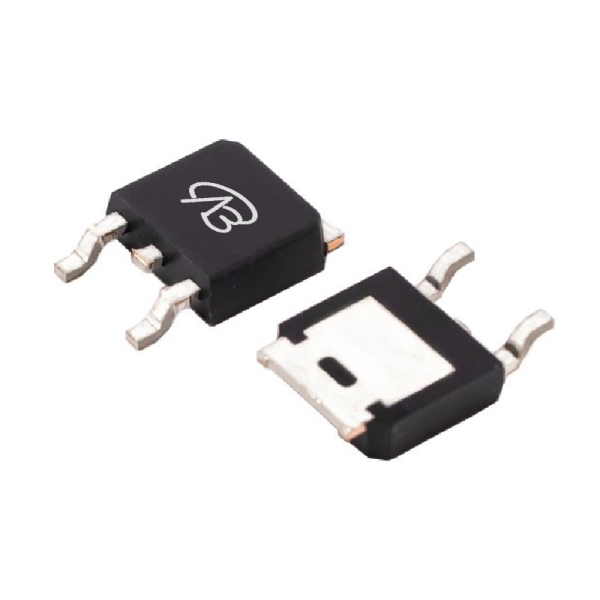
In the design of power conversion and motor drive systems, selecting a MOSFET that balances performance, robustness, and cost is a critical task for engineers. This goes beyond simple part substitution, requiring a careful evaluation of voltage ratings, current handling, switching efficiency, and thermal management. This article uses two established MOSFETs from STMicroelectronics, the STD60NF55LT4 (N-channel, 55V) and the STP38N65M5 (N-channel, 650V), as benchmarks. We will delve into their design cores and typical applications, then conduct a comparative evaluation with two domestic alternative solutions from VBsemi: VBE1615 and VBM165R36S. By clarifying parameter differences and performance orientations, we aim to provide a clear selection guide for your next power design.
Comparative Analysis: STD60NF55LT4 (55V N-channel) vs. VBE1615
Analysis of the Original Model (STD60NF55LT4) Core:
This is a 55V N-channel MOSFET from STMicroelectronics in a DPAK package. Its design core leverages ST's advanced "Single Feature Size™" stripe-based technology, achieving high cell density. This results in a robust transistor with low on-resistance, strong avalanche ruggedness, and excellent manufacturing reproducibility. Key advantages include a high continuous drain current of 60A and a low on-resistance of 12mΩ at 10V gate drive, enabling efficient power handling with low conduction losses in medium-voltage applications.
Compatibility and Differences of the Domestic Alternative (VBE1615):
VBsemi's VBE1615 is an N-channel MOSFET in a TO-252 (DPAK compatible) package, offering a viable pin-to-pin alternative. Its key parameters show a close match: a similar voltage rating of 60V and a high continuous current of 58A. The on-resistance is slightly higher at 10mΩ (at 10V) compared to the original's 12mΩ, but this difference is marginal and may result in comparable conduction performance in practice.
Key Application Areas:
Original Model STD60NF55LT4: Ideal for applications requiring high current and efficiency in 48V or lower systems. Typical uses include:
Synchronous rectification in DC-DC converters for servers, telecom, and computing.
Motor drives for industrial tools, robotics, and e-mobility.
High-current load switching and power management modules.
Alternative Model VBE1615: Well-suited as a direct replacement in the same application spaces as the STD60NF55LT4, particularly where supply chain diversification or cost optimization is desired, without sacrificing current capability or significantly increasing conduction loss.
Comparative Analysis: STP38N65M5 (650V N-channel) vs. VBM165R36S
This comparison shifts to high-voltage applications, where the design focus is on balancing high voltage withstand capability with switching efficiency and thermal performance.
Analysis of the Original Model (STP38N65M5) Core:
This 650V N-channel MOSFET from ST uses the MDmesh M5 technology in a TO-220 package. Its core advantages are:
High Voltage Performance: A 650V drain-source voltage rating makes it suitable for off-line applications.
Optimized Switching: The MDmesh M5 technology is designed for low gate charge and improved figure-of-merit (RDS(on) Qg), leading to good switching efficiency.
Robust Current Handling: A continuous drain current of 30A with an on-resistance of 95mΩ (@10V) supports substantial power levels.
Compatibility and Differences of the Domestic Alternative (VBM165R36S):
VBsemi's VBM165R36S presents itself as a "performance-enhanced" alternative in the same TO-220 package. It matches the critical 650V voltage rating. Notably, it offers improvements in key parameters: a higher continuous current of 36A and a significantly lower on-resistance of 75mΩ (@10V). This suggests the potential for lower conduction losses and a higher efficiency margin in similar applications.
Key Application Areas:
Original Model STP38N65M5: A reliable choice for high-voltage, medium-power switching applications. Typical uses include:
Power Factor Correction (PFC) stages in SMPS.
Inverters for motor drives, UPS systems, and solar applications.
Switch-mode power supplies (SMPS) for industrial and consumer electronics.
Alternative Model VBM165R36S: Suitable as an upgrade or direct replacement in the same high-voltage domains as the STP38N65M5. Its superior current and on-resistance specs make it particularly attractive for designs seeking higher power density, improved efficiency, or more thermal headroom, such as in next-generation or higher-power PFC circuits and motor inverters.
Summary
This analysis reveals two distinct substitution scenarios:
For 55V medium-power applications, the original STD60NF55LT4, with its proven stripe technology offering 60A current and 12mΩ RDS(on), is a strong performer in synchronous rectification and motor drives. Its domestic alternative VBE1615 provides a highly competitive, pin-to-pin compatible option with nearly identical specifications (58A, 10mΩ), making it an excellent choice for supply chain diversification without performance compromise.
For 650V high-voltage applications, the original STP38N65M5, with its MDmesh M5 technology (30A, 95mΩ), is a solid solution for PFC and inverter stages. The domestic alternative VBM165R36S offers a clear performance-enhanced path, featuring a higher current rating (36A) and a substantially lower on-resistance (75mΩ). This makes it a compelling option for upgrades or new designs demanding higher efficiency and power capability.
The core conclusion is that selection hinges on precise requirement matching. In the landscape of supply chain diversification, domestic alternatives like VBE1615 and VBM165R36S not only provide reliable backup options but also demonstrate competitive or even superior performance in key parameters. This offers engineers greater flexibility and resilience in design trade-offs and cost optimization. A deep understanding of each device's specifications and intended application is essential to unlocking its full potential in your circuit.

Download PDF document
 Download now


