 中文
中文 English
MOSFET Selection for Automotive & Power Applications: STD47N10F7AG, STD10NF10T4 vs. China Alternatives VBGE1102N, VBE1101M
Number of views:9999
 Back to previous page
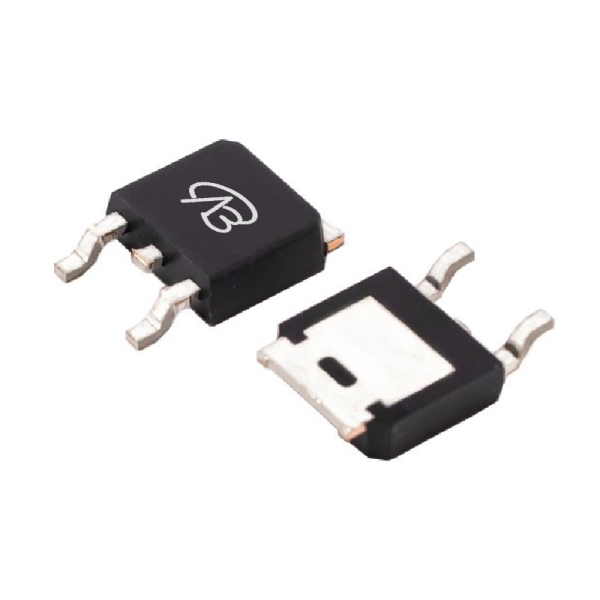
In the demanding fields of automotive electronics and industrial power systems, selecting a MOSFET that delivers robust performance, high reliability, and cost-effectiveness is a critical task for engineers. This goes beyond simple part substitution; it involves a careful balance of voltage rating, current capability, on-resistance, and quality standards. This article takes two representative MOSFETs from STMicroelectronics—the STD47N10F7AG (high-current) and STD10NF10T4 (general-purpose)—as benchmarks. We will delve into their design cores and typical applications, then conduct a comparative evaluation with two domestic alternative solutions: VBGE1102N and VBE1101M from VBsemi. By clarifying their parameter differences and performance orientations, we aim to provide a clear selection guide to help you find the most suitable power switching solution for your next design.
Comparative Analysis: STD47N10F7AG (High-Current N-channel) vs. VBGE1102N
Analysis of the Original Model (STD47N10F7AG) Core:
This is an AEC-Q101 qualified automotive-grade N-channel MOSFET from ST, in a DPAK (TO-252) package. Its design core is to offer high power handling and efficiency in automotive environments. Key advantages include: a high continuous drain current rating of 45A, a low on-resistance of 18mΩ (typical) at 10V Vgs, and a 100V drain-source voltage rating. It utilizes ST's advanced STripFET F7 technology, optimized for low conduction and switching losses.
Compatibility and Differences of the Domestic Alternative (VBGE1102N):
VBsemi's VBGE1102N is also offered in a TO-252 package and serves as a pin-to-pin compatible alternative. The primary differences are in the electrical parameters: while both are 100V, single N-channel devices, the VBGE1102N has a slightly lower continuous current rating of 35A and a moderately higher on-resistance (21mΩ @10V vs. the original's typical 18mΩ). It features SGT (Shielded Gate Trench) technology.
Key Application Areas:
Original Model STD47N10F7AG: Its high current (45A) and low RDS(on) make it ideal for demanding automotive and industrial applications such as:
Automotive Load Switches & Drives: Solenoid drivers, motor controls (e.g., fans, pumps), and high-current power distribution.
DC-DC Converters: As the main switch or synchronous rectifier in high-current buck/boost converters for 12V/24V/48V systems.
Power Management Units (PMUs): In applications requiring high efficiency and reliability under harsh conditions.
Alternative Model VBGE1102N: A suitable alternative for applications where the full 45A current of the original is not required, but a 100V rating and good efficiency (with 21mΩ RDS(on)) are needed. It offers a cost-effective solution for high-reliability power switching within its 35A rating.
Comparative Analysis: STD10NF10T4 (General-Purpose N-channel) vs. VBE1101M
This comparison focuses on a general-purpose 100V N-channel MOSFET where the balance of cost, adequate current, and standard performance is key.
Analysis of the Original Model (STD10NF10T4) Core:
This ST model is a standard 100V N-channel MOSFET in a TO-252 package. Its design offers a reliable and cost-effective solution for medium-power switching. Its core parameters are a 13A continuous drain current and an on-resistance of 130mΩ (@10V, 5A Id).
Compatibility and Differences of the Domestic Alternative (VBE1101M):
VBsemi's VBE1101M is a direct pin-to-pin compatible alternative in a TO-252 package. It shows a performance enhancement in key parameters: it offers a higher continuous current rating of 15A (vs. 13A) and a significantly lower on-resistance of 114mΩ (@10V) compared to the original's 130mΩ. It utilizes Trench technology.
Key Application Areas:
Original Model STD10NF10T4: Suitable for various general-purpose medium-power switching applications, such as:
Low-Side Switches: In power supplies, motor control circuits, and relay replacements.
DC-DC Conversion: As a switch in lower-current (<10A) converters.
Load Switching: For peripheral power control in consumer, industrial, and automotive subsystems.
Alternative Model VBE1101M: With its superior current handling (15A) and lower on-resistance (114mΩ), it is an excellent "drop-in upgrade" for applications currently using the STD10NF10T4. It can provide lower conduction losses, better thermal performance, and headroom for higher load currents, making it suitable for enhanced or next-generation designs requiring higher efficiency within the same footprint.
Conclusion
In summary, this analysis reveals two distinct selection scenarios:
For high-current, automotive-grade applications, the original STD47N10F7AG, with its 45A current rating and very low 18mΩ RDS(on), remains a top-tier choice for demanding automotive and industrial power stages. Its domestic alternative VBGE1102N provides a viable, cost-effective compatible solution for designs where the current requirement is within 35A and a slight increase in RDS(on) is acceptable.
For general-purpose, cost-sensitive 100V switching, the original STD10NF10T4 has been a reliable workhorse. However, the domestic alternative VBE1101M presents a compelling performance-upgraded replacement, offering higher current (15A vs. 13A) and lower on-resistance (114mΩ vs. 130mΩ) in the same package, enabling improved efficiency and potential design margin.
The core takeaway is that selection must be driven by precise application requirements. In the context of supply chain diversification, domestic alternatives like VBGE1102N and VBE1101M not only provide reliable backup options but can also offer performance parity or even advantages in specific parameters, giving engineers greater flexibility and resilience in design optimization and cost management. Understanding the specific demands of your circuit is essential to unlocking the full value of these components.

Download PDF document
 Download now


