 中文
中文 English
MOSFET Selection for High-Voltage and High-Current Applications: STD3LN80K5, STP80NF10FP vs. China Alternatives VBE18R02S and VBMB1101N
Number of views:9999
 Back to previous page
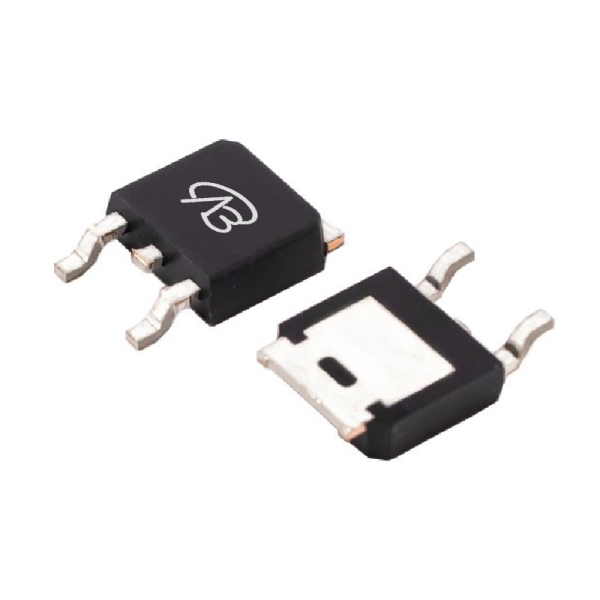
In power design, choosing the right MOSFET for high-voltage switching or high-current handling is a critical engineering decision, balancing voltage rating, current capability, on-resistance, package, and cost. This article takes two established MOSFETs from STMicroelectronics—the high-voltage STD3LN80K5 (N-channel) and the high-current STP80NF10FP (N-channel)—as benchmarks. We will delve into their design cores and typical applications, then evaluate their direct pin-to-pin domestic alternatives from VBsemi: VBE18R02S and VBMB1101N. By comparing their key parameters and performance orientations, this analysis provides a clear selection guide for your next power switching design.
Comparative Analysis: STD3LN80K5 (N-channel) vs. VBE18R02S
Analysis of the Original Model (STD3LN80K5) Core:
This is an 800V N-channel MOSFET from STMicroelectronics, utilizing the DPAK package. It is part of the MDmesh K5 family, designed for high-voltage, low-power switching applications where low gate charge and high dv/dt capability are important. Its key advantages are a very high drain-source voltage (Vdss) of 800V and a relatively low typical on-resistance (RDS(on)) of 2.75Ω (3.25Ω max @ 10V Vgs) for its voltage class. It supports a continuous drain current (Id) of 2A, making it suitable for off-line power supplies and lighting applications.
Compatibility and Differences of the Domestic Alternative (VBE18R02S):
VBsemi's VBE18R02S is a direct pin-to-pin compatible alternative in a TO-252 (DPAK) package. The primary differences are in the electrical parameters: while it matches the high 800V voltage rating, it offers a significantly lower maximum on-resistance of 2600 mΩ (2.6Ω @ 10V Vgs), which is better than the original's specified maximum. The continuous current rating remains the same at 2A. This indicates VBE18R02S can provide slightly lower conduction losses in the same high-voltage applications.
Key Application Areas:
Original Model STD3LN80K5: Ideal for high-voltage, low-to-medium current switching. Typical applications include:
SMPS (Switched-Mode Power Supplies): Used in flyback or forward converter topologies for auxiliary power or primary-side switching.
Lighting: Electronic ballasts for fluorescent lamps or primary switches in LED drivers.
Industrial Controls: Snubber circuits or high-voltage signal switching.
Alternative Model VBE18R02S: A suitable domestic alternative for the same 800V application spaces, potentially offering improved efficiency due to its lower specified RDS(on). It is a robust choice for enhancing supply chain resilience in AC-DC converters, power factor correction (PFC) stages, and industrial power systems.
Comparative Analysis: STP80NF10FP (N-channel) vs. VBMB1101N
This comparison shifts focus from high voltage to high current and low on-resistance. The design pursuit for the STP80NF10FP is achieving high power handling with good thermal performance.
Analysis of the Original Model (STP80NF10FP) Core:
This is a 100V N-channel MOSFET in a TO-220FP (fully isolated) package. Its core advantages are:
High Current Capability: A continuous drain current rating of 40A.
Low On-Resistance: An RDS(on) as low as 15mΩ @ 10V Vgs, minimizing conduction losses.
Robust Package: The TO-220FP package offers excellent power dissipation (Pd up to 45W) with full isolation, simplifying heatsink mounting.
Compatibility and Differences of the Domestic Alternative (VBMB1101N):
VBsemi's VBMB1101N is a direct pin-to-pin compatible alternative in a TO-220F package. It represents a significant "performance-enhanced" alternative:
It maintains the same 100V voltage rating.
It features a dramatically lower on-resistance of just 9mΩ @ 10V Vgs.
It boasts a much higher continuous current rating of 90A.
This combination makes VBMB1101N capable of handling significantly higher power with lower losses and reduced thermal stress in comparable applications.
Key Application Areas:
Original Model STP80NF10FP: Excellent for medium-voltage, high-current applications requiring isolation. Typical uses include:
DC-DC Converters: Synchronous rectification or primary switches in high-current buck/boost converters (e.g., for 12V/24V/48V systems).
Motor Drives: Driving brushed DC motors, stepper motors, or as switches in inverter bridges for low-power BLDC motors.
Power Management: Load switches, OR-ing circuits, and battery protection in automotive, telecom, or industrial equipment.
Alternative Model VBMB1101N: An outstanding upgrade for applications demanding maximum efficiency and current headroom. It is perfectly suited for:
High-Current DC-DC Converters: Where minimizing conduction loss is critical for efficiency and thermal management.
High-Power Motor Drives: For larger DC motors or more demanding servo applications.
Advanced Power Distribution: Such as in e-mobility, high-power UPS systems, or server power supplies.
Conclusion
This analysis reveals two distinct selection and upgrade paths:
For high-voltage (800V) switching needs, the original STD3LN80K5 provides reliable performance in DPAK packages for offline power applications. Its domestic alternative, VBE18R02S, offers direct compatibility with a potentially lower on-resistance, making it an excellent choice for cost-effective and resilient sourcing without sacrificing performance.
For high-current, low-voltage (100V) switching, the original STP80NF10FP in an isolated TO-220FP package is a solid performer. Its domestic alternative, VBMB1101N, delivers a substantial performance boost with its ultra-low 9mΩ RDS(on) and high 90A current rating, enabling higher power density, superior efficiency, and greater design margin in next-generation systems.
The core takeaway is that selection depends on precise application requirements. In today's landscape, domestic alternatives like VBE18R02S and VBMB1101N not only provide reliable backup options but also offer opportunities for performance enhancement and cost optimization, giving engineers greater flexibility and resilience in their power design choices.

Download PDF document
 Download now


