 中文
中文 English
MOSFET Selection for Industrial Power Applications: STD30NF06LT4, STB60NF06T4 vs. China Alternatives VBE1638, VBL1615
Number of views:9999
 Back to previous page
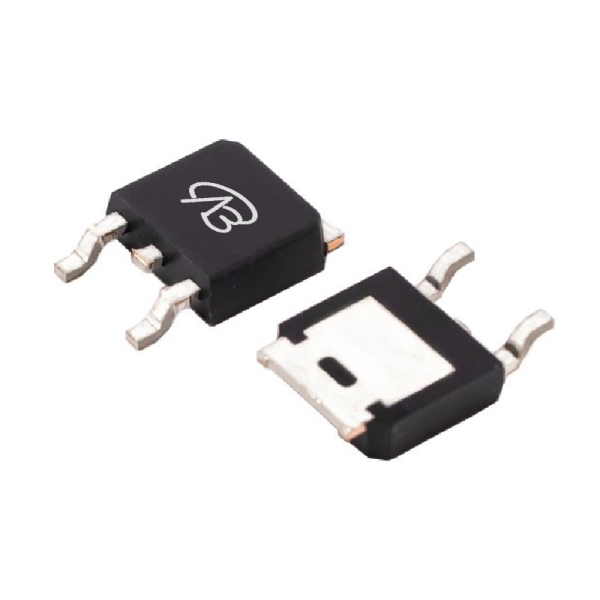
In industrial power designs, selecting a MOSFET that balances performance, ruggedness, and cost is a critical engineering task. It's not just about finding a pin-compatible part, but a careful evaluation of on-resistance, current capability, thermal performance, and supply chain stability. This article takes two established industrial MOSFETs from STMicroelectronics—STD30NF06LT4 (in DPAK) and STB60NF06T4 (in D2PAK)—as benchmarks. We will delve into their design cores and typical applications, then conduct a comparative evaluation with two Chinese alternative solutions: VBE1638 and VBL1615 from VBsemi. By clarifying their parameter differences and performance orientations, we aim to provide a clear selection guide to help you find the most suitable power switching solution for your next robust design.
Comparative Analysis: STD30NF06LT4 (N-channel, DPAK) vs. VBE1638
Analysis of the Original Model (STD30NF06LT4) Core:
This is a 60V N-channel MOSFET from STMicroelectronics in a DPAK (TO-252) package. It is built on ST's proprietary "single feature size" strip process, resulting in high cell density for low on-resistance, rugged avalanche characteristics, and excellent manufacturing repeatability. Its key advantages are a robust 35A continuous drain current and an on-resistance (RDS(on)) of 22mΩ at 10V gate drive. This combination makes it a reliable workhorse for medium-current switching.
Compatibility and Differences of the Domestic Alternative (VBE1638):
VBsemi's VBE1638 is offered in a TO-252 (DPAK-compatible) package and serves as a potential alternative. The main differences are in the electrical parameters: while both are rated for 60V, the VBE1638 specifies a higher continuous current of 45A but with a slightly higher on-resistance of 25mΩ at 10V (vs. 22mΩ for the STD30NF06LT4). Its threshold voltage and gate voltage ratings are comparable.
Key Application Areas:
Original Model STD30NF06LT4: Its ruggedness and balanced 35A/22mΩ performance make it ideal for various industrial medium-power applications:
Motor drives and solenoids in 24V/48V systems.
Switching power supplies and DC-DC converters.
General-purpose load switching and power management modules.
Alternative Model VBE1638: Suitable for applications where a higher current margin (45A) is beneficial, and a slight increase in conduction loss is acceptable. It can be considered for upgrades or cost-optimized designs in similar fields.
Comparative Analysis: STB60NF06T4 (N-channel, D2PAK) vs. VBL1615
This comparison focuses on higher-power solutions in larger packages for demanding thermal environments.
Analysis of the Original Model (STB60NF06T4) Core:
This 60V N-channel MOSFET from ST uses the D2PAK (TO-263) package, part of the StripFET™ II family. Its design pursues low conduction loss and high current handling. The core advantages are a low on-resistance of 16mΩ at 10V and a high continuous drain current of 60A. The larger D2PAK package offers superior thermal performance, making it suitable for high-power applications.
Compatibility and Differences of the Domestic Alternative (VBL1615):
VBsemi's VBL1615 is a direct package-compatible alternative in TO-263 (D2PAK). It represents a significant "performance-enhanced" option. It matches the 60V voltage rating but offers substantially improved key parameters: a much lower on-resistance of 11mΩ at 10V and a higher continuous current rating of 75A.
Key Application Areas:
Original Model STB60NF06T4: Its 60A capability and 16mΩ RDS(on) make it a strong choice for high-current applications:
High-current DC-DC converters and synchronous rectification in server/telecom power.
Inverters and motor drives for industrial equipment.
High-power load switches and battery management systems (BMS).
Alternative Model VBL1615: With its superior 75A/11mΩ specs, it is an excellent choice for upgraded scenarios demanding even lower conduction losses, higher efficiency, or greater current headroom. It is well-suited for next-generation designs or replacements seeking performance gains in the aforementioned high-power fields.
Summary and Selection Paths:
This analysis reveals two distinct selection paths based on package and power level:
1. For DPAK-based, medium-power industrial applications, the original STD30NF06LT4 offers a proven, rugged solution with 35A current and 22mΩ on-resistance. Its domestic alternative VBE1638 provides a viable option with a higher current rating (45A), suitable for designs prioritizing current margin or cost optimization, even with a slightly higher RDS(on).
2. For D2PAK-based, high-power applications requiring excellent thermal performance, the original STB60NF06T4 is a reliable performer with 60A and 16mΩ. The domestic alternative VBL1615 stands out as a high-performance upgrade, offering significantly lower on-resistance (11mΩ) and higher current capability (75A), enabling higher efficiency and power density in demanding circuits.
Core Conclusion: The choice is not about absolute superiority but precise requirement matching. In the context of supply chain diversification, domestic alternatives like VBE1638 and VBL1615 not only provide feasible backup options but can also offer performance advantages in key parameters. This gives engineers greater flexibility and resilience in design trade-offs and cost control. Understanding the design philosophy and implications of each device's specifications is essential to unlocking its full value in your circuit.

Download PDF document
 Download now


