 中文
中文 English
MOSFET Selection for High-Performance Power Applications: STD134N4F7AG, STP20N60M2-EP vs. China Alternatives VBE1402, VBM165R13S
Number of views:9999
 Back to previous page
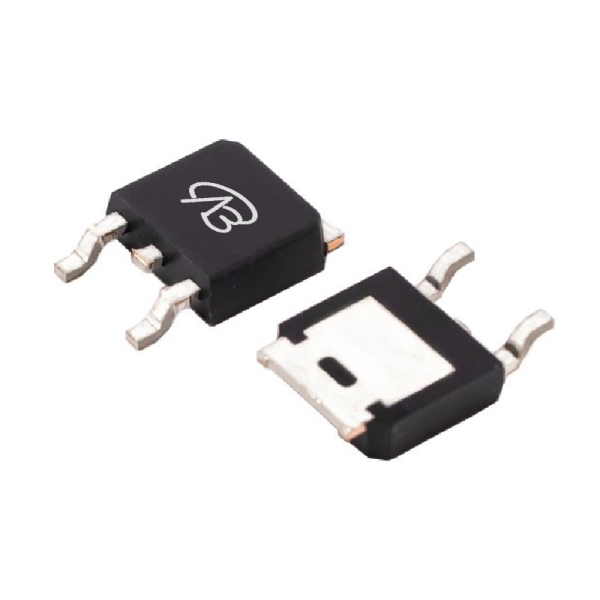
In the design of automotive and industrial power systems, selecting a MOSFET that delivers robust performance, high reliability, and cost-effectiveness is a critical engineering challenge. It involves a careful balance of voltage rating, current handling, switching efficiency, and thermal management. This article takes two prominent MOSFETs from STMicroelectronics—the STD134N4F7AG (low-voltage, high-current) and the STP20N60M2-EP (high-voltage, medium-current)—as benchmarks. We will delve into their design cores and primary applications, followed by a comparative evaluation of their Chinese alternative solutions, VBE1402 and VBM165R13S. By clarifying parameter differences and performance orientations, this analysis provides a clear selection map to help you identify the optimal power switching solution for your next demanding design.
Comparative Analysis: STD134N4F7AG (N-channel, 40V) vs. VBE1402
Analysis of the Original Model (STD134N4F7AG) Core:
This is an Automotive-grade N-channel MOSFET from STMicroelectronics, in a DPAK package. It is part of the STripFET F7 series, designed for high efficiency and power density in low-voltage applications. Its core advantages are: a very low typical on-resistance of 2.5 mΩ (3.5 mΩ @ 10V max), and an impressive continuous drain current rating of 80A. This combination ensures minimal conduction losses in high-current paths.
Compatibility and Differences of the Domestic Alternative (VBE1402):
VBsemi's VBE1402, offered in a TO-252 (similar footprint to DPAK) package, serves as a pin-to-pin compatible alternative. The key differences are in the electrical parameters: While both are rated for 40V, the VBE1402 specifies an even lower on-resistance of 1.6 mΩ @ 10V and a higher continuous current rating of 120A, indicating potentially lower conduction loss and higher current handling capability than the original part.
Key Application Areas:
Original Model STD134N4F7AG: Its ultra-low RDS(on) and high current rating make it ideal for high-efficiency, high-current switching in automotive and industrial 12V/24V systems.
Automotive DC-DC Converters: As a synchronous rectifier or main switch in buck/boost modules.
Motor Control: For driving high-current brushed DC motors or as switches in solenoid/valve drivers.
Power Distribution Units (PDUs): In load switches and OR-ing circuits for battery management and power routing.
Alternative Model VBE1402: With its superior RDS(on) and current specs, it is suitable for upgrade scenarios or new designs demanding the lowest possible conduction loss and maximum current capability within the 40V range, such as in next-generation high-power DC-DC converters or motor drives.
Comparative Analysis: STP20N60M2-EP (N-channel, 600V) vs. VBM165R13S
This comparison shifts focus to high-voltage applications, where the design pursuit balances high voltage blocking capability with manageable conduction loss.
Analysis of the Original Model (STP20N60M2-EP) Core:
This is an N-channel 600V MOSFET from ST's MDmesh M2 EP series, in a TO-220 package. Its design core leverages the Multi-Epitaxial (EP) process for a good trade-off between switching performance and ruggedness. Key advantages include: a high drain-source voltage of 600V, a continuous current of 13A, and a typical on-resistance of 0.230 Ohm (@10V, 6.5A). The TO-220 package provides good thermal dissipation for medium-power off-line applications.
Compatibility and Differences of the Domestic Alternative (VBM165R13S):
VBsemi's VBM165R13S, also in a TO-220 package, is a direct form-fit alternative. It offers a higher voltage rating (650V vs. 600V) and a comparable continuous current rating of 13A. The on-resistance is specified at 330 mΩ @ 10V. This positions it as a robust alternative for similar high-voltage application spaces with a slight voltage margin advantage.
Key Application Areas:
Original Model STP20N60M2-EP: Its 600V rating and balanced RDS(on) make it suitable for various off-line power conversion and motor drive applications.
Switch-Mode Power Supplies (SMPS): As the primary-side switch in flyback or PFC (Power Factor Correction) stages for adapters, LED drivers, and auxiliary power supplies.
Motor Drives: For controlling induction motors or universal motors in appliances and industrial equipment.
Inverters: In low to medium power solar inverter or UPS stages.
Alternative Model VBM165R13S: With its 650V rating, it is well-suited for applications requiring extra voltage margin against transients, such as in PFC circuits, motor drives operating in harsh electrical environments, or as a reliable alternative in existing 600V-designs for enhanced robustness.
Conclusion
In summary, this analysis reveals two distinct selection paths based on voltage domain:
For low-voltage, high-current applications (e.g., automotive 12V/24V systems), the original model STD134N4F7AG sets a high standard with its 80A capability and very low RDS(on). Its domestic alternative VBE1402 presents a compelling "performance-enhanced" option, offering even lower RDS(on) and higher current (120A), making it ideal for designs pushing the limits of efficiency and power density.
For high-voltage, medium-current applications (e.g., off-line SMPS, motor drives), the original model STP20N60M2-EP provides a reliable 600V solution with proven performance. Its domestic alternative VBM165R13S offers a directly compatible replacement with a higher 650V rating, providing additional safety margin and supply chain resilience for similar application spaces.
The core conclusion is that selection hinges on precise requirement matching. In the context of supply chain diversification, domestic alternatives like VBE1402 and VBM165R13S not only provide viable backup options but also offer specific parametric advantages—be it superior efficiency or higher voltage ruggedness. This grants engineers greater flexibility and resilience in design trade-offs and cost optimization. A deep understanding of each device's design philosophy and parameter implications is key to unlocking its full potential within your circuit.

Download PDF document
 Download now


