 中文
中文 English
MOSFET Selection for Medium-High Power Applications: STD100NH02LT4, STD80N10F7 vs. China Alternatives VBE1206, VBE1101N
Number of views:9999
 Back to previous page
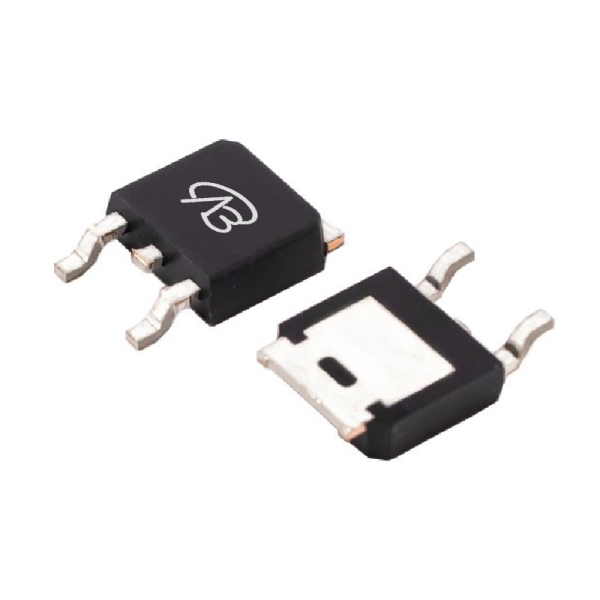
In medium-high power circuit design, selecting a MOSFET that balances performance, reliability, and cost is a critical task for engineers. This is not a simple part substitution but a strategic decision involving electrical characteristics, thermal management, and supply chain stability. This article takes two representative MOSFETs, STD100NH02LT4 (24V N-channel) and STD80N10F7 (100V N-channel), as benchmarks. It delves into their design focus and application scenarios, while providing a comparative evaluation of two domestic alternative solutions, VBE1206 and VBE1101N. By clarifying their parameter differences and performance orientations, we aim to offer a clear selection guide to help you find the most suitable power switching solution in the complex component landscape.
Comparative Analysis: STD100NH02LT4 (24V N-channel) vs. VBE1206
Analysis of the Original Model (STD100NH02LT4) Core:
This is a 24V N-channel MOSFET from STMicroelectronics, packaged in DPAK. Its design core is to deliver high current handling with low conduction loss in a robust package. Key advantages include: a high continuous drain current rating of 60A and a low on-resistance of 4.8mΩ (typical @10V, 30A), which minimizes power dissipation under load.
Compatibility and Differences of the Domestic Alternative (VBE1206):
VBsemi's VBE1206 is also offered in a TO-252 (DPAK) package, providing good pin-to-pin compatibility. The main differences are in the electrical parameters: VBE1206 has a slightly lower voltage rating (20V vs. 24V) but offers a significantly higher continuous current rating of 100A. Its on-resistance is also very competitive at 4.5mΩ (@4.5V gate drive).
Key Application Areas:
Original Model STD100NH02LT4: Ideal for 12V/24V systems requiring high efficiency and current capability, such as:
Synchronous rectification in high-current DC-DC converters.
Motor drives for power tools or small electric vehicles.
High-side or low-side switches in power distribution modules.
Alternative Model VBE1206: Suited for applications where current demand is paramount (up to 100A) and the operating voltage is within 20V, such as:
Ultra-high-current point-of-load (POL) converters.
Battery management system (BMS) discharge switches.
Upgraded designs seeking lower conduction loss at high currents.
Comparative Analysis: STD80N10F7 (100V N-channel) vs. VBE1101N
This comparison focuses on higher voltage N-channel MOSFETs where a balance of voltage withstand, current capability, and switching performance is key.
Analysis of the Original Model (STD80N10F7) Core:
This 100V N-channel MOSFET from ST uses the STripFET F7 technology. Its core advantages are:
Robust Voltage & Current Rating: 100V drain-source voltage and 70A continuous current.
Low Conduction Loss: Features a low typical on-resistance of 8.5mΩ (@10V).
Proven Package: DPAK package offers good power dissipation for its class.
Compatibility and Differences of the Domestic Alternative (VBE1101N):
VBsemi's VBE1101N offers a direct pin-to-pin alternative in TO-252. It matches the 100V voltage rating and provides a higher continuous current rating of 85A. Its on-resistance parameters are very close, at 8.5mΩ (@10V) and 10.5mΩ (@4.5V), making it a strong performance competitor.
Key Application Areas:
Original Model STD80N10F7: Excellent for medium-power applications requiring 100V breakdown, such as:
DC-DC converters in 48V telecom or industrial systems.
Motor drives for industrial equipment or e-bikes.
Power supplies for networking and communication devices.
Alternative Model VBE1101N: A suitable alternative or upgrade path for similar 100V applications, especially where higher current headroom (85A) is beneficial for improved reliability or efficiency margin, such as in next-generation or higher-power-density designs.
Conclusion
This analysis reveals two distinct selection pathways based on voltage and current needs:
For 24V-class, high-current applications, the original STD100NH02LT4 offers a proven balance of 60A current and 4.8mΩ RDS(on). Its domestic alternative VBE1206 shifts the focus towards maximum current delivery (100A) at a slightly lower voltage (20V), making it ideal for pushing the limits in high-current, low-voltage circuits.
For 100V-class applications, the original STD80N10F7 provides robust 70A capability with 8.5mΩ RDS(on). The domestic alternative VBE1101N stands out as a performance-enhanced option, matching the voltage while offering a higher 85A current rating, suitable for demanding upgrades.
The core takeaway is that selection hinges on precise requirement matching. In today's diversified supply chain, domestic alternatives like VBE1206 and VBE1101N not only provide reliable backup options but also offer compelling performance advantages in specific parameters, giving engineers greater flexibility and resilience in design trade-offs and cost optimization. Understanding the design philosophy and parameter implications of each device is key to unlocking its full potential in your circuit.

Download PDF document
 Download now


