 中文
中文 English
MOSFET Selection for High-Voltage Power Applications: STB30NF20, STD40NF10 vs. China Alternatives VBL1208N, VBGE1102N
Number of views:9999
 Back to previous page
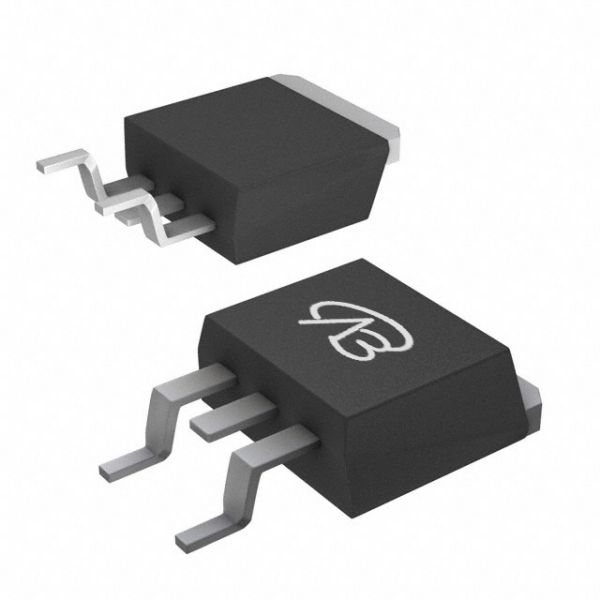
In the design of high-voltage switching power supplies and motor drives, selecting a MOSFET that balances voltage rating, current capability, and switching efficiency is a critical engineering decision. This involves more than a simple part substitution; it requires a careful trade-off among performance, ruggedness, cost, and supply chain security. This article takes two representative high-voltage MOSFETs from STMicroelectronics—STB30NF20 (200V) and STD40NF10 (100V)—as benchmarks. We will delve into their design cores and application scenarios, and provide a comparative evaluation of two domestic alternative solutions: VBL1208N and VBGE1102N. By clarifying their parameter differences and performance orientations, we aim to offer a clear selection guide to help you find the optimal power switching solution in your next high-voltage design.
Comparative Analysis: STB30NF20 (200V N-channel) vs. VBL1208N
Analysis of the Original Model (STB30NF20) Core:
This is a 200V N-channel MOSFET from STMicroelectronics in a TO-263-2 (D2PAK) package. Its design core is to provide robust performance in high-voltage applications. Key advantages include a high drain-source voltage (Vdss) of 200V, a continuous drain current (Id) of 30A, and an on-resistance (RDS(on)) of 75mΩ at 10V gate drive. This combination makes it suitable for circuits requiring good voltage blocking and moderate current handling.
Compatibility and Differences of the Domestic Alternative (VBL1208N):
VBsemi's VBL1208N is a direct pin-to-pin compatible alternative in the same TO-263 package. The key differences are in the electrical parameters: VBL1208N matches the 200V voltage rating but offers significantly better performance in conduction. It features a lower on-resistance of 48mΩ (at 10V) and a higher continuous current rating of 40A.
Key Application Areas:
Original Model STB30NF20: Well-suited for 200V-class applications requiring a balance of voltage withstand and current capability, such as:
SMPS (Switched-Mode Power Supply) primary-side switches in offline converters.
Motor drives and inverters for appliances and industrial controls.
High-voltage power switching and load switching.
Alternative Model VBL1208N: An excellent "performance-enhanced" drop-in replacement. Its lower RDS(on) and higher current rating make it ideal for the same applications as the original, but where lower conduction losses, higher efficiency, or increased current margin are desired. It is particularly valuable for upgrading existing designs or in new designs targeting higher power density.
Comparative Analysis: STD40NF10 (100V N-channel) vs. VBGE1102N
The design pursuit of this 100V N-channel MOSFET is a blend of low on-resistance and optimized switching characteristics, thanks to ST's proprietary STripFET™ technology.
The core advantages of the original model are:
Excellent Conduction Performance: It offers a very low on-resistance of 28mΩ at 10V gate drive (specified at 25A), supporting a high continuous drain current of 50A.
Optimized Switching: The STripFET™ process minimizes input capacitance and gate charge, making this device highly suitable for high-frequency switching applications with lower gate drive requirements.
Compact Power Package: The DPAK (TO-252) package provides a good compromise between power handling and board space.
The domestic alternative VBGE1102N presents a compelling "high-performance" option: While in a similar TO-252 package, it offers superior parameters in key areas. It has a slightly lower voltage rating of 100V but features an exceptionally low on-resistance of 21mΩ at 10V gate drive (and 26mΩ at 4.5V). Its continuous current rating is 35A.
Key Application Areas:
Original Model STD40NF10: Its low RDS(on) and fast-switching capabilities make it an ideal choice for high-efficiency, medium-to-high current DC-DC conversion. Typical applications include:
Primary switches in isolated DC-DC converters for telecom and computing.
Synchronous rectification in high-current buck/boost converters.
Motor drives and solenoid drivers.
Alternative Model VBGE1102N: This model is exceptionally well-suited for applications where minimizing conduction loss is paramount. Its ultra-low RDS(on) makes it a top contender for:
High-efficiency synchronous buck regulators, especially in point-of-load (POL) converters.
Motor drive circuits where lower heat generation is critical.
Any 100V-system application seeking to maximize efficiency through reduced MOSFET losses.
Conclusion
In summary, this comparative analysis reveals two clear and advantageous substitution paths:
For 200V-class N-channel applications, the original STB30NF20 provides reliable performance. Its domestic alternative VBL1208N stands out as a superior drop-in upgrade, offering significantly lower on-resistance (48mΩ vs. 75mΩ) and higher current capability (40A vs. 30A), enabling lower losses and potentially higher output power in the same footprint.
For 100V-class N-channel applications focusing on ultra-low loss, the original STD40NF10, with its STripFET™ technology, is a strong performer. The domestic alternative VBGE1102N pushes the boundaries further by offering dramatically lower on-resistance (21mΩ vs. 28mΩ @10V), making it an excellent choice for designs where maximizing efficiency and power density is the ultimate goal.
The core takeaway is that modern domestic alternatives are not just backup options but often provide performance-enhanced solutions. Models like VBL1208N and VBGE1102N offer engineers powerful tools for design optimization, providing better efficiency margins, thermal performance, and resilience in the supply chain without compromising on form factor or functionality.

Download PDF document
 Download now


