 中文
中文 English
MOSFET Selection for Compact Power Applications: SQ2337ES-T1_BE3, SI4925BDY-T1-GE3 vs. China Alternatives VB2658, VBA4317
Number of views:9999
 Back to previous page
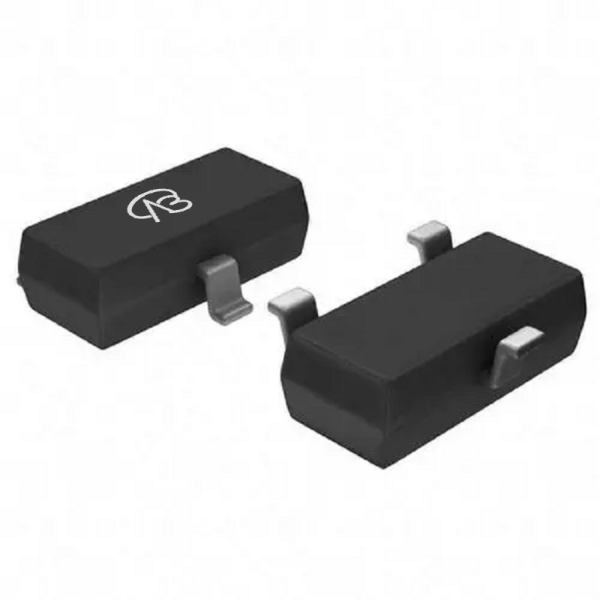
In the pursuit of device miniaturization and high efficiency today, selecting a MOSFET that is 'just right' for a compact circuit board is a practical challenge faced by every engineer. This is not merely completing a substitution from a model list, but a precise trade-off among performance, size, cost, and supply chain resilience. This article will use the two highly representative MOSFETs, SQ2337ES-T1_BE3 (P-channel) and SI4925BDY-T1-GE3 (Dual P-channel), as benchmarks, deeply analyze their design cores and application scenarios, and comparatively evaluate the two domestic alternative solutions, VB2658 and VBA4317. By clarifying the parameter differences and performance orientations among them, we aim to provide you with a clear selection map, helping you find the most matching power switching solution for your next design in the complex world of components.
Comparative Analysis: SQ2337ES-T1_BE3 (P-channel) vs. VB2658
Analysis of the Original Model (SQ2337ES-T1_BE3) Core:
This is an 80V P-channel MOSFET from VISHAY, using a compact SOT-23-3 package. Its design core is to provide a robust, AEC-Q101 qualified switching solution in a minimal footprint. Key advantages are: a high drain-source voltage rating of 80V, a continuous drain current of 2.2A, and features like 100% Rg and UIS testing for reliability.
Compatibility and Differences of the Domestic Alternative (VB2658):
VBsemi's VB2658 is a pin-to-pin compatible alternative in the SOT23-3 package. The main differences lie in the electrical parameters: VB2658 has a lower voltage rating (-60V vs -80V) but offers significantly superior conduction performance with a much lower on-resistance (50mΩ@10V vs 290mΩ@10V) and a higher continuous current rating (-5.2A vs 2.2A).
Key Application Areas:
Original Model SQ2337ES-T1_BE3: Its high voltage rating and qualification make it suitable for automotive or industrial applications requiring 80V capability in a tiny package, such as low-current load switching or protection circuits in harsh environments.
Alternative Model VB2658: More suitable for applications where lower voltage (up to 60V) is acceptable, but much lower conduction loss and higher current handling (up to 5.2A) are critical, such as in space-constrained power switches or battery management circuits.
Comparative Analysis: SI4925BDY-T1-GE3 (Dual P-channel) vs. VBA4317
This Dual P-channel MOSFET is designed for applications requiring two matched high-side switches in a single package, balancing integration and performance.
Analysis of the Original Model (SI4925BDY-T1-GE3) Core:
The core advantages of this VISHAY part in the SOIC-8 package are: a 30V rating, a continuous current of 7.1A per channel, and an on-resistance of 41mΩ@4.5V. It integrates two P-channel MOSFETs, saving board space in designs needing dual high-side switches.
Compatibility and Differences of the Domestic Alternative (VBA4317):
The domestic alternative VBA4317 is a direct pin-to-pin compatible Dual P-channel MOSFET in SOP8. It represents a "performance-enhanced" choice: it matches the 30V voltage rating but offers a higher continuous current (-8A per channel) and a significantly lower on-resistance (21mΩ@10V vs 41mΩ@4.5V), leading to reduced power dissipation.
Key Application Areas:
Original Model SI4925BDY-T1-GE3: Its dual integrated switches make it ideal for space-saving designs in 12V-24V systems requiring two high-side switches, such as in power multiplexing, load switching for multiple rails, or simple motor control.
Alternative Model VBA4317: Is more suitable for upgraded scenarios demanding lower conduction losses and higher current capability from a dual high-side switch, such as in more efficient power distribution systems or motor drives with higher power requirements.
Conclusion
In summary, this comparative analysis reveals two clear selection paths:
For high-voltage, low-current P-channel applications in ultra-compact SOT-23 packages, the original model SQ2337ES-T1_BE3, with its 80V rating and AEC-Q101 qualification, is suited for specialized automotive/industrial needs. Its domestic alternative VB2658 offers a compelling performance upgrade in conduction (lower RDS(on)) and current rating for applications up to 60V.
For integrated dual P-channel applications, the original model SI4925BDY-T1-GE3 provides a space-saving solution for dual high-side switching. The domestic alternative VBA4317 provides significant "performance enhancement" with lower on-resistance and higher current capability, enabling more efficient and powerful designs.
The core conclusion is: There is no absolute superiority or inferiority in selection; the key lies in precise matching of requirements. In the context of supply chain diversification, domestic alternative models not only provide feasible backup options but also achieve surpassing in specific parameters, offering engineers more flexible and resilient choice space in design trade-offs and cost control. Understanding the design philosophy and parameter implications of each device is essential to maximize its value in the circuit.

Download PDF document
 Download now


