 中文
中文 English
MOSFET Selection for Power Applications: SI4153DY-T1-GE3, SQD50P08-25L_GE3 vs. China Alternatives VBA2309, VBE2625
Number of views:9999
 Back to previous page
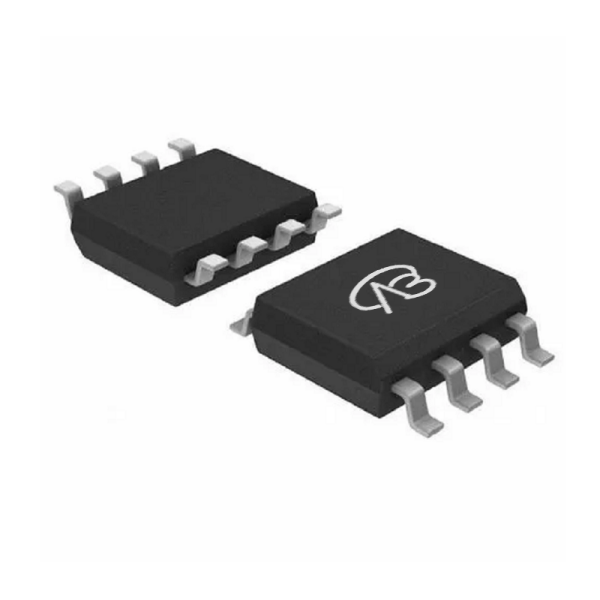
In modern power design, selecting the right P-channel MOSFET is crucial for achieving efficient power switching and management. This article uses two established MOSFETs, SI4153DY-T1-GE3 and SQD50P08-25L_GE3 from VISHAY, as benchmarks. We will analyze their design cores and application scenarios, and provide a comparative evaluation of two domestic alternative solutions, VBA2309 and VBE2625. By clarifying parameter differences and performance orientations, this aims to offer a clear selection guide for your next power design.
Comparative Analysis: SI4153DY-T1-GE3 (P-channel) vs. VBA2309
Analysis of the Original Model (SI4153DY-T1-GE3) Core:
This is a 30V P-channel MOSFET from VISHAY in a standard SOIC-8 package. Its design focuses on providing a robust balance of current handling and low conduction loss in a common footprint. Key advantages include a continuous drain current of 19.3A and a low on-resistance of 15mΩ at a 4.5V gate drive.
Compatibility and Differences of the Domestic Alternative (VBA2309):
VBsemi's VBA2309 is a pin-to-pin compatible alternative in an SOP8 package. It matches the original model's voltage rating (-30V) and offers very similar on-resistance performance (15mΩ@4.5V). Its continuous current rating is -13.5A.
Key Application Areas:
Original Model SI4153DY-T1-GE3: Ideal for various 12V/24V system applications requiring a reliable P-channel switch with good current capability, such as load switches, power distribution, and DC-DC conversion.
Alternative Model VBA2309: A suitable direct replacement for the SI4153DY in standard SOIC-8 footprint applications, offering equivalent electrical performance for cost-optimized or supply chain diversification strategies.
Comparative Analysis: SQD50P08-25L_GE3 (P-channel) vs. VBE2625
This comparison focuses on higher-voltage, higher-current P-channel MOSFETs for more demanding power applications.
Analysis of the Original Model (SQD50P08-25L_GE3) Core:
This is an 80V, 50A P-channel MOSFET from VISHAY in a TO-252 (DPAK) package. It is AEC-Q101 qualified, making it suitable for automotive applications. Its core strengths are high voltage capability, very high continuous current (50A), and a low on-resistance of 25mΩ at 10V gate drive, ensuring low conduction losses in high-power circuits.
Compatibility and Differences of the Domestic Alternative (VBE2625):
VBsemi's VBE2625 is a compatible alternative in a TO-252 package. While its voltage rating (-60V) is different from the original's -80V, it matches the high continuous current rating of -50A. It offers competitive on-resistance, specified at 20mΩ@10V.
Key Application Areas:
Original Model SQD50P08-25L_GE3: Designed for demanding automotive and industrial applications requiring high voltage (80V) and high current (50A) switching, such as in motor drives, solenoid control, and high-power DC-DC converters.
Alternative Model VBE2625: A strong alternative for applications where the voltage requirement is within 60V but high current (50A) and low on-resistance are critical. It is well-suited for industrial power systems, motor drives, and high-current load switches where the VISHAY part is specified.
Conclusion:
This analysis outlines two distinct replacement scenarios:
For standard SOIC-8 P-channel applications, the VBA2309 serves as an effective pin-to-pin alternative to the SI4153DY-T1-GE3, offering equivalent key parameters for design simplification.
For higher-power TO-252 applications, the VBE2625 presents a compelling alternative to the SQD50P08-25L_GE3, matching its high current capability and offering low on-resistance, suitable for 60V systems. Engineers must verify that the voltage rating meets the specific application requirements.
The core takeaway is precise requirement matching. These domestic alternatives provide viable, performance-competitive options, enhancing supply chain resilience and offering flexibility in design and cost optimization. Understanding each device's specifications is key to leveraging its full value in the circuit.

Download PDF document
 Download now


