 中文
中文 English
MOSFET Selection for Power Switching: RFP12N06RLE, CSD17308Q3 vs. China Alternatives VBM1638, VBQF1310
Number of views:9999
 Back to previous page
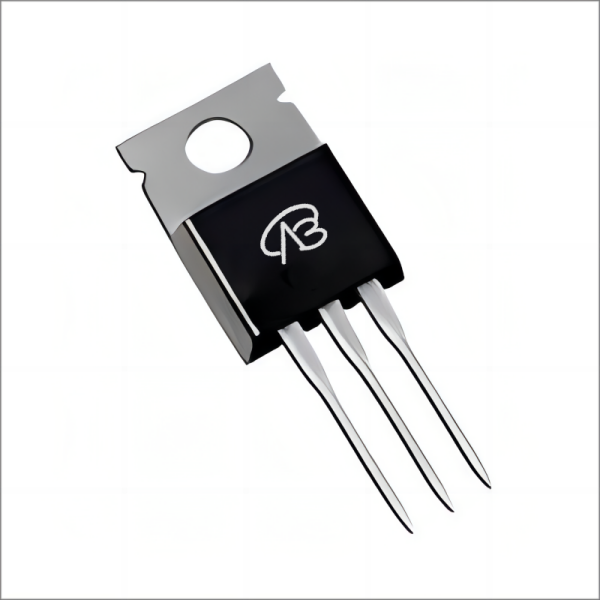
In power design, balancing performance, cost, and supply chain stability is key. This article takes two classic MOSFETs—RFP12N06RLE (TO-220, N-channel) and CSD17308Q3 (VSON, N-channel)—as benchmarks, analyzing their design focus and applications, while evaluating domestic alternatives VBM1638 and VBQF1310. By comparing parameters and performance orientation, we provide a clear selection guide for your next power switching solution.
Comparative Analysis: RFP12N06RLE (N-channel) vs. VBM1638
Analysis of the Original Model (RFP12N06RLE) Core:
This TI 60V N-channel MOSFET in a TO-220 package is designed for robust, medium-power switching. Its key features include a 12A continuous drain current and an on-resistance of 135mΩ at 5V gate drive. The TO-220 package offers good thermal performance for through-hole applications requiring simple heatsinking.
Compatibility and Differences of the Domestic Alternative (VBM1638):
VBsemi's VBM1638 is a pin-to-pin compatible alternative in the same TO-220 package. It offers significant performance enhancement: a much lower on-resistance of 24mΩ (at 10V) and a higher continuous current rating of 50A at the same 60V voltage rating. This represents a major upgrade in conduction loss and current-handling capability.
Key Application Areas:
Original Model RFP12N06RLE: Suitable for classic 60V medium-current applications where through-hole mounting is preferred, such as linear regulators, power supplies, or motor drives in industrial controls.
Alternative Model VBM1638: Ideal for upgrade scenarios demanding higher efficiency and power density. Its low RDS(on) and high current make it excellent for switching power supplies, motor drives, or any application needing lower losses and higher load current within the 60V range.
Comparative Analysis: CSD17308Q3 (N-channel) vs. VBQF1310
This comparison focuses on high-performance, space-constrained applications.
Analysis of the Original Model (CSD17308Q3) Core:
This TI NexFET™ is a 30V N-channel MOSFET in a compact 3x3mm VSON-CLIP-8 package. Its design pursues low resistance and high current in minimal space. Key advantages are a very low on-resistance of 12.5mΩ at 3V drive and a high continuous drain current of 50A, making it ideal for high-current point-of-load (POL) converters.
Compatibility and Differences of the Domestic Alternative (VBQF1310):
VBsemi's VBQF1310 offers a direct footprint-compatible alternative in a DFN8(3x3) package. While its continuous current (30A) is rated lower than the original, it features a competitive on-resistance of 13mΩ at 10V (and 19mΩ at 4.5V). It provides a reliable, cost-effective alternative for many 30V applications.
Key Application Areas:
Original Model CSD17308Q3: Excels in space-constrained, high-current applications like synchronous buck converters for CPUs/GPUs, high-density DC-DC modules, and battery protection circuits where minimal RDS(on) at low gate drive is critical.
Alternative Model VBQF1310: A practical choice for 30V applications where the full 50A current of the original is not required, but good efficiency and a compact footprint are needed. Suitable for POL converters, load switches, and motor drives in consumer electronics or compact power systems.
Conclusion:
This analysis reveals two distinct substitution strategies:
1. For through-hole 60V designs, the domestic VBM1638 is not just a compatible alternative but a performance-upgrade over the RFP12N06RLE, offering significantly lower RDS(on) and higher current capability.
2. For compact 30V VSON applications, the VBQF1310 serves as a cost-effective and capable alternative to the CSD17308Q3, suitable for designs where the ultra-high 50A current is not mandatory.
The core takeaway is precise requirement matching. Domestic alternatives like VBM1638 and VBQF1310 provide viable, sometimes superior, options, enhancing design flexibility and supply chain resilience. Understanding each device's parameter implications is essential to leverage its full value in your circuit.

Download PDF document
 Download now


