 中文
中文 English
MOSFET Selection for Medium-Power Switching: RFD14N06, RF1S23N06LE vs. China Alternatives VBFB1630, VBN1615
Number of views:9999
 Back to previous page
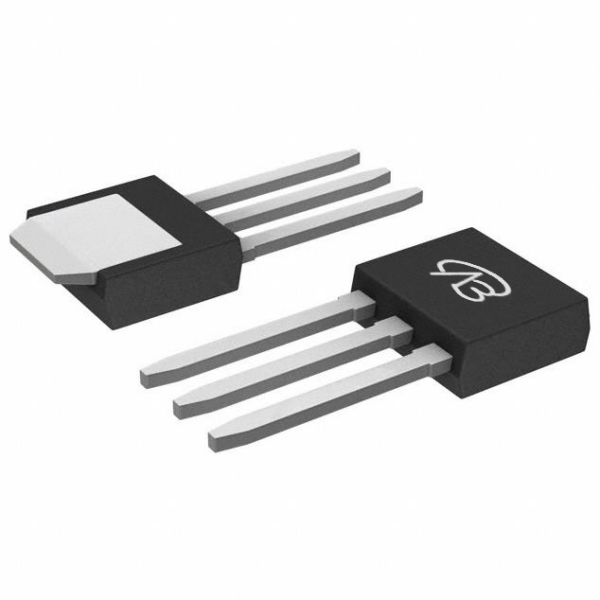
In medium-power switching applications, selecting a MOSFET that balances performance, cost, and reliability is a key challenge for engineers. This is not a simple part substitution, but a careful trade-off among current capability, conduction loss, thermal performance, and supply chain stability. This article takes two classic N-channel MOSFETs—RFD14N06 and RF1S23N06LE from TI—as benchmarks, analyzes their design focus and typical applications, and evaluates two domestic alternative solutions, VBFB1630 and VBN1615. By clarifying parameter differences and performance orientations, we provide a clear selection guide to help you find the most suitable power switching solution in your next design.
Comparative Analysis: RFD14N06 (N-channel) vs. VBFB1630
Analysis of the Original Model (RFD14N06) Core:
This is a 60V N-channel MOSFET from Texas Instruments in a TO-251 (IPAK) package. Its design emphasizes a robust balance for general-purpose medium-power switching. Key features include a continuous drain current (Id) of 14A and an on-resistance (RDS(on)) of 100mΩ at 10V gate drive. This combination offers reliable performance in various 60V systems.
Compatibility and Differences of the Domestic Alternative (VBFB1630):
VBsemi's VBFB1630 is offered in a TO-251 package, providing good footprint compatibility. The key differences are in electrical performance: VBFB1630 significantly outperforms the original in both current handling and conduction loss. It supports a continuous drain current of 35A and features a much lower on-resistance of 32mΩ at 10V (and 37mΩ at 4.5V).
Key Application Areas:
Original Model RFD14N06: Suitable for general-purpose switching, DC-DC converters, motor drives, or load switches in 60V systems where a 14A current rating and 100mΩ on-resistance are sufficient.
Alternative Model VBFB1630: An excellent performance-upgrade alternative. Its higher current (35A) and lower on-resistance (32mΩ) make it ideal for applications requiring lower conduction losses, higher efficiency, or greater current margin within the same voltage class. It's suitable for upgraded power supplies, motor controls, or any design seeking improved thermal performance.
Comparative Analysis: RF1S23N06LE (N-channel) vs. VBN1615
This comparison focuses on higher-current N-channel MOSFETs in larger packages for improved power handling.
Analysis of the Original Model (RF1S23N06LE) Core:
This TI MOSFET in an I2PAK (TO-262) package is designed for higher-current applications. Its core advantages are a 23A continuous current rating and a low on-resistance of 65mΩ at a 5V gate drive, facilitating efficient switching in circuits with moderate gate drive voltage.
Compatibility and Differences of the Domestic Alternative (VBN1615):
VBsemi's VBN1615 comes in a TO-262 package, ensuring mechanical compatibility. It represents a substantial performance enhancement: it doubles the continuous current rating to 60A and drastically reduces the on-resistance to 15mΩ at 10V gate drive.
Key Application Areas:
Original Model RF1S23N06LE: Well-suited for higher-power DC-DC conversion (e.g., synchronous rectification), motor drives, or power distribution in 60V systems where 23A current and 65mΩ RDS(on) meet the requirements.
Alternative Model VBN1615: A high-performance alternative for demanding applications. Its ultra-low 15mΩ on-resistance and high 60A current capability make it perfect for high-efficiency power supplies, high-current motor drives, or any application where minimizing conduction loss and maximizing power density are critical.
Conclusion:
This analysis reveals two distinct upgrade paths with domestic alternatives:
For the RFD14N06 (TO-251), the alternative VBFB1630 offers a direct package-compatible solution with superior electrical parameters (35A vs. 14A, 32mΩ vs. 100mΩ), enabling performance enhancement in existing designs.
For the RF1S23N06LE (TO-262), the alternative VBN1615 provides a massive boost in key specs (60A vs. 23A, 15mΩ vs. 65mΩ), making it an ideal choice for next-generation designs requiring higher power handling and efficiency.
The core takeaway is that selection depends on precise requirement matching. In the context of supply chain diversification, these domestic alternatives not only offer reliable backup options but also provide significant performance advantages, giving engineers greater flexibility and resilience in design trade-offs and cost optimization. Understanding each device's parameter implications is essential to unlocking its full potential in your circuit.

Download PDF document
 Download now


