 中文
中文 English
MOSFET Selection for Medium to High Power Applications: IRF822, CSD19503KCS vs. China Alternatives VBM165R04, VBM1808
Number of views:9999
 Back to previous page
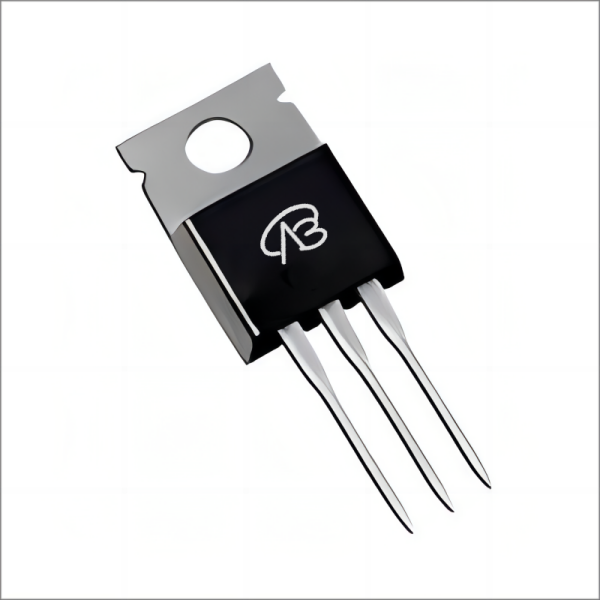
In medium to high power circuit design, selecting a MOSFET that balances voltage withstand, current capacity, and switching efficiency is a critical task for engineers. This goes beyond simple part substitution, requiring careful consideration of performance, cost, and supply chain stability. This article uses two representative MOSFETs, IRF822 (high-voltage N-channel) and CSD19503KCS (low-voltage high-current N-channel), as benchmarks. It delves into their design cores and application scenarios, while comparatively evaluating two domestic alternative solutions, VBM165R04 and VBM1808. By clarifying their parameter differences and performance orientations, we aim to provide a clear selection guide to help you find the most suitable power switching solution in the complex component landscape.
Comparative Analysis: IRF822 (N-channel) vs. VBM165R04
Analysis of the Original Model (IRF822) Core:
This is a 500V N-channel MOSFET from TI in a TO-220AB package. Its design core is to provide robust high-voltage switching capability for medium-power applications. Key advantages include a high drain-source voltage (Vdss) of 500V and a continuous drain current (Id) of 2.2A, making it suitable for off-line and high-voltage circuits.
Compatibility and Differences of the Domestic Alternative (VBM165R04):
VBsemi's VBM165R04 is also offered in a TO-220 package and serves as a pin-to-pin compatible alternative. The main differences are in the electrical parameters: VBM165R04 features a significantly higher voltage rating (650V vs. 500V) and a higher continuous current rating (4A vs. 2.2A). Crucially, its on-resistance is substantially lower (2.2Ω @10V vs. 4Ω @10V for IRF822), leading to reduced conduction losses.
Key Application Areas:
Original Model IRF822: Suitable for medium-power applications requiring 500V withstand voltage, such as offline switch-mode power supplies (SMPS) auxiliary circuits, electronic ballasts, and high-voltage line drivers.
Alternative Model VBM165R04: Better suited for applications demanding higher voltage margin (up to 650V) and higher current capability (up to 4A) with lower conduction loss. Ideal for upgraded or new designs in SMPS primary sides, power factor correction (PFC), and industrial controls where efficiency and voltage stress are concerns.
Comparative Analysis: CSD19503KCS (N-channel) vs. VBM1808
This comparison shifts focus to high-current, low on-resistance performance for low-voltage applications.
Analysis of the Original Model (CSD19503KCS) Core:
This TI NexFET™ power MOSFET in a TO-220 package is designed for high-efficiency, high-current switching. Its core advantages are an ultra-low on-resistance of 9.2mΩ (@10V, 60A) and a very high continuous drain current rating of 100A at 80V Vdss, enabling minimal power loss in high-current paths.
Compatibility and Differences of the Domestic Alternative (VBM1808):
The domestic alternative VBM1808, also in a TO-220 package, presents itself as a "performance-matched" or slightly enhanced option. It matches the 80V voltage rating and 100A continuous current rating. Its key advantage is an even lower on-resistance, specified at 7mΩ (@10V), compared to the original's 9.2mΩ, promising potentially lower conduction losses.
Key Application Areas:
Original Model CSD19503KCS: Ideal for high-current, low-voltage applications where efficiency is paramount. Typical uses include synchronous rectification in high-power DC-DC converters (e.g., for servers, telecom), motor drives for industrial tools or e-vehicles, and high-current load switches in power distribution systems.
Alternative Model VBM1808: Equally suitable for all applications of the original model. Its marginally lower on-resistance makes it an excellent drop-in replacement for achieving potentially better efficiency or thermal performance in high-current 80V systems like motor controllers, uninterruptible power supplies (UPS), and high-power DC-DC conversion stages.
Conclusion
In summary, this analysis reveals clear selection and upgrade paths:
For high-voltage (500V) medium-current applications, the original IRF822 provides a proven solution. Its domestic alternative VBM165R04 offers a significant upgrade in voltage rating (650V), current capability (4A), and notably lower on-resistance, making it a compelling choice for designs requiring higher performance margins or facing higher voltage stresses.
For high-current, low-voltage (80V) applications, the original CSD19503KCS sets a high standard with its 100A current and 9.2mΩ on-resistance. The domestic alternative VBM1808 matches its key ratings while offering a slightly lower on-resistance (7mΩ), presenting an efficient, pin-to-pin compatible alternative for optimizing conduction losses.
The core takeaway is that selection hinges on precise requirement matching. In the context of supply chain diversification, domestic alternatives like VBM165R04 and VBM1808 not only provide reliable backup options but also offer performance parity or even enhancement in key parameters. This gives engineers greater flexibility and resilience in design trade-offs and cost management. Understanding the design philosophy and parameter implications of each device is essential to unlock its full potential in your circuit.

Download PDF document
 Download now


