 中文
中文 English
MOSFET Selection for Power Applications: IRF543, CSD19501KCS vs. China Alternatives VBM1680, VBM1805
Number of views:9999
 Back to previous page
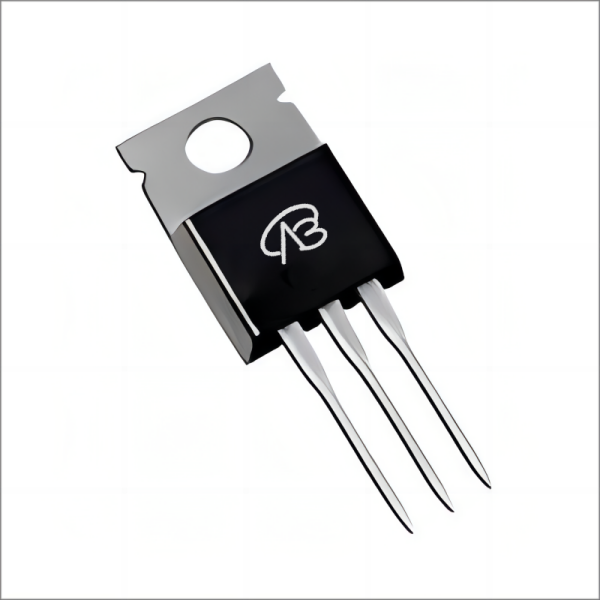
In power circuit design, selecting the right MOSFET involves balancing voltage, current, on-resistance, and cost. This article uses two established MOSFETs, IRF543 (N-channel) and CSD19501KCS (N-channel), as benchmarks. We will analyze their design cores and application scenarios, then evaluate the domestic alternative solutions VBM1680 and VBM1805. By clarifying parameter differences, we provide a clear selection map for your next power switching design.
Comparative Analysis: IRF543 (N-channel) vs. VBM1680
Analysis of the Original Model (IRF543) Core:
This is an 80V N-channel MOSFET from TI in a TO-220AB package. Its design focuses on robust, general-purpose power switching. Key advantages are a high voltage rating (80V) and a continuous drain current of 25A, with an on-resistance of 100mΩ at 10V gate drive.
Compatibility and Differences of the Domestic Alternative (VBM1680):
VBsemi's VBM1680 is a pin-to-pin compatible alternative in a TO-220 package. The main differences are: a slightly lower voltage rating (60V vs 80V), a comparable continuous current (20A vs 25A), but a significantly lower on-resistance of 72mΩ at 10V. This offers reduced conduction loss.
Key Application Areas:
Original Model IRF543: Suitable for general-purpose medium-power switching in 48-60V systems, such as motor drives, power supplies, and inverters where 80V rating is utilized.
Alternative Model VBM1680: Ideal for applications where the voltage requirement is below 60V and lower conduction loss is desired, such as in lower-voltage motor controls, DC-DC converters, or as an upgrade replacement in circuits not using the full 80V rating of the IRF543.
Comparative Analysis: CSD19501KCS (N-channel) vs. VBM1805
This comparison focuses on high-current, low-loss power switching.
Analysis of the Original Model (CSD19501KCS) Core:
This TI NexFET™ power MOSFET in a TO-220 package is designed for high efficiency. Its core advantages are an ultra-low on-resistance of 6.6mΩ at 10V, a very high continuous drain current of 100A, and an 80V rating. The low input capacitance (3.98nF) also supports fast switching.
Compatibility and Differences of the Domestic Alternative (VBM1805):
VBsemi's VBM1805 is a direct alternative in a TO-220 package and represents a significant "performance-enhanced" option. It matches the 80V rating but dramatically surpasses key specs: a continuous current of 160A and an even lower on-resistance of 4.8mΩ at 10V.
Key Application Areas:
Original Model CSD19501KCS: An excellent choice for high-efficiency, high-current applications like server/telecom power supplies, synchronous rectification in DC-DC converters, and high-power motor drives.
Alternative Model VBM1805: Suited for the most demanding upgrade scenarios requiring maximum current capability and minimal conduction loss. Ideal for next-generation high-density power supplies, advanced motor drives, and any application where thermal performance and efficiency are critical.
Conclusion:
This analysis reveals two clear paths:
1. For general-purpose 80V applications, the IRF543 offers proven performance. Its alternative, VBM1680, provides a cost-effective option with better RDS(on) for systems under 60V.
2. For high-current, high-efficiency designs, the CSD19501KCS sets a high standard. The domestic alternative VBM1805 delivers substantial performance gains in current and RDS(on), enabling higher power density and lower losses.
The core conclusion is precise requirement matching. Domestic alternatives like VBM1680 and VBM1805 provide not just backup options but also opportunities for performance enhancement and cost optimization, giving engineers greater flexibility.

Download PDF document
 Download now


