 中文
中文 English
MOSFET Selection for Medium to High Power Applications: IRF541, CSD17527Q5A vs. China Alternatives VBM1680, VBQA1308
Number of views:9999
 Back to previous page
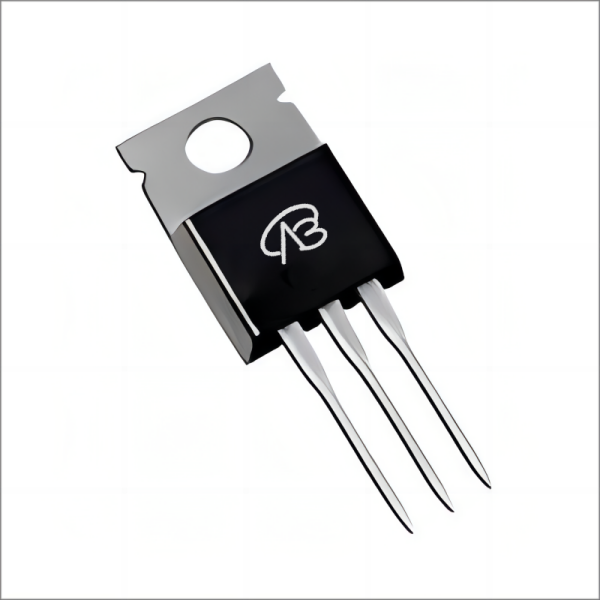
In the realm of power electronics design, balancing robust performance, thermal management, and cost-effectiveness is a constant engineering challenge. Selecting the right MOSFET is not merely about finding a functional substitute but making a precise trade-off among current handling, switching efficiency, package size, and supply chain stability. This article uses two established MOSFETs, the IRF541 (N-channel) and the CSD17527Q5A (N-channel), as benchmarks. We will delve into their design cores and typical applications, followed by a comparative evaluation of two domestic alternative solutions: VBM1680 and VBQA1308. By clarifying their parameter differences and performance orientations, we aim to provide a clear selection map to help you identify the most suitable power switching solution for your next design.
Comparative Analysis: IRF541 (N-channel) vs. VBM1680
Analysis of the Original Model (IRF541) Core:
This is an 80V N-channel MOSFET from TI in a classic TO-220AB package. Its design core is to provide reliable, medium-to-high power switching in applications where through-hole mounting and good thermal dissipation via a heatsink are priorities. Key advantages include a high drain-source voltage (Vdss) of 80V and a continuous drain current (Id) of 28A, making it suitable for various industrial and power supply applications. Its on-resistance (RDS(on)) is 77mΩ at a 10V gate drive.
Compatibility and Differences of the Domestic Alternative (VBM1680):
VBsemi's VBM1680 is offered in the same TO-220 package, providing direct pin-to-pin and form-factor compatibility. The main differences lie in the electrical parameters: VBM1680 has a slightly lower voltage rating (60V vs. 80V) but offers an improved on-resistance of 72mΩ@10V. Its continuous current rating is 20A.
Key Application Areas:
Original Model IRF541: Its 80V rating and 28A current capability make it well-suited for traditional linear regulators, motor drives, DC-DC converters, and relay replacements in industrial controls, automotive, and higher-voltage power supplies where through-hole assembly is used.
Alternative Model VBM1680: This is a strong alternative for applications where the voltage requirement is within 60V and the design prioritizes a lower RDS(on) for reduced conduction losses at a similar package footprint. It's suitable for upgrades in existing TO-220 based designs or new projects with moderate voltage needs.
Comparative Analysis: CSD17527Q5A (N-channel) vs. VBQA1308
This comparison shifts focus to high-performance, surface-mount power MOSFETs where low on-resistance and high current density in a small package are critical.
Analysis of the Original Model (CSD17527Q5A) Core:
This TI model is a 30V N-channel MOSFET in a compact VSONP-8 (5x6mm) package, part of their NexFET™ series. Its design pursuit is maximizing efficiency and power density in space-constrained applications. The core advantages are an extremely low on-resistance of 10.8mΩ and the ability to handle high continuous current, making it ideal for synchronous rectification and high-current switching in modern DC-DC converters.
Compatibility and Differences of the Domestic Alternative (VBQA1308):
VBsemi's VBQA1308 also uses a DFN8(5x6) package, ensuring direct footprint compatibility. It represents a "performance-enhanced" alternative. While both are rated for 30V, the VBQA1308 boasts significantly superior parameters: an ultra-low RDS(on) of 7mΩ at 10V (and 9mΩ at 4.5V) and a remarkably high continuous drain current rating of 80A.
Key Application Areas:
Original Model CSD17527Q5A: Its excellent combination of low RDS(on) and compact SON package makes it a top choice for high-efficiency, high-frequency switching applications like synchronous buck converters in computing, telecom, and point-of-load (POL) modules, as well as battery protection circuits.
Alternative Model VBQA1308: This model is tailored for the most demanding applications requiring minimal conduction loss and maximum current throughput. It is perfectly suited for next-generation DC-DC converters with very high output currents, high-power motor drives in compact spaces, or any design where pushing the efficiency envelope and thermal performance is paramount.
Conclusion
In summary, this analysis reveals two distinct selection pathways based on package and performance needs:
For through-hole, medium-power applications, the original IRF541 offers a proven 80V/28A solution. Its domestic alternative VBM1680 provides a compatible, lower-RDS(on) option for designs operating below 60V, enabling potential efficiency gains in legacy or cost-sensitive TO-220 applications.
For state-of-the-art, surface-mount power designs, the original CSD17527Q5A sets a high standard with its low 10.8mΩ RDS(on) in a small package. The domestic alternative VBQA1308 pushes the boundaries further, offering a substantial upgrade with its 7mΩ RDS(on) and massive 80A current rating, making it an exceptional choice for cutting-edge, high-power-density applications.
The core takeaway is that selection is about precise requirement matching. In today's landscape of supply chain diversification, domestic alternatives like VBM1680 and VBQA1308 not only provide reliable backup options but also offer compelling performance advantages in key parameters, giving engineers greater flexibility and resilience in their design trade-offs and cost optimization strategies. Understanding the specific design philosophy and parameter implications of each device is essential to unlocking its full potential in your circuit.

Download PDF document
 Download now


