 中文
中文 English
MOSFET Selection for High-Performance Power Switching: HUF76629D3S, CSD16570Q5BT vs. China Alternatives VBE1104N, VBQA1202
Number of views:9999
 Back to previous page
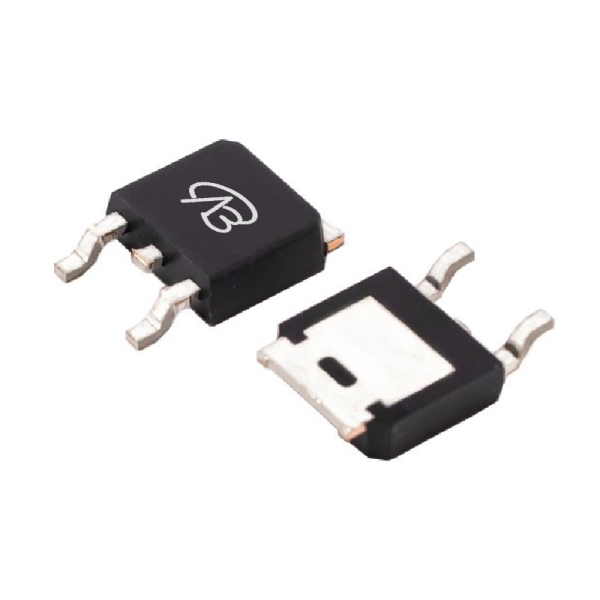
In modern power design, balancing high voltage handling, low conduction loss, and thermal performance is a critical challenge. Selecting the right MOSFET involves careful trade-offs among voltage rating, current capability, on-resistance, and package efficiency. This article takes two representative MOSFETs—HUF76629D3S (N-channel, 100V) and CSD16570Q5BT (N-channel, 25V)—as benchmarks, analyzes their design focus and application scenarios, and evaluates two domestic alternative solutions, VBE1104N and VBQA1202. By comparing parameter differences and performance orientations, we provide a clear selection guide to help you find the optimal power switching solution for your next design.
Comparative Analysis: HUF76629D3S (N-channel) vs. VBE1104N
Analysis of the Original Model (HUF76629D3S) Core:
This is a 100V N-channel MOSFET from Texas Instruments in a TO-252 (DPAK) package. Its design core is to provide robust high-voltage switching with good thermal performance in a compact through-hole footprint. Key advantages include a high drain-source voltage (Vdss) of 100V, continuous drain current (Id) of 20A, and an on-resistance (RDS(on)) of 54mΩ at 5V gate drive. It is suited for applications requiring reliable operation at elevated voltages.
Compatibility and Differences of the Domestic Alternative (VBE1104N):
VBsemi’s VBE1104N is a direct pin-to-pin compatible alternative in the same TO-252 package. It offers significant performance enhancements: the same 100V voltage rating, but a much higher continuous current of 40A and lower on-resistance—35mΩ at 4.5V and 30mΩ at 10V. This results in reduced conduction losses and improved efficiency in high-current scenarios.
Key Application Areas:
- Original Model HUF76629D3S: Ideal for medium-power, high-voltage applications such as:
- Switching power supplies (e.g., 48V telecom or industrial systems).
- Motor drives and inverters requiring 100V capability.
- Automotive auxiliary systems and DC-DC converters in high-voltage rails.
- Alternative Model VBE1104N: Better suited for upgraded designs demanding higher current handling (up to 40A) and lower conduction losses at 100V, such as:
- High-current power stages in server/communication PSUs.
- Enhanced motor drives or solenoid controls.
- Applications where thermal improvement and efficiency are critical.
Comparative Analysis: CSD16570Q5BT (N-channel) vs. VBQA1202
Analysis of the Original Model (CSD16570Q5BT) Core:
This TI MOSFET is a 25V N-channel device in a compact SON-8 (5x6mm) package. It focuses on ultra-low on-resistance and high-current performance in a small footprint. Its standout feature is an extremely low RDS(on) of 0.82mΩ, supporting high-efficiency power conversion. With a continuous drain current rating of 25V capability, it targets space-constrained, high-current applications.
Compatibility and Differences of the Domestic Alternative (VBQA1202):
VBsemi’s VBQA1202 is a direct alternative in a DFN8 (5x6mm) package. It offers comparable voltage rating (20V) but dramatically higher current capability—150A continuous—and very low on-resistance: 1.9mΩ at 2.5V and 1.7mΩ at 4.5V. This represents a substantial upgrade in current handling and conduction performance.
Key Application Areas:
- Original Model CSD16570Q5BT: Optimized for high-efficiency, compact designs such as:
- Synchronous rectification in low-voltage DC-DC converters (e.g., 12V input buck converters).
- Power management in notebooks, GPUs, or point-of-load (POL) modules.
- Battery protection circuits and load switches in portable devices.
- Alternative Model VBQA1202: Ideal for extreme high-current, low-voltage applications where minimal loss is paramount, including:
- High-power DC-DC converters (e.g., VRM, multiphase buck converters).
- Motor drives for drones, e-bikes, or high-current robotic systems.
- Server and data center power supplies requiring superior thermal and efficiency margins.
Conclusion:
This comparison highlights two distinct selection paths:
- For high-voltage (100V) applications, the original HUF76629D3S provides reliable performance in a TO-252 package, while its domestic alternative VBE1104N offers enhanced current capability (40A) and lower on-resistance, making it a superior choice for designs prioritizing efficiency and thermal performance.
- For low-voltage, high-current applications, the original CSD16570Q5BT excels with its ultra-low 0.82mΩ on-resistance in a small SON package, whereas the domestic alternative VBQA1202 delivers exceptional current handling (150A) and low RDS(on), enabling higher power density and reduced losses.
The core insight: Selection depends on precise requirement matching. Domestic alternatives not only provide reliable backup options but also offer performance enhancements in key parameters, giving engineers greater flexibility in design trade-offs, cost control, and supply chain resilience. Understanding each device’s design philosophy and parametric implications is essential to maximize its value in your circuit.

Download PDF document
 Download now


