 中文
中文 English
MOSFET Selection for Power Management: HUF76113T3ST, CSD19505KTTT vs. China Alternatives VBJ1322, VBL1803
Number of views:9999
 Back to previous page
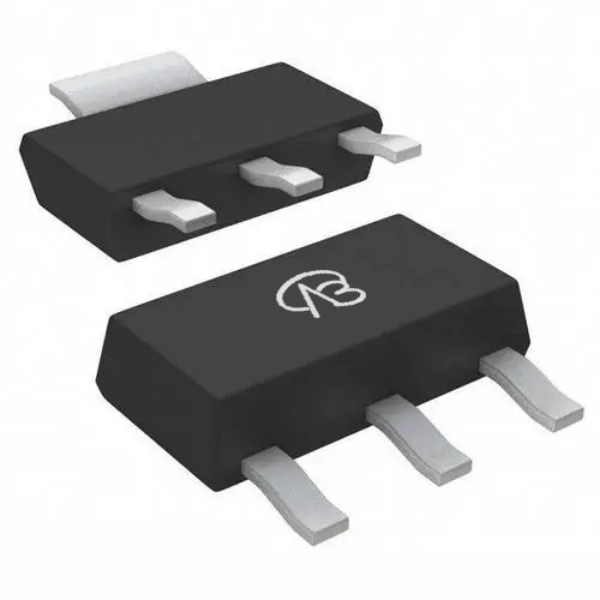
In modern power design, selecting the right MOSFET is crucial for balancing performance, size, and cost. This article takes two representative MOSFETs—HUF76113T3ST (low-power) and CSD19505KTTT (high-power)—as benchmarks, analyzes their design focus and application scenarios, and evaluates two domestic alternative solutions, VBJ1322 and VBL1803. By comparing parameter differences and performance orientations, we provide a clear selection guide to help you find the most suitable power switching solution.
Comparative Analysis: HUF76113T3ST (N-channel) vs. VBJ1322
Analysis of the Original Model (HUF76113T3ST) Core:
This is a 30V N-channel MOSFET from TI in a compact package. It is designed for low-power applications requiring reliable switching and moderate current handling. Key features include a continuous drain current of 4.7A, an on-resistance of 31mΩ at 10V gate drive, and a power dissipation of 1.1W. Its strength lies in providing a stable and cost-effective solution for space-constrained, low-to-medium current circuits.
Compatibility and Differences of the Domestic Alternative (VBJ1322):
VBsemi’s VBJ1322 is offered in an SOT223 package and serves as a functional alternative. The main differences are in electrical parameters: VBJ1322 has a similar voltage rating (30V) but offers a higher continuous current of 7A and a significantly lower on-resistance of 19mΩ at 10V. This results in better conduction performance and lower power loss compared to the original model.
Key Application Areas:
- Original Model HUF76113T3ST: Ideal for low-power switching applications such as:
- Power management in portable electronics and IoT devices.
- Load switching and power distribution in 12V/24V control systems.
- Low-side switches in DC-DC converters for consumer electronics.
- Alternative Model VBJ1322: Better suited for applications requiring higher current capability (up to 7A) and lower conduction loss within the same voltage range, such as upgraded power switches or more efficient low-power motor drives.
Comparative Analysis: CSD19505KTTT (N-channel) vs. VBL1803
This comparison focuses on high-power applications where low on-resistance and high current handling are critical.
Analysis of the Original Model (CSD19505KTTT) Core:
This is an 80V N-channel MOSFET from TI in a TO-263 (D2PAK) package. It is designed for high-current, high-efficiency applications. Its core advantages include an extremely low on-resistance of 3.1mΩ at 10V, a very high continuous drain current of 212A, and a power dissipation of 300W. This makes it suitable for demanding power conversion and motor drive circuits.
Compatibility and Differences of the Domestic Alternative (VBL1803):
VBsemi’s VBL1803 is also in a TO263 package and is a direct alternative. It matches the voltage rating (80V) but offers a slightly higher continuous current of 215A and a lower on-resistance of 5mΩ at 10V (and 10mΩ at 4.5V). This provides comparable or slightly improved performance in conduction loss and current capacity.
Key Application Areas:
- Original Model CSD19505KTTT: Excellent for high-power applications such as:
- Synchronous rectification in high-current DC-DC converters (e.g., server, telecom power supplies).
- Motor drives for industrial equipment, electric vehicles, or high-power tools.
- High-efficiency power stages in solar inverters or UPS systems.
- Alternative Model VBL1803: Suitable for similar high-power scenarios where a domestic alternative is preferred, offering robust performance with 215A current capability and low on-resistance, ideal for next-generation high-density power designs.
Conclusion:
This analysis highlights two distinct selection paths:
- For low-to-medium power applications, the original HUF76113T3ST provides a reliable, cost-effective solution, while its domestic alternative VBJ1322 offers enhanced current handling and lower on-resistance for upgraded designs.
- For high-power applications, the original CSD19505KTTT sets a high standard with ultra-low on-resistance and high current capability. The domestic alternative VBL1803 matches this performance closely, providing a viable alternative for supply chain diversification.
The core takeaway is that selection depends on precise requirement matching. Domestic alternatives like VBJ1322 and VBL1803 not only offer backup options but also deliver competitive or improved parameters, giving engineers greater flexibility in design trade-offs and cost optimization. Understanding each device’s design philosophy and parameters is key to maximizing circuit performance.

Download PDF document
 Download now


