 中文
中文 English
Power Density and Efficiency in Modern Designs: CSD88539ND, CSD16323Q3 vs. Domestic Alternatives VBA3615, VBQF1303
Number of views:9999
 Back to previous page
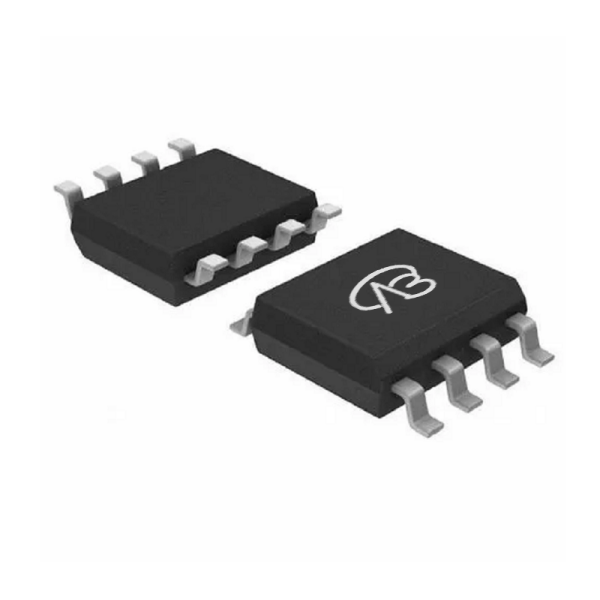
In today's drive for higher power density and efficiency, selecting the optimal MOSFET for a design is a critical engineering challenge. It involves careful balancing of performance, size, cost, and supply chain security. This article uses two representative MOSFETs, the dual N-channel CSD88539ND and the high-current single N-channel CSD16323Q3, as benchmarks. We will deeply analyze their design cores and application scenarios, and provide a comparative evaluation of their domestic alternative solutions, VBA3615 and VBQF1303. By clarifying their parameter differences and performance orientations, we aim to provide a clear selection guide to help you find the most suitable power switching solution in the complex component landscape.
Comparative Analysis: CSD88539ND (Dual N-channel) vs. VBA3615
Analysis of the Original Model (CSD88539ND) Core:
This is a 60V dual N-channel MOSFET from Texas Instruments, in a standard SOIC-8 package. Its design core is to provide a compact, dual-switch solution for medium-power applications. Key advantages include: a drain current of 15A per channel, and an on-resistance (RDS(on)) of 27mΩ at a 6V gate drive. It integrates two MOSFETs in one package, saving board space in multi-switch circuits.
Compatibility and Differences of the Domestic Alternative (VBA3615):
VBsemi's VBA3615 is a direct pin-to-pin compatible alternative in an SOP8 package, also featuring a dual N-channel configuration. The key differences are in the electrical parameters: VBA3615 offers significantly lower on-resistance at common drive voltages—15mΩ @4.5V and 12mΩ @10V—compared to the original. Its continuous drain current rating is 10A per channel. It also has a slightly higher gate-source voltage (Vgs) rating of ±20V.
Key Application Areas:
Original Model CSD88539ND: Ideal for space-constrained 48V-60V systems requiring dual switches with good current handling, such as:
Synchronous buck or boost converter stages.
Motor drive H-bridge circuits for compact form factors.
Redundant power path management.
Alternative Model VBA3615: Better suited for applications where lower conduction loss is prioritized over peak current per channel, or where a higher Vgs rating is beneficial. Its superior RDS(on) at lower drive voltages makes it efficient for circuits operating with 5V or 10V gate drives.
Comparative Analysis: CSD16323Q3 (Single N-channel) vs. VBQF1303
This comparison shifts focus to ultra-low resistance and very high current capability in a miniature footprint.
Analysis of the Original Model (CSD16323Q3) Core:
This 25V N-channel MOSFET from TI uses a compact 3x3mm VSON-8 package. Its design pursues extreme current density and efficiency. Core advantages are:
Exceptional Current Handling: A continuous drain current rating of 105A.
Very Low On-Resistance: An RDS(on) as low as 7.2mΩ at a 3V gate drive, minimizing conduction losses.
Power-Dense Package: The small SON package allows for very high power density in applications like point-of-load (POL) converters.
Compatibility and Differences of the Domestic Alternative (VBQF1303):
VBsemi's VBQF1303, in a DFN8(3x3) package, is a form-factor compatible alternative that offers a compelling performance profile. Key parameter comparisons:
It has a higher voltage rating (30V vs. 25V).
It features even lower on-resistance: 5mΩ @4.5V and 3.9mΩ @10V.
Its continuous drain current rating is 60A.
Key Application Areas:
Original Model CSD16323Q3: Its combination of ultra-low RDS(on) and very high current in a tiny package makes it a top choice for:
High-current, low-voltage POL converters (e.g., for CPUs, ASICs, FPGAs).
Secondary-side synchronous rectification in high-frequency DC-DC converters.
Battery protection circuits in high-discharge rate applications.
Alternative Model VBQF1303: This model is an excellent choice for applications requiring a balance of good voltage margin, very low resistance, and high current. It is well-suited for:
Upgraded designs where lower RDS(on) at standard drive voltages (4.5V/10V) can improve efficiency.
Motor drives and load switches in 12V-24V systems where its 30V rating and 60A capability provide robust performance.
Conclusion:
This analysis reveals two distinct selection pathways based on design priorities:
For dual N-channel applications in standard packages, the original CSD88539ND offers a proven 15A-per-channel solution for 60V systems. Its domestic alternative VBA3615 provides a compelling advantage in significantly lower on-resistance at common gate drives, making it a strong candidate for efficiency-focused designs where the 10A current rating is sufficient.
For single N-channel applications demanding maximum current density, the original CSD16323Q3 sets a high bar with its 105A rating and very low RDS(on) in a 3x3mm package. The domestic alternative VBQF1303 responds with a higher voltage rating and even lower on-resistance figures, presenting itself as a powerful and efficient option for a wide range of high-current, low-voltage switching tasks.
The core takeaway is that selection is about precise requirement matching. In the context of supply chain diversification, domestic alternatives like VBA3615 and VBQF1303 not only provide reliable backup options but often introduce enhanced parameters, giving engineers greater flexibility in design trade-offs and cost optimization. Understanding the specific performance profile of each device is key to unlocking its full potential in your circuit.

Download PDF document
 Download now


