 中文
中文 English
MOSFET Selection for High-Power and Compact Solutions: CSD19535KTT, CSD19538Q3AT vs. China Alternatives VBL1103, VBQF1104N
Number of views:9999
 Back to previous page
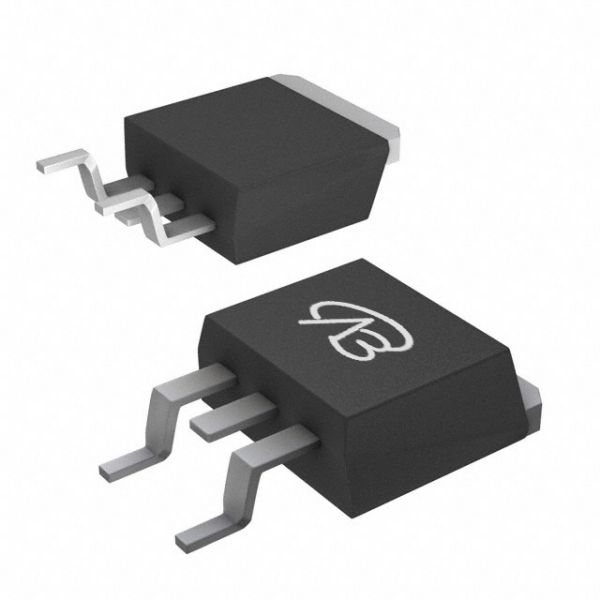
In modern power design, balancing high-current handling, thermal performance, and board space is a critical challenge. Selecting the right MOSFET involves careful trade-offs among current capability, on-resistance, package size, and supply chain flexibility. This article takes two representative TI MOSFETs—CSD19535KTT (high-power D2PAK) and CSD19538Q3AT (compact VSONP-8)—as benchmarks, analyzes their design focus and application scenarios, and evaluates two domestic alternatives, VBL1103 and VBQF1104N. By comparing parameter differences and performance orientations, we provide a clear selection guide to help you find the optimal power switching solution.
Comparative Analysis: CSD19535KTT (High-Power N-channel) vs. VBL1103
Analysis of the Original Model (CSD19535KTT) Core:
This is a 100V N-channel MOSFET from Texas Instruments in a TO-263-3 (D2PAK) package. Its design core is to deliver extremely high current with low conduction loss in a robust power package. Key advantages include: a very low on-resistance of 3.4mΩ at 10V gate drive, and a high continuous drain current rating of 200A (at specified conditions). This makes it suitable for applications demanding high power throughput and efficient thermal dissipation.
Compatibility and Differences of the Domestic Alternative (VBL1103):
VBsemi’s VBL1103 is offered in the same TO-263 package, providing a pin-to-pin compatible alternative. Its key parameters are closely matched: same 100V voltage rating, an on-resistance of 3mΩ at 10V (slightly lower), and a continuous current rating of 180A. This makes VBL1103 a strong performance-equivalent substitute for high-current applications.
Key Application Areas:
Original Model CSD19535KTT: Ideal for high-power switching where current capability and low RDS(on) are critical. Typical applications include:
High-current DC-DC converters and power stages in server, telecom, or industrial power supplies.
Motor drives and inverters for industrial equipment or electric vehicles.
Battery protection and management systems in high-power energy storage.
Alternative Model VBL1103: Suited for the same high-power domains, offering a reliable domestic alternative with comparable efficiency and thermal performance, suitable for designs requiring supply chain diversification.
Comparative Analysis: CSD19538Q3AT (Compact N-channel) vs. VBQF1104N
This comparison shifts focus to space-constrained applications where a small footprint and good switching performance are essential.
Analysis of the Original Model (CSD19538Q3AT) Core:
This TI MOSFET uses a compact VSONP-8 (3.3x3.3mm) package. Its design pursues a balance of moderate current handling, low on-resistance, and a minimal PCB footprint. Key features: 100V voltage rating, 15A continuous current, and an on-resistance of 59mΩ at 10V gate drive (measured at 5A). This combination suits power-dense designs where board space is premium.
Compatibility and Differences of the Domestic Alternative (VBQF1104N):
VBsemi’s VBQF1104N comes in a DFN8(3x3) package, similar in footprint. It offers enhanced parameters: same 100V rating, a lower on-resistance of 36mΩ at 10V, and a higher continuous current rating of 21A. This represents a performance upgrade in both conduction loss and current capacity within a similarly compact form factor.
Key Application Areas:
Original Model CSD19538Q3AT: Fits applications requiring a small-size MOSFET with reliable 100V capability and moderate current. Examples include:
Compact DC-DC converters (e.g., point-of-load regulators) in networking, computing, or consumer electronics.
Space-constrained power switches, load switches, or protection circuits.
Motor drive modules for small drones, robotics, or portable tools.
Alternative Model VBQF1104N: Offers a superior performance alternative for similar compact applications, enabling higher efficiency or higher current designs. Suitable for upgraded power modules, more efficient motor drives, or any design benefiting from lower RDS(on) in a small package.
Conclusion:
This analysis reveals two distinct selection paths based on power and size requirements:
For high-power applications where current capability and thermal performance are paramount, the original CSD19535KTT, with its 200A rating and 3.4mΩ RDS(on), is a robust choice for server power, motor drives, and high-current converters. Its domestic alternative VBL1103 provides a closely matched, pin-compatible solution with 180A and 3mΩ, offering a reliable substitute for supply chain resilience.
For compact, power-dense applications, the original CSD19538Q3AT balances 100V operation, 15A current, and a tiny 3.3mm package, making it ideal for space-constrained POL converters and compact motor drives. The domestic alternative VBQF1104N delivers a performance-enhanced option with lower RDS(on) (36mΩ) and higher current (21A) in a similar footprint, enabling more efficient or higher-power miniaturized designs.
The core insight: selection depends on precise requirement matching. Domestic alternatives like VBL1103 and VBQF1104N not only provide viable backups but also offer parameter advantages in some cases, giving engineers greater flexibility in design trade-offs and cost control. Understanding each device's design focus and parameter implications is key to maximizing circuit performance and reliability.

Download PDF document
 Download now


