 中文
中文 English
MOSFET Selection for High-Power and High-Density Applications: CSD19534KCS, CSD18563Q5AT vs. China Alternatives VBM1101N, VBQA1606
Number of views:9999
 Back to previous page
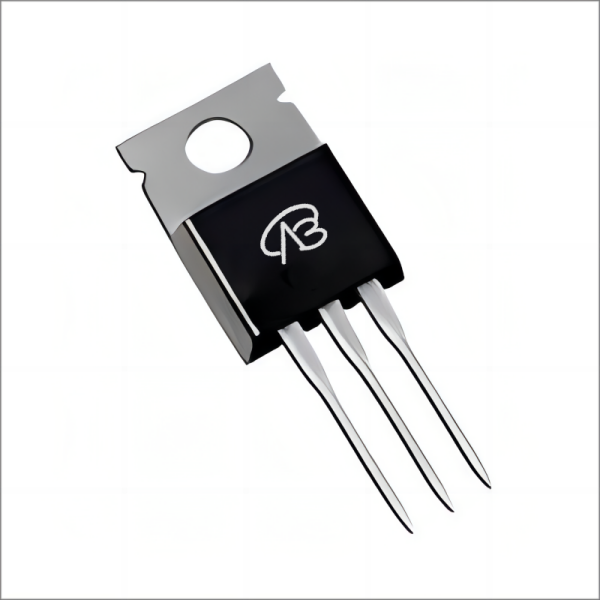
In the design of high-power and high-density power systems, selecting the appropriate MOSFET is a critical decision that balances performance, thermal management, and board space. This article takes two high-performance N-channel MOSFETs from Texas Instruments—the robust CSD19534KCS (TO-220) and the compact CSD18563Q5AT (SON-8)—as benchmarks. We will delve into their design cores and application strengths, followed by a comparative evaluation of their domestic pin-to-pin alternatives, VBM1101N and VBQA1606. By clarifying their parameter differences and performance orientations, we aim to provide a clear selection guide for your next high-performance power design.
Comparative Analysis: CSD19534KCS (TO-220, 100V) vs. VBM1101N
Analysis of the Original Model (CSD19534KCS) Core:
This is a 100V N-channel MOSFET from TI's NexFET™ series in a standard TO-220 package. Its design core is to deliver high current handling and low conduction loss in a robust, thermally efficient through-hole package. Key advantages include a very low on-resistance (RDS(on)) of 16.5mΩ (typical) at 10V gate drive and an impressive continuous drain current (Id) rating of 100A. This makes it an excellent choice for applications requiring high power throughput and where package size is less constrained.
Compatibility and Differences of the Domestic Alternative (VBM1101N):
VBsemi's VBM1101N is a direct pin-to-pin compatible alternative in the TO-220 package. It matches the original's 100V voltage rating. The key electrical parameters show a nuanced difference: while its RDS(on) at 10V (9mΩ) is significantly lower, indicating potentially lower conduction loss, its rated continuous current is also a robust 100A. This makes VBM1101N a highly competitive alternative, offering comparable or superior conduction performance.
Key Application Areas:
Original Model CSD19534KCS: Ideal for high-current, high-voltage applications where the TO-220 package's superior thermal mass and ease of heatsinking are major advantages. Typical applications include:
High-power DC-DC converters and inverters (e.g., in solar, industrial power supplies).
Motor drives and controllers for industrial equipment.
Primary-side switches in high-power SMPS.
Alternative Model VBM1101N: Perfectly suited as a drop-in replacement for the CSD19534KCS in the above applications, especially where its lower 10V RDS(on) can be leveraged for higher efficiency. It provides a reliable domestic source for high-power through-hole MOSFET solutions.
Comparative Analysis: CSD18563Q5AT (SON-8, 60V) vs. VBQA1606
The design pursuit of this compact N-channel MOSFET is achieving maximum power density and efficiency in a minimal footprint.
Analysis of the Original Model (CSD18563Q5AT) Core:
This TI NexFET™ device in a 5mm x 6mm SON-8 package is engineered for high-performance in space-constrained applications. Its core advantages are:
Exceptional Power Density: Combines a 60V rating with a very high continuous current of 100A.
Ultra-Low On-Resistance: Features an exceptionally low RDS(on) of 6.8mΩ (typical) at 10V gate drive, minimizing conduction losses.
Advanced Thermal Package: The SON-8 (5x6) package offers a good thermal pad for effective heat dissipation from a small area.
Compatibility and Differences of the Domestic Alternative (VBQA1606):
VBsemi's VBQA1606 is a pin-to-pin compatible alternative in a DFN8(5x6) package, equivalent to the SON-8. It matches the 60V voltage rating. While its rated continuous current (80A) is slightly lower than the original's 100A, it boasts an impressively low RDS(on) of 6mΩ at 10V. This makes it a compelling "performance-focused" alternative where minimizing conduction loss in a compact space is paramount, and the 80A current rating is sufficient.
Key Application Areas:
Original Model CSD18563Q5AT: The benchmark for high-current, high-density applications. Its combination of ultra-low RDS(on) and high current in a small package makes it ideal for:
Synchronous rectification and high-current switching in high-frequency, high-efficiency DC-DC converters (e.g., VRMs, point-of-load converters for servers/telecom).
Motor drives in compact robotics and automotive systems.
High-density power modules.
Alternative Model VBQA1606: An excellent alternative for applications demanding ultra-low conduction loss in a compact footprint, where the 80A current capability meets the design requirements. It is well-suited for upgrading efficiency in existing designs or for new high-density power stages.
Conclusion:
This analysis reveals two distinct selection strategies based on package and performance priorities:
For high-power applications utilizing the TO-220 package, the original CSD19534KCS sets a strong standard with its 100A, 100V, and low RDS(on) performance. Its domestic alternative VBM1101N stands out as a highly capable, pin-to-pin compatible replacement, offering a significantly lower 10V RDS(on) (9mΩ vs. ~16.5mΩ) which can translate directly into efficiency gains, making it a powerful choice for high-current designs.
For ultra-high-density applications requiring a SON/DFN package, the original CSD18563Q5AT is a top-tier component with its 100A, 60V, and 6.8mΩ RDS(on) specification. The domestic alternative VBQA1606 provides a compelling option, trading a modestly lower current rating (80A) for an even lower 10V RDS(on) of 6mΩ. This makes it ideal for designs where minimizing conduction loss and thermal stress in a tiny footprint is the primary goal.
The core takeaway is that selection hinges on precise requirement matching. In the landscape of supply chain diversification, domestic alternatives like VBM1101N and VBQA1606 not only provide reliable backup options but also offer specific parametric advantages—such as lower RDS(on)—giving engineers greater flexibility in optimizing for efficiency, cost, and supply resilience in their power designs.

Download PDF document
 Download now


