 中文
中文 English
MOSFET Selection for High-Power and High-Density Applications: CSD19532KTTT, CSD16415Q5T vs. China Alternatives VBL1105, VBQA1202
Number of views:9999
 Back to previous page
In modern power design, achieving both high current handling and high power density is a critical challenge. Selecting the right MOSFET is not just about finding a pin-compatible replacement, but a careful balance of current capability, conduction loss, thermal performance, and footprint. This article takes two high-performance MOSFETs from TI, CSD19532KTTT (High-Current D2PAK) and CSD16415Q5T (Ultra-Low-Resistance SON), as benchmarks. We will delve into their design cores and application targets, and provide a comparative evaluation of two domestic alternative solutions: VBL1105 and VBQA1202. By clarifying their parameter differences and performance orientations, we aim to offer a clear selection guide for your next high-performance power design.
Comparative Analysis: CSD19532KTTT (N-channel, D2PAK) vs. VBL1105
Analysis of the Original Model (CSD19532KTTT) Core:
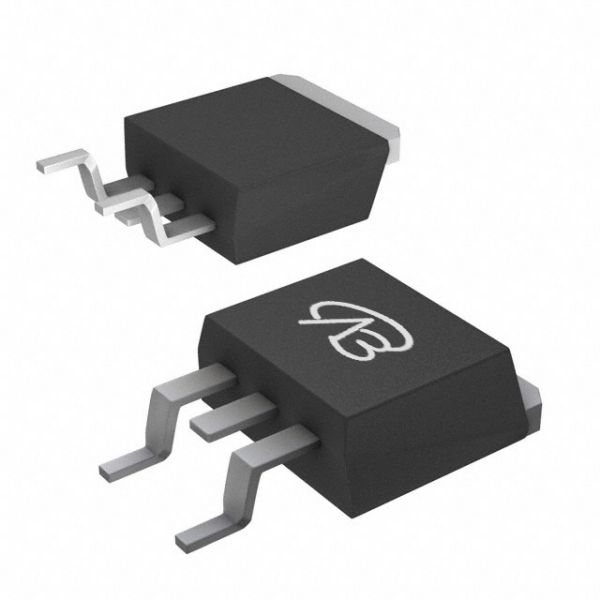
This is a 100V N-channel MOSFET from Texas Instruments in a TO-263-3 (D2PAK) package. Its design core is to deliver extremely high current capability with robust thermal performance in a standard package. Key advantages include a very high continuous drain current rating of 200A and a low on-resistance of 5.6mΩ at 10V gate drive. This combination makes it a powerhouse for managing severe inrush currents and sustaining high load currents with minimal conduction loss.
Compatibility and Differences of the Domestic Alternative (VBL1105):
VBsemi's VBL1105 is also offered in a TO-263 package, providing direct footprint compatibility. The key differences are in the electrical parameters: While both are rated for 100V, the VBL1105 features a significantly lower on-resistance of 4mΩ (at 10V), which is about 30% better than the original. However, its continuous current rating of 140A is lower than the TI part's 200A.
Key Application Areas:
Original Model CSD19532KTTT: Its ultra-high 200A current rating makes it ideal for the most demanding high-current paths. Typical applications include:
High-Current DC-DC Converters: Serving as the main switch in high-power server VRMs, telecom rectifiers, or industrial power supplies.
Motor Drives and Inverters: For driving large brushed/BLDC motors in industrial tools, robotics, or electric vehicles.
Battery Protection/Management Systems (BMS): As a discharge switch in high-capacity battery packs requiring very low voltage drop.
Alternative Model VBL1105: This model is an excellent choice for applications where lower conduction loss (4mΩ RDS(on)) is the priority over the absolute maximum current rating. It is well-suited for upgrading existing 100V designs based on similar packages to achieve higher efficiency, provided the operational current stays within its 140A capability.
Comparative Analysis: CSD16415Q5T (N-channel, SON) vs. VBQA1202
This comparison shifts focus to power density, targeting applications where space is at a premium but performance cannot be compromised.
Analysis of the Original Model (CSD16415Q5T) Core:
This TI MOSFET in a compact VSON-CLIP-8 (5x6mm) package represents the pinnacle of achieving low resistance in a small footprint. Its core advantages are:
Exceptional On-Resistance: An ultra-low 0.99mΩ (at 10V) minimizes conduction loss.
High Current Density: Capable of handling up to 100A continuous current from a tiny 5x6mm package.
Optimized for Low Voltage: With a 25V rating and low threshold voltage, it is perfect for high-current, low-voltage point-of-load (POL) conversion.
Compatibility and Differences of the Domestic Alternative (VBQA1202):
VBsemi's VBQA1202 comes in a DFN8(5x6) package, offering direct pin-to-pin compatibility. It presents a compelling "performance-enhanced" alternative:
It offers a higher continuous current rating of 150A compared to the original's 100A.
Its on-resistance is specified at 1.7mΩ (at 4.5V), indicating excellent performance at lower gate drive voltages common in modern logic-level applications.
It has a slightly lower voltage rating of 20V, which is sufficient for many 12V-based systems.
Key Application Areas:
Original Model CSD16415Q5T: Its unbeatable combination of sub-1mΩ RDS(on) and 100A rating in a miniaturized package makes it ideal for:
High-Density Point-of-Load (POL) Converters: For CPUs, GPUs, ASICs, and FPGAs in servers, networking, and computing equipment.
Secondary Synchronous Rectification: In high-frequency DC-DC converters for telecom and computing.
Alternative Model VBQA1202: This model is suitable for applications demanding even higher current capability (150A) from the same compact footprint. It is an excellent upgrade path for designs where maximizing current per square millimeter is critical, especially in systems operating with logic-level gate drive (e.g., 4.5V).
Conclusion
This analysis reveals two distinct selection strategies based on application priority:
For high-current paths in standard packages, the original CSD19532KTTT, with its massive 200A rating, remains the go-to choice for the most extreme current demands. Its domestic alternative VBL1105 provides a compelling option with superior 4mΩ on-resistance for applications prioritizing minimal conduction loss over the absolute maximum current, within a 140A range.
For space-constrained, high-current-density designs, the original CSD16415Q5T sets a high bar with its 0.99mΩ and 100A in a 5x6mm package. The domestic alternative VBQA1202 pushes the boundaries further by offering a 150A current rating in the same footprint, making it a powerful upgrade for next-generation high-density power designs, particularly those using logic-level drive.
The core takeaway is that selection is driven by precise application requirements. In the landscape of supply chain diversification, domestic alternatives like VBL1105 and VBQA1202 not only provide reliable backup options but also deliver competitive or even superior performance in key parameters, offering engineers greater flexibility and resilience in their design and cost optimization efforts.

Download PDF document
 Download now


