 中文
中文 English
MOSFET Selection for High-Power and Compact Applications: CSD19505KTT, CSD17313Q2 vs. China Alternatives VBL1803, VBQG7322
Number of views:9999
 Back to previous page
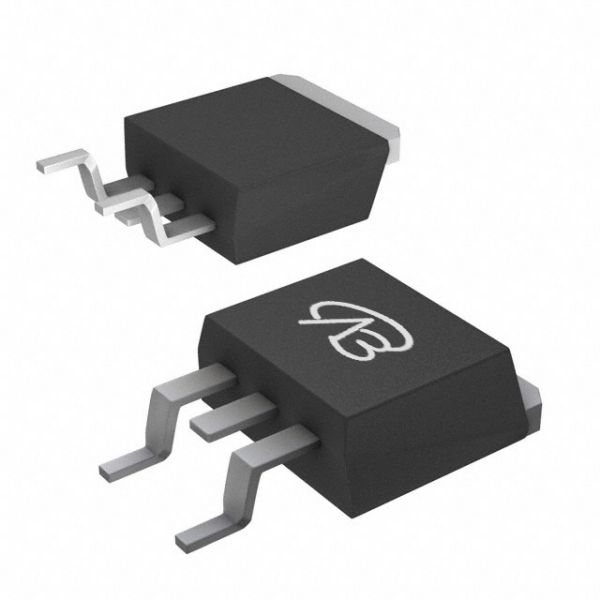
In modern power design, balancing high-current handling, thermal performance, and board space is a critical challenge. This article takes two representative MOSFETs from Texas Instruments—the high-power CSD19505KTT and the compact CSD17313Q2—as benchmarks. We will analyze their design focus and application scenarios, then evaluate two domestic alternative solutions: VBL1803 and VBQG7322. By comparing their parameter differences and performance orientations, we provide a clear selection guide to help you find the optimal power switching solution.
Comparative Analysis: CSD19505KTT (N-channel) vs. VBL1803
Analysis of the Original Model (CSD19505KTT) Core:
This is an 80V N-channel MOSFET from TI in a TO-263-3 (D2PAK) package. Its design core is to deliver extremely high current capability with low conduction loss in a robust, thermally efficient package. Key advantages include a very low on-resistance of 3.1mΩ (typical at 6V Vgs) and an impressive continuous drain current rating of 212A. This makes it a powerhouse for demanding high-current paths.
Compatibility and Differences of the Domestic Alternative (VBL1803):
VBsemi's VBL1803 is offered in the same TO-263 package, providing direct pin-to-pin compatibility. The key differences are in the electrical parameters: VBL1803 has a comparable 80V voltage rating but a slightly higher on-resistance (5mΩ @10V vs. the original's ~3.8mΩ @6V). Its continuous current rating is also very high at 215A, matching the original's capability.
Key Application Areas:
Original Model CSD19505KTT: Ideal for high-current, high-efficiency applications where minimal conduction loss is paramount.
High-Current DC-DC Converters: Synchronous rectification or high-side switching in server, telecom, or industrial power supplies.
Motor Drives & Solenoid Control: For driving large brushed/brushless DC motors or high-power actuators.
Battery Protection/Management Systems (BMS): As a main discharge switch in high-power lithium battery packs.
Alternative Model VBL1803: A strong domestic alternative suitable for the same high-power applications, offering a viable balance of performance, cost, and supply chain resilience. Its slightly higher RDS(on) may require minor thermal consideration in the most efficiency-critical designs.
Comparative Analysis: CSD17313Q2 (N-channel) vs. VBQG7322
This comparison shifts focus to space-constrained applications. The original model's design pursues a balance of adequate current handling, low on-resistance, and a minimal footprint.
Analysis of the Original Model (CSD17313Q2) Core:
This is a 30V N-channel MOSFET in a tiny WSON-6 (2x2) package. Its core advantages are:
Space-Saving Form Factor: The 2x2mm package is crucial for modern portable and miniaturized electronics.
Good Performance for Size: It offers a 5A continuous current rating with an on-resistance of 30mΩ (at 8V Vgs, 4A), providing efficient power switching in a tiny space.
Compatibility and Differences of the Domestic Alternative (VBQG7322):
VBsemi's VBQG7322 also uses a compact DFN6(2x2) package, ensuring pin-to-pin compatibility. Its parameters show a competitive profile: a similar 30V voltage rating, a slightly higher continuous current of 6A, and a lower on-resistance (23mΩ @10V vs. the original's 30mΩ @8V).
Key Application Areas:
Original Model CSD17313Q2: Perfect for compact circuits where board real estate is at a premium.
Load Switches in Portable Devices: Power domain isolation in smartphones, tablets, and IoT sensors.
Point-of-Load (POL) Converters: As a switching element in miniaturized DC-DC modules.
Battery-Powered Device Protection: Used in the charge/discharge paths of single-cell Li-ion applications.
Alternative Model VBQG7322: Serves as a performance-enhanced alternative for the same compact applications. Its lower RDS(on) and slightly higher current rating can offer better efficiency and thermal performance, making it suitable for upgraded designs or where margin is desired.
Conclusion
This analysis reveals two distinct selection paths based on application priority:
For high-power, high-current applications where thermal performance and ultra-low loss are critical, the original CSD19505KTT with its 3.1mΩ RDS(on) and 212A rating sets a high benchmark. Its domestic alternative VBL1803 provides a robust, pin-compatible option with very similar current capability (215A), making it a strong candidate for supply chain diversification without significant performance compromise.
For ultra-compact applications where every square millimeter counts, the original CSD17313Q2 in its 2x2mm package offers a proven solution. The domestic alternative VBQG7322 emerges as a compelling "performance-optimized" choice, providing lower on-resistance and higher current in the same footprint, which can lead to efficiency gains and design headroom.
The core takeaway is that selection hinges on precise requirement matching. Domestic alternatives like VBL1803 and VBQG7322 not only offer viable backups but also present opportunities for parameter enhancement, giving engineers greater flexibility in balancing performance, size, cost, and supply chain strategy.

Download PDF document
 Download now


