 中文
中文 English
MOSFET Selection for High-Power Applications: CSD18542KCS, CSD18510KTTT vs. China Alternatives VBM1638, VBL1402
Number of views:9999
 Back to previous page
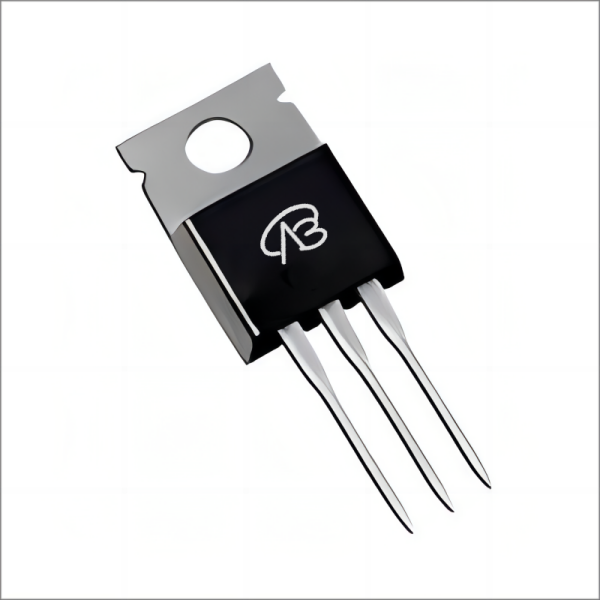
In high-power circuit design, selecting a MOSFET that delivers robust performance, high efficiency, and reliable thermal management is a critical task for engineers. This involves careful trade-offs among current handling, conduction losses, package thermal capability, and supply chain stability. This article takes two high-performance N-channel MOSFETs from Texas Instruments—CSD18542KCS (TO-220 package) and CSD18510KTTT (D2PAK package)—as benchmarks. We will delve into their design cores and application scenarios, and provide a comparative evaluation of two domestic alternative solutions: VBM1638 and VBL1402. By clarifying parameter differences and performance orientations, we aim to offer a clear selection guide for your next high-power design.
Comparative Analysis: CSD18542KCS (TO-220, 60V) vs. VBM1638
Analysis of the Original Model (CSD18542KCS) Core:
This is a 60V N-channel MOSFET from TI in a standard TO-220-3 package. Its design core is to balance high current capability with manageable conduction loss in a classic, widely compatible package. Key advantages include a high continuous drain current rating of 200A and an on-resistance (RDS(on)) of 4.4mΩ measured at 10V, 100A. This makes it suitable for applications requiring high current switching with a 60V voltage rating.
Compatibility and Differences of the Domestic Alternative (VBM1638):
VBsemi's VBM1638 is a pin-to-pin compatible alternative in the TO-220 package. The main differences are in electrical parameters: VBM1638 offers a lower on-resistance of 24mΩ @ 10V (compared to 4.4mΩ @ 10V for the original, though note the original's spec is at 100A) and a continuous current rating of 50A. It shares the same 60V voltage rating. While its listed RDS(on) is higher, its specified test condition (10V gate) is standard for comparison. For applications where the original's extreme 200A rating is not fully utilized, VBM1638 provides a cost-effective alternative with sufficient current handling for many scenarios.
Key Application Areas:
Original Model CSD18542KCS: Ideal for high-current switching in 48V-60V systems where the TO-220 package's thermal mass and compatibility are assets. Typical applications include:
High-current DC-DC converters and power supplies.
Motor drives for industrial equipment or electric vehicles.
Solid-state relays and high-power load switches.
Alternative Model VBM1638: Suitable for applications within its 50A current rating that require a 60V MOSFET in a TO-220 package, offering a reliable domestic alternative for power stages, motor drives, or switching circuits where the ultra-high 200A capability of the original is not necessary.
Comparative Analysis: CSD18510KTTT (D2PAK, 40V) vs. VBL1402
This comparison focuses on ultra-low on-resistance MOSFETs in a D2PAK (TO-263) package, where the design pursuit is minimizing conduction losses in high-current paths.
Analysis of the Original Model (CSD18510KTTT) Core:
This TI MOSFET features an exceptionally low on-resistance of 2.6mΩ @ 4.5V gate drive and an impressive continuous drain current rating of 274A, housed in a D2PAK-3 package. Its core advantage is enabling extremely high efficiency in high-current applications by minimizing I²R losses.
Compatibility and Differences of the Domestic Alternative (VBL1402):
VBsemi's VBL1402 is a direct pin-to-pin compatible alternative in the D2PAK package. It presents a compelling "performance-enhanced" option in key parameters: it matches the 40V voltage rating, offers a very competitive on-resistance of 2.5mΩ @ 4.5V, and provides a high continuous current rating of 150A. While its current rating is lower than the original's 274A, its RDS(on) is comparable, making it suitable for many high-current applications requiring low loss.
Key Application Areas:
Original Model CSD18510KTTT: Its ultra-low RDS(on) and very high current rating make it a top-tier choice for the most demanding high-efficiency, high-current applications. Examples include:
Synchronous rectification in high-power DC-DC converters (e.g., for servers, telecom).
Motor drives and inverters requiring minimal conduction loss.
High-current battery management systems (BMS) and power distribution.
Alternative Model VBL1402: An excellent alternative for applications demanding very low on-resistance and high current (up to 150A) in a D2PAK package. It is well-suited for:
High-efficiency DC-DC converter designs as a synchronous rectifier or switch.
Motor drives and power stages where its 2.5mΩ RDS(on) ensures low losses.
Upgrading designs that previously used higher RDS(on) MOSFETs for improved thermal performance and efficiency.
Conclusion
In summary, this analysis reveals two distinct selection paths for high-power N-channel MOSFETs:
For 60V applications in a TO-220 package, the original CSD18542KCS stands out with its massive 200A current rating, making it the preferred choice for the most demanding high-current switches. Its domestic alternative VBM1638 provides a viable, cost-effective option for applications where the full 200A capability is not required but a 60V, TO-220 MOSFET is needed.
For 40V applications requiring ultra-low loss in a D2PAK package, the original CSD18510KTTT sets a high benchmark with its 2.6mΩ RDS(on) and 274A rating. The domestic alternative VBL1402 emerges as a strong performance contender, offering a very similar 2.5mΩ RDS(on) and a robust 150A current rating, making it an attractive upgrade or direct replacement for many high-power, high-efficiency designs.
The core conclusion is that selection depends on precise requirement matching. In the context of supply chain diversification, domestic alternatives like VBM1638 and VBL1402 not only provide reliable backup options but also offer competitive or enhanced performance in key parameters, giving engineers greater flexibility and resilience in design trade-offs and cost optimization. Understanding the specific parameter implications of each device is key to maximizing its value in the circuit.

Download PDF document
 Download now


