 中文
中文 English
MOSFET Selection for High-Power Applications: CSD18536KCS, IRF9531 vs. China Alternatives VBM1602, VBM2610N
Number of views:9999
 Back to previous page
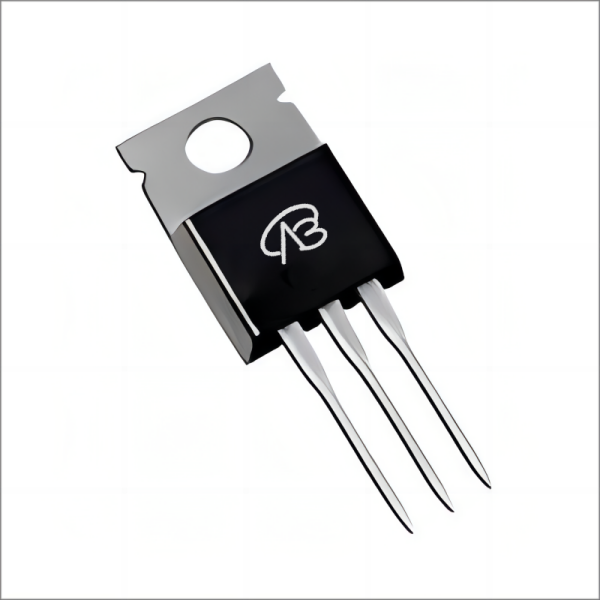
In high-power circuit design, selecting a MOSFET that balances robust performance, efficient thermal management, and cost-effectiveness is a critical engineering challenge. This goes beyond simple part substitution; it requires a careful trade-off among current handling, conduction losses, voltage ratings, and supply chain stability. This article uses two industry-standard MOSFETs, CSD18536KCS (N-channel) and IRF9531 (P-channel), as benchmarks. We will deeply analyze their design cores and application scenarios, and provide a comparative evaluation of two domestic alternative solutions, VBM1602 and VBM2610N. By clarifying their parameter differences and performance orientations, we aim to provide a clear selection guide to help you find the most suitable power switching solution for your next high-power design.
Comparative Analysis: CSD18536KCS (N-channel) vs. VBM1602
Analysis of the Original Model (CSD18536KCS) Core:
This is a 60V N-channel MOSFET from Texas Instruments, utilizing the widely adopted TO-220 package. Its design core is to deliver extremely low conduction loss and very high current capability in a robust, thermally efficient package. Key advantages are: an ultra-low on-resistance of 1.6mΩ (typical) and a remarkably high continuous drain current rating of 349A. This combination minimizes power loss and supports demanding high-current applications.
Compatibility and Differences of the Domestic Alternative (VBM1602):
VBsemi's VBM1602 is a direct pin-to-pin compatible alternative in the TO-220 package. The key differences are in electrical parameters: VBM1602 has a slightly higher on-resistance (2.1mΩ @10V vs. the original's ~1.6mΩ) and a lower continuous current rating (270A vs. 349A). However, it maintains the same 60V voltage rating.
Key Application Areas:
Original Model CSD18536KCS: Its exceptional current handling and ultra-low RDS(on) make it ideal for the most demanding high-current switching applications. Typical uses include:
High-current DC-DC converters and voltage regulators in server, telecom, and industrial power supplies.
Motor drives and inverters for industrial equipment and electric vehicles.
Primary side switches in high-power SMPS (Switched-Mode Power Supplies).
Battery management systems (BMS) for high-discharge applications.
Alternative Model VBM1602: A suitable alternative for applications where the extreme current capability of the CSD18536KCS is not fully required, but a robust, cost-effective 60V N-channel solution with good performance (270A, 2.1mΩ) is needed. It offers a reliable option for high-power designs with potential supply chain or cost considerations.
Comparative Analysis: IRF9531 (P-channel) vs. VBM2610N
This comparison focuses on P-channel MOSFETs for high-side switching or complementary applications.
Analysis of the Original Model (IRF9531) Core:
The IRF9531 is an 80V P-channel MOSFET in a TO-220AB package. Its design offers a good balance of voltage rating and current capability for P-channel devices. Key parameters include an 80V drain-source voltage and a 12A continuous drain current with an on-resistance of 300mΩ (@10V).
Compatibility and Differences of the Domestic Alternative (VBM2610N):
VBsemi's VBM2610N is a pin-to-pin compatible alternative in the TO-220 package. It represents a significant performance enhancement over the original IRF9531. While its voltage rating is lower (-60V vs. -80V), it offers a dramatically higher continuous current (-40A vs. 12A) and a much lower on-resistance (62mΩ @10V vs. 300mΩ).
Key Application Areas:
Original Model IRF9531: Suitable for applications requiring an 80V P-channel MOSFET with moderate current (12A) capability. Common uses include:
High-side load switches in 48V systems.
Polarity protection and reverse battery protection circuits.
Complementary output stages in amplifiers or motor drives (paired with an N-channel device).
Alternative Model VBM2610N: An excellent upgrade choice for applications where the primary need is for much higher current handling and significantly lower conduction loss in a P-channel MOSFET, and where a 60V rating is sufficient. It is ideal for:
High-current high-side switching in lower voltage systems (e.g., 12V, 24V, 48V).
Upgrading existing designs using IRF9531-like parts to achieve better efficiency and thermal performance.
New designs requiring a robust P-channel switch with low RDS(on) for power path management.
Summary
This analysis reveals two distinct selection paths for high-power N-channel and P-channel applications:
For ultra-high-current N-channel applications, the original CSD18536KCS, with its unmatched 349A current rating and ultra-low 1.6mΩ RDS(on), is the premier choice for the most demanding designs where maximum performance is critical. Its domestic alternative VBM1602 provides a robust, compatible solution with solid performance (270A, 2.1mΩ), serving as a viable alternative for cost-sensitive or supply-chain-resilient designs that do not require the absolute maximum specs.
For P-channel applications, the original IRF9531 serves as a reliable standard for 80V, moderate-current (12A) needs. In contrast, the domestic alternative VBM2610N offers a compelling performance-focused upgrade path for designers, delivering vastly superior current capability (40A) and much lower conduction loss (62mΩ) in a compatible package, albeit at a lower voltage rating (60V).
The core conclusion is that selection depends on precise requirement matching. In the context of supply chain diversification, domestic alternatives like VBM1602 and VBM2610N not only provide feasible backup options but also offer opportunities for performance enhancement or cost optimization in specific parameters. Understanding the design priorities—whether it's ultimate current handling, lowest loss, specific voltage rating, or cost—is essential to selecting the MOSFET that delivers maximum value in your circuit.

Download PDF document
 Download now


