 中文
中文 English
MOSFET Selection for High-Power and High-Density Applications: CSD18535KCS, CSD18531Q5A vs. China Alternatives VBM1602, VBGQA1603
Number of views:9999
 Back to previous page
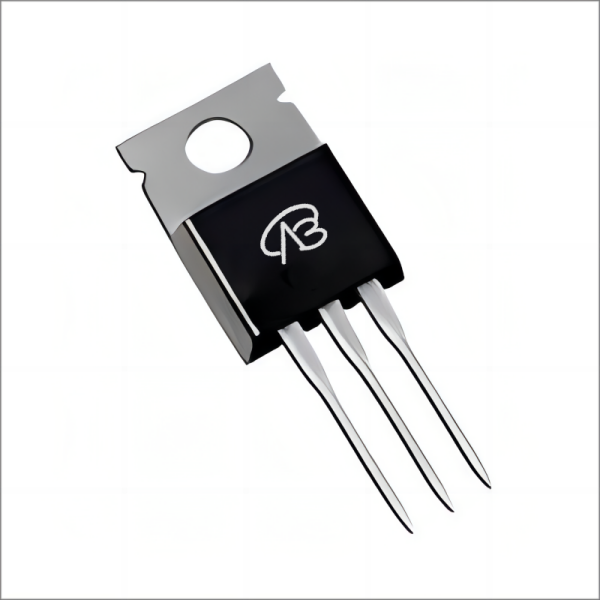
In today's pursuit of high power density and efficiency, selecting the optimal MOSFET for demanding power stages is a critical engineering challenge. This involves a precise balance among current handling, thermal performance, form factor, and cost. This article uses two benchmark MOSFETs from TI—the high-current CSD18535KCS (TO-220) and the power-dense CSD18531Q5A (SON)—for deep analysis. We will evaluate their domestic alternatives, VBM1602 and VBGQA1603, clarifying parameter differences and application fit to provide a clear selection guide for your next high-performance design.
Comparative Analysis: CSD18535KCS (TO-220, N-channel) vs. VBM1602
Analysis of the Original Model (CSD18535KCS) Core:
This is a 60V N-channel MOSFET from Texas Instruments in a standard TO-220-3 package. Its design core is to deliver extremely high current capability with minimal conduction loss in a thermally robust package. Key advantages are: a very low on-resistance of 2mΩ (measured at 10V, 100A), and an exceptionally high continuous drain current rating of 200A. This makes it a powerhouse for applications where brute-force current handling and low RDS(on) are paramount.
Compatibility and Differences of the Domestic Alternative (VBM1602):
VBsemi's VBM1602 is a direct pin-to-pin compatible alternative in the TO-220 package. The key differences are in electrical parameters: while both are rated for 60V, VBM1602 offers a slightly higher continuous current rating of 270A. Its on-resistance is comparable at 2.1mΩ (@10V), though the original part specifies 2mΩ under specific test conditions (100A). The gate threshold voltage and voltage ratings are well-aligned.
Key Application Areas:
Original Model CSD18535KCS: Ideal for high-current, thermally challenging applications where the TO-220 package's superior thermal mass and ease of heatsinking are beneficial.
High-current DC-DC converters and voltage regulators (e.g., for servers, telecom).
Motor drives and inverters for industrial equipment, e-bikes, or power tools.
Solid-state relays and high-power switching circuits.
Alternative Model VBM1602: Suited for the same high-power domains as the original, potentially offering a margin in current handling (270A vs. 200A) and a competitive RDS(on), making it a robust alternative for upgrades or cost-optimized designs requiring high reliability.
Comparative Analysis: CSD18531Q5A (SON, N-channel) vs. VBGQA1603
This comparison shifts focus to high-power density, where the design pursuit is maximizing current capability and minimizing losses in a minimal footprint.
Analysis of the Original Model (CSD18531Q5A) Core:
This TI MOSFET uses a compact VSONP-8 (5x6mm) package. Its core advantage is delivering high current (134A continuous) and low on-resistance (3.5mΩ @10V) in a space-saving surface-mount package. This enables high-efficiency power conversion in densely packed boards.
Compatibility and Differences of the Domestic Alternative (VBGQA1603):
VBsemi's VBGQA1603 is a pin-to-pin compatible alternative in a DFN8(5x6) package (similar footprint). The main parameter differences are: VBGQA1603 has a slightly lower continuous current rating (90A vs. 134A) but offers a marginally lower on-resistance of 2.8mΩ (@10V) compared to the original's 3.5mΩ. Its voltage ratings are identical (60V).
Key Application Areas:
Original Model CSD18531Q5A: Perfect for space-constrained, high-efficiency applications requiring substantial current in a small footprint.
Synchronous rectification in high-current point-of-load (POL) converters.
Power stages in compact server blades, networking hardware, and graphics cards.
High-density DC-DC modules and motor drives where board space is premium.
Alternative Model VBGQA1603: Targets similar high-density applications but with a different performance trade-off: it offers lower conduction loss (lower RDS(on)) but with a reduced continuous current rating. It is suitable for designs where maximizing efficiency at slightly lower current levels is the priority, or as a viable alternative in supply-constrained scenarios.
Summary and Selection Paths:
This analysis reveals two distinct selection paradigms based on package and power density:
1. For High-Current, Heatsink-Friendly Applications (TO-220): The original CSD18535KCS, with its 200A rating and 2mΩ RDS(on), sets a high bar for high-power designs leveraging TO-220's thermal advantages. The domestic alternative VBM1602 presents a compelling option with a higher 270A current rating and comparable low RDS(on), making it a strong candidate for performance-equivalent or enhanced replacements in motor drives and high-power converters.
2. For High-Power-Density, Surface-Mount Applications (SON/DFN): The original CSD18531Q5A excels by delivering 134A and 3.5mΩ RDS(on) in a tiny 5x6mm package, ideal for cutting-edge, space-constrained power designs. The domestic alternative VBGQA1603 offers a nuanced trade-off: superior on-resistance (2.8mΩ) for potentially higher efficiency at the cost of a lower current ceiling (90A). It is an excellent choice for designs prioritizing minimal conduction loss within its current range.
Core Conclusion: Selection is not about absolute superiority but precise requirement matching. In the landscape of supply chain diversification, domestic alternatives like VBM1602 and VBGQA1603 provide not just backup options but also specific parametric advantages or trade-offs. Understanding the core design intent—maximum current in a robust package (TO-220) versus optimized power density (SON)—and comparing key specs like RDS(on) and Id is essential to leverage these components effectively for design resilience and cost optimization.

Download PDF document
 Download now


