 中文
中文 English
MOSFET Selection for High-Current Power Applications: CSD18534KCS, CSD17301Q5A vs. China Alternatives VBM1606, VBQA1302
Number of views:9999
 Back to previous page
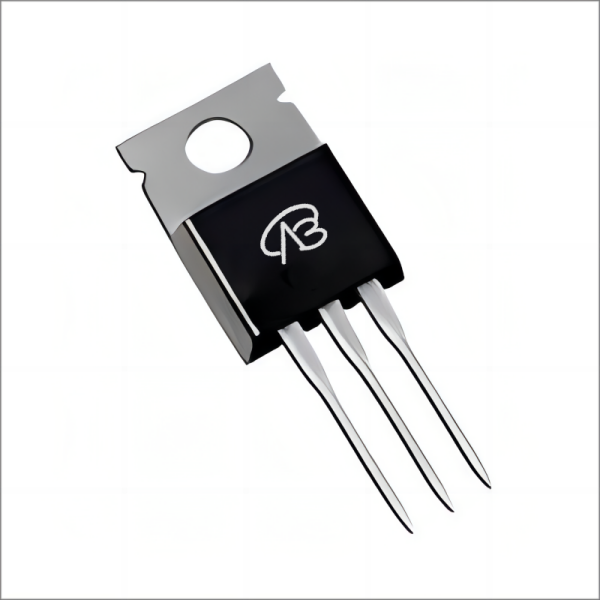
In today's pursuit of high efficiency and power density in power systems, selecting a MOSFET that delivers robust performance and reliability is a critical challenge for engineers. This goes beyond simple part substitution; it involves a careful balance of current handling, conduction losses, thermal management, and supply chain stability. This article uses two prominent MOSFETs, CSD18534KCS (TO-220 package) and CSD17301Q5A (DFN package), as benchmarks. We will delve into their design cores and application contexts, and provide a comparative evaluation of two domestic alternative solutions: VBM1606 and VBQA1302. By clarifying their parameter differences and performance orientations, we aim to provide a clear selection guide to help you find the optimal power switching solution for your next high-current design.
Comparative Analysis: CSD18534KCS (N-channel, TO-220) vs. VBM1606
Analysis of the Original Model (CSD18534KCS) Core:
This is a 60V N-channel MOSFET from Texas Instruments, utilizing a standard TO-220 package. Its design core is to provide high-current capability and good thermal performance in a classic, easy-to-manage form factor. Key advantages include: a high continuous drain current rating of 100A and a low on-resistance of 7.6mΩ (typical at 10V Vgs). This combination makes it suitable for applications requiring high power handling with moderate switching frequencies.
Compatibility and Differences of the Domestic Alternative (VBM1606):
VBsemi's VBM1606 is a direct pin-to-pin compatible alternative in the TO-220 package. It presents a significant performance enhancement in key parameters: while maintaining the same 60V voltage rating, it offers a higher continuous current of 120A and a substantially lower on-resistance of 5mΩ (at 10V Vgs). This translates to potentially lower conduction losses and improved efficiency in high-current paths.
Key Application Areas:
Original Model CSD18534KCS: Well-suited for high-current switching and linear applications where through-hole mounting and the thermal mass of a TO-220 package are beneficial. Typical uses include:
Power supplies and DC-DC converters for industrial equipment.
Motor drives and controllers.
Battery management systems (BMS) and power distribution.
Alternative Model VBM1606: An excellent upgrade choice for applications demanding lower conduction loss and higher current capacity within the same footprint. It is ideal for enhancing the efficiency and power density of existing designs using the CSD18534KCS or for new designs targeting maximum performance from a TO-220 device.
Comparative Analysis: CSD17301Q5A (N-channel, DFN) vs. VBQA1302
This comparison shifts focus to high-performance, surface-mount solutions for space-constrained, high-current applications.
Analysis of the Original Model (CSD17301Q5A) Core:
This TI MOSFET is designed for maximum power density and efficiency in a compact 5mm x 6mm DFN (SON) package. Its core advantages are:
Exceptional Low On-Resistance: Features an ultra-low RDS(on) of 3.7mΩ (at 3V Vgs, 25A), minimizing conduction losses.
High Current in Small Package: Capable of handling 100A continuous drain current, enabling very high power density.
Optimized for Low-Voltage Drive: Excellent performance at low gate drive voltages (e.g., 3V), making it suitable for modern logic-level control.
Compatibility and Differences of the Domestic Alternative (VBQA1302):
VBsemi's VBQA1302 is a pin-to-pin compatible alternative in the DFN8(5x6) package and represents a performance leap. It surpasses the original in critical specs: a much lower on-resistance of 1.8mΩ (at 10V Vgs) and a higher continuous current rating of 160A. This makes it a superior choice for pushing the limits of efficiency and current handling in the same board space.
Key Application Areas:
Original Model CSD17301Q5A: Ideal for high-efficiency, high-frequency switching applications where board space is at a premium. Common applications include:
Synchronous rectification in high-current DC-DC converters (e.g., for servers, telecom).
Point-of-load (POL) converters.
High-current load switches in computing and storage systems.
Alternative Model VBQA1302: Suited for the most demanding upgrade scenarios where minimizing conduction loss and maximizing current throughput are paramount. It is an optimal choice for next-generation power designs requiring the highest possible efficiency and power density from a compact DFN package.
Conclusion:
In summary, this analysis reveals two distinct upgrade paths facilitated by domestic alternatives:
For through-hole, high-current applications, the original CSD18534KCS offers reliable 100A capability in a TO-220 package. Its domestic alternative, VBM1606, provides a direct upgrade with lower on-resistance (5mΩ vs. 7.6mΩ) and higher current rating (120A vs. 100A), enabling cooler operation and higher efficiency in existing or new designs.
For surface-mount, ultra-high-density applications, the original CSD17301Q5A sets a high bar with 100A and 3.7mΩ in a tiny DFN package. The domestic alternative VBQA1302 delivers a remarkable performance enhancement with drastically lower on-resistance (1.8mΩ) and a 60% higher current rating (160A), making it a powerhouse for cutting-edge, efficiency-critical designs.
The core takeaway is that selection is about precise requirement matching. In the context of supply chain diversification, these domestic alternatives not only provide reliable backup options but also offer significant performance gains in key parameters. This gives engineers greater flexibility, resilience, and headroom for innovation in their design trade-offs and cost optimization strategies. Understanding the performance delta and design philosophy behind each device is key to unlocking its full potential in your circuit.

Download PDF document
 Download now


