 中文
中文 English
MOSFET Selection for High-Voltage Power Applications: STWA20N95K5, STL16N60M6 vs. China Alternatives VBP19R20S, VBQA165R05S
Number of views:9999
 Back to previous page
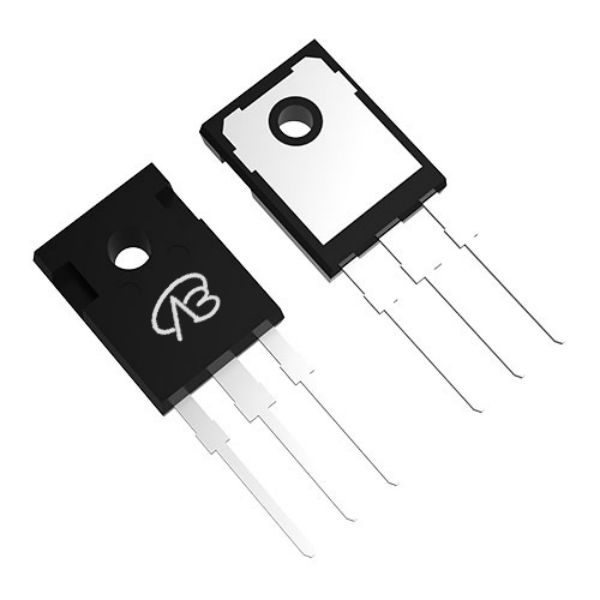
Comparative Analysis: STWA20N95K5 (N-channel) vs. VBP19R20S
Analysis of the Original Model (STWA20N95K5) Core:
This is a 950V N-channel MOSFET from STMicroelectronics, utilizing the TO-247 long-lead package. It is built on the MDmesh K5 technology, targeting high-voltage, high-efficiency applications. Its key advantages are a high drain-source voltage (Vdss) of 950V, a continuous drain current (Id) of 17.5A, and a typical on-resistance (RDS(on)) of 0.275Ω (330mΩ @10V per datasheet). This combination makes it suitable for circuits requiring robust voltage blocking and moderate current handling.
Compatibility and Differences of the Domestic Alternative (VBP19R20S):
VBsemi's VBP19R20S is offered in a TO-247 package, providing potential pin-to-pin compatibility. The main differences are in electrical parameters: VBP19R20S has a slightly lower voltage rating (900V vs. 950V) but offers a higher continuous current rating of 20A and a significantly lower on-resistance of 205mΩ @10V. This suggests improved conduction losses in the alternative part.
Key Application Areas:
Original Model STWA20N95K5: Ideal for high-voltage switching applications up to 950V, such as:
Power Factor Correction (PFC) stages in SMPS.
High-voltage DC-DC converters.
Industrial motor drives and inverters.
Alternative Model VBP19R20S: Suited for applications requiring high current (up to 20A) and lower conduction loss in the ~900V range, potentially offering a performance upgrade in systems where the slightly lower voltage rating is acceptable.
Comparative Analysis: STL16N60M6 (N-channel) vs. VBQA165R05S
This comparison focuses on a medium-voltage MOSFET in a compact, surface-mount package.
Analysis of the Original Model (STL16N60M6) Core:
This STMicroelectronics MOSFET is a 600V N-channel device in a PowerFLAT 5x6 HV (VDFN-8) package, featuring MDmesh M6 technology. It balances a voltage rating of 600V with a continuous current of 8A (12A typical per description) and an on-resistance of 350mΩ @10V. Its compact, thermally efficient package is designed for space-constrained, high-density power designs.
Compatibility and Differences of the Domestic Alternative (VBQA165R05S):
VBsemi's VBQA165R05S comes in a DFN8(5x6) package, likely offering footprint compatibility. Key parameter differences exist: VBQA165R05S has a higher voltage rating (650V vs. 600V) but a lower continuous current (5A vs. 8A) and a higher on-resistance (1000mΩ @10V vs. 350mΩ).
Key Application Areas:
Original Model STL16N60M6: Excellent for compact, medium-power applications requiring good voltage withstand and switching performance, such as:
Low-power SMPS and adapters.
Lighting ballasts and LED drivers.
Auxiliary power supplies.
Alternative Model VBQA165R05S: More suitable for applications where the higher 650V voltage rating is a primary advantage, but where the lower current (5A) and higher on-resistance are acceptable for the load, potentially in lower-power or standby circuits.
Summary
This analysis reveals distinct selection paths based on voltage class and package needs:
For high-voltage (950V) applications in a through-hole TO-247 package, the original STWA20N95K5 provides a proven solution with its high voltage blocking capability. The domestic alternative VBP19R20S presents an interesting trade-off: a slightly lower voltage rating (900V) but with superior current handling (20A) and significantly lower on-resistance, making it a strong candidate for performance-driven replacements where the system voltage margin allows.
For medium-voltage (600V) applications in a compact surface-mount package, the original STL16N60M6 offers a balanced performance profile for its power class. The domestic alternative VBQA165R05S takes a different approach, prioritizing a higher voltage rating (650V) at the expense of lower current capability and higher conduction resistance. This makes it a viable option primarily where the increased voltage margin is critical for design robustness in lower-current scenarios.
The core conclusion is that selection hinges on precise requirement matching. In the context of supply chain diversification, domestic alternatives like VBP19R20S and VBQA165R05S provide viable options and distinct parameter advantages. Understanding the specific demands of your circuit—whether it's ultimate voltage rating, current capacity, or low conduction loss—is key to leveraging the value of these components effectively.

Download PDF document
 Download now


