 中文
中文 English
MOSFET Selection for High-Voltage Power Applications: STW57N65M5-4, STP10N95K5 vs. China Alternatives VBP165R47S and VBM19R11S
Number of views:9999
 Back to previous page
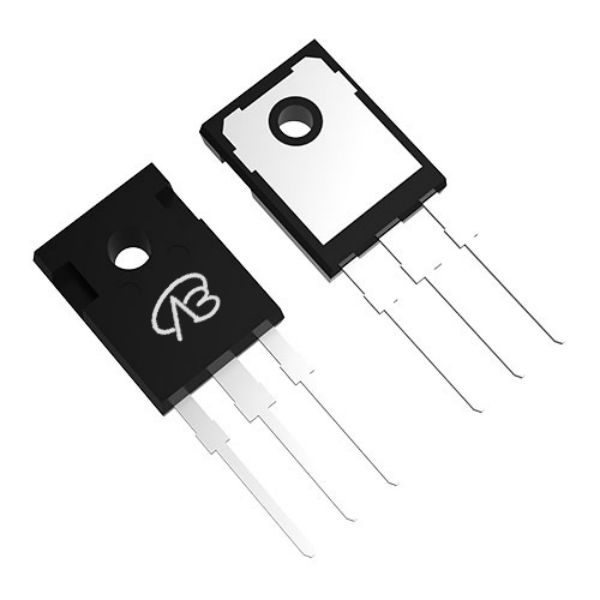
Comparative Analysis: STW57N65M5-4 (650V N-Channel) vs. VBP165R47S
Analysis of the Original Model (STW57N65M5-4) Core:
This is a 650V N-channel MOSFET from ST, utilizing the MDmesh M5 technology and housed in a TO-247-4 package. Its design core focuses on achieving low conduction loss and robust performance in high-power applications. Key advantages include: a low typical on-resistance (RDS(on)) of 56mΩ, a high continuous drain current rating of 42A, and a 650V drain-source voltage (Vdss) rating suitable for off-line power supplies. The TO-247-4 package offers excellent thermal performance for effective heat dissipation.
Compatibility and Differences of the Domestic Alternative (VBP165R47S):
VBsemi's VBP165R47S is also offered in a TO-247 package and serves as a pin-to-pin compatible alternative. The main differences lie in the electrical parameters: VBP165R47S features a slightly lower rated continuous current (47A vs. 42A) but boasts a significantly lower on-resistance of 50mΩ (at 10V gate drive) compared to the original's 63mΩ (at 10V). Both share the same 650V voltage rating.
Key Application Areas:
Original Model STW57N65M5-4: Its combination of 650V rating, 42A current capability, and low RDS(on) makes it ideal for high-efficiency, high-power applications.
Server & Telecom SMPS: Used as the main switch or synchronous rectifier in high-power AC-DC power supplies (e.g., PFC stages, LLC resonant converters).
Industrial Motor Drives: Suitable for inverters and drives requiring 650V breakdown voltage.
Solar Inverters: Can be used in power stages for energy conversion.
Alternative Model VBP165R47S: With its even lower 50mΩ on-resistance, it is particularly suitable for applications where minimizing conduction loss is paramount, potentially offering higher efficiency and lower thermal stress in similar 650V circuits, such as upgraded or new designs of high-density SMPS and motor drives.
Comparative Analysis: STP10N95K5 (950V N-Channel) vs. VBM19R11S
This comparison shifts to very high-voltage applications, where the primary design pursuit is high voltage withstand capability coupled with manageable conduction loss.
Analysis of the Original Model (STP10N95K5) Core:
This 950V N-channel MOSFET from ST uses MDmesh K5 technology in a TO-220 package. Its core advantages are:
High Voltage Rating: A 950V Vdss makes it suitable for applications directly connected to high-voltage rails or with high voltage spikes.
Balanced Performance: It offers a continuous current of 8A with an on-resistance of 800mΩ (at 10V, 4A test condition), providing a good compromise for its voltage class.
Compact Power Package: The TO-220 package offers a good balance of power handling and footprint for medium-power, high-voltage applications.
Compatibility and Differences of the Domestic Alternative (VBM19R11S):
VBsemi's VBM19R11S presents a compelling "performance-enhanced" alternative. While in a compatible TO-220 package, it offers key parametric advantages: a higher continuous current rating of 11A (vs. 8A) and a significantly lower on-resistance of 580mΩ (at 10V) compared to the original's 800mΩ. Its voltage rating is 900V, slightly lower than the original's 950V, which must be considered based on the application's derating requirements.
Key Application Areas:
Original Model STP10N95K5: Its 950V rating and 8A capability make it a solid choice for medium-power applications requiring high voltage blocking.
Lighting Ballasts & LED Drivers: For offline, non-isolated, or flyback converters in lighting systems.
Auxiliary Power Supplies (AUX): In industrial and appliance power supplies where high input voltage is present.
Consumer Electronics SMPS: In flyback or forward converter topologies for TVs, monitors, etc.
Alternative Model VBM19R11S: With its lower RDS(on) (580mΩ) and higher current rating (11A), it is highly suitable for applications demanding higher efficiency, lower heat generation, or increased power density within the ~900V range. It is an excellent upgrade choice for designs like high-performance LED drivers, compact AUX supplies, or other SMPS where reduced conduction loss is critical.
Summary
In summary, this comparative analysis reveals two distinct selection paths for high-voltage designs:
For 650V-class, high-current applications like server PSUs and industrial drives, the original model STW57N65M5-4, with its robust 42A rating and low RDS(on), is a proven choice. Its domestic alternative VBP165R47S offers a direct package-compatible replacement with the advantage of even lower on-resistance (50mΩ), making it attractive for designs prioritizing minimal conduction loss and potentially higher efficiency.
For ~900-950V class, medium-power applications such as lighting and auxiliary supplies, the original STP10N95K5 provides reliable 950V/8A performance. The domestic alternative VBM19R11S offers a significant performance boost with higher current (11A) and much lower on-resistance (580mΩ), making it a powerful upgrade option for applications where its 900V rating is sufficient and improved efficiency is desired.
The core conclusion is: Selection is not about absolute superiority, but precise requirement matching. In the context of supply chain diversification, domestic alternatives like VBP165R47S and VBM19R11S not only provide viable backup options but also deliver performance enhancements in key parameters such as RDS(on) and current rating. This offers engineers greater flexibility and resilience in design trade-offs, cost control, and performance optimization for their high-voltage power applications. Understanding the design philosophy and parametric implications of each device is essential to maximize its value in the circuit.

Download PDF document
 Download now


