 中文
中文 English
MOSFET Selection for High-Voltage Power Applications: STW26NM60N, STU5N62K3 vs. China Alternatives VBP16R20S, VBFB165R05S
Number of views:9999
 Back to previous page
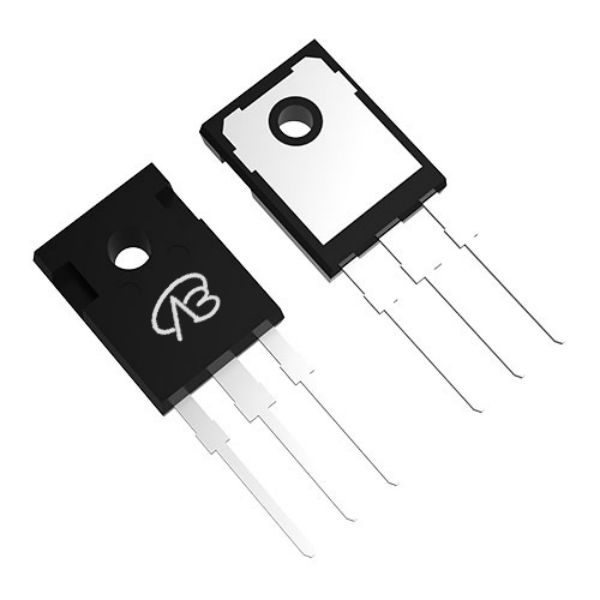
Comparative Analysis: STW26NM60N (N-channel, TO-247) vs. VBP16R20S
Analysis of the Original Model (STW26NM60N) Core:
This is a 600V N-channel MOSFET from STMicroelectronics, utilizing the TO-247AC-3 package. It is developed with ST's second-generation MDmesh™ technology, which combines a vertical structure with a strip layout to achieve an excellent balance of low on-resistance and low gate charge. Its key advantages are: a drain-source voltage (Vdss) of 600V, a continuous drain current (Id) of 20A, and a typical on-resistance (RDS(on)) of 165mΩ at 10V gate drive. This makes it highly suitable for demanding high-efficiency converters.
Compatibility and Differences of the Domestic Alternative (VBP16R20S):
VBsemi's VBP16R20S is a direct pin-to-pin compatible alternative in the TO-247 package. The key parameters show a high degree of similarity and slight enhancement: it offers the same 600V voltage rating and 20A continuous current. Notably, its on-resistance is specified at 160mΩ @10V, which is slightly lower than the original's 165mΩ, potentially offering marginally lower conduction losses. It utilizes a Super Junction Multi-Epitaxial (SJ_Multi-EPI) process.
Key Application Areas:
Original Model STW26NM60N: Ideal for high-efficiency, medium-to-high power switching applications at 600V. Typical uses include:
Switch-Mode Power Supplies (SMPS): PFC stages, hard-switched or resonant converters.
Industrial Motor Drives: Inverters for fans, pumps, and other industrial controls.
High-Voltage DC-DC Converters: Power conversion in renewable energy, telecom, and server PSUs.
Alternative Model VBP16R20S: Serves as a highly compatible, performance-similar or slightly enhanced drop-in replacement for the STW26NM60N in the above applications, providing a reliable domestic supply chain option.
Comparative Analysis: STU5N62K3 (N-channel, TO-251) vs. VBFB165R05S
This comparison focuses on high-voltage MOSFETs in a more compact TO-251 (IPAK) package, targeting space-constrained applications requiring good voltage withstand capability.
Analysis of the Original Model (STU5N62K3) Core:
The STU5N62K3 is a 620V N-channel MOSFET in a TO-251 package. Its design targets applications needing a compact footprint with reliable high-voltage blocking. Key parameters include a Vdss of 620V, a continuous drain current of 4.2A, and an on-resistance of 1.6Ω at 10V gate drive. It offers a balance of voltage rating and current capability in a small package.
Compatibility and Differences of the Domestic Alternative (VBFB165R05S):
VBsemi's VBFB165R05S is a pin-to-pin compatible alternative in the TO-251 package. It presents a different parameter trade-off: a slightly higher voltage rating of 650V and a higher continuous current rating of 5A compared to the original. However, its on-resistance is specified at 950mΩ @10V, which is significantly lower than the original's 1.6Ω. This indicates the alternative model offers substantially better conduction performance for similar or slightly higher current levels. It also employs an SJ_Multi-EPI process.
Key Application Areas:
Original Model STU5N62K3: Suitable for compact designs requiring up to 620V blocking voltage and moderate current (around 4A). Applications include:
Low-to-Medium Power SMPS: Auxiliary power supplies, flyback converter primary switches.
Lighting: Electronic ballasts, LED driver circuits.
Appliance Control: Motor control and switching in home appliances.
Alternative Model VBFB165R05S: Better suited for applications within the TO-251 footprint that can benefit from its enhanced performance profile—higher current capability (5A) and significantly lower on-resistance (950mΩ). This makes it an excellent choice for upgrading efficiency or power density in similar high-voltage, space-constrained circuits like compact SMPS and lighting drivers.
Summary and Selection Paths:
This analysis reveals two distinct selection scenarios for high-voltage applications:
1. For TO-247 based, medium-high power 600V applications, the original STW26NM60N, with its proven MDmesh™ technology offering 165mΩ RDS(on) and 20A current, is a robust choice for efficient converters. Its domestic alternative VBP16R20S provides a near-identical, pin-compatible replacement with a slightly lower 160mΩ RDS(on), making it a strong and viable alternative for supply chain diversification without compromising performance.
2. For compact TO-251 based, high-voltage (620V+) applications, the original STU5N62K3 provides a specific balance of 620V rating and 4.2A current. The domestic alternative VBFB165R05S offers a compelling "performance-optimized" option within the same package. With a higher 650V rating, a higher 5A current, and a drastically lower 950mΩ on-resistance, it is particularly attractive for designs where reducing conduction loss in a small space is a priority.
Core Conclusion: Selection is not about absolute superiority but precise requirement matching. In the context of supply chain diversification, domestic alternatives like VBP16R20S and VBFB165R05S not only provide reliable backup options but also offer opportunities for parameter enhancement or optimization. Understanding the specific voltage, current, loss, and space constraints of your application is key to leveraging the full value of these components in your circuit design.

Download PDF document
 Download now


