 中文
中文 English
MOSFET Selection for High-Voltage Power Applications: STW15NK90Z, STW18NM80 vs. China Alternatives VBP19R20S and VBP18R20S
Number of views:9999
 Back to previous page
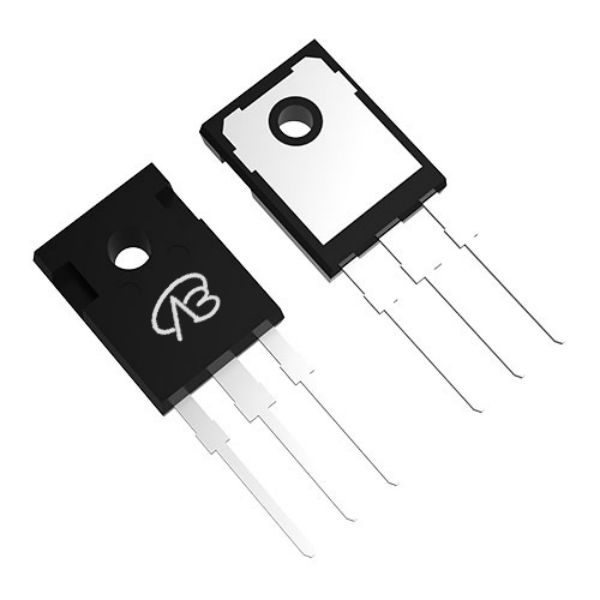
Comparative Analysis: STW15NK90Z (900V N-channel) vs. VBP19R20S
Analysis of the Original Model (STW15NK90Z) Core:
This is a 900V N-channel MOSFET from STMicroelectronics in a TO-247-3 package. Its design core is to provide robust high-voltage switching capability. The key parameters are a continuous drain current (Id) of 15A and an on-resistance (RDS(on)) of 550mΩ at a 10V gate drive. It serves as a reliable workhorse in applications requiring high drain-source voltage (Vdss) withstand.
Compatibility and Differences of the Domestic Alternative (VBP19R20S):
VBsemi's VBP19R20S is a direct pin-to-pin compatible alternative in a TO-247 package. The main differences are significantly improved electrical parameters: it matches the 900V voltage rating but offers a higher continuous current of 20A and a drastically lower on-resistance of 205mΩ (@10V). This represents a major reduction in conduction losses.
Key Application Areas:
Original Model STW15NK90Z: Suitable for high-voltage applications where 900V rating is crucial and current demands are around 15A, such as in certain SMPS (Switched-Mode Power Supply) primary sides, PFC (Power Factor Correction) stages, or industrial controls.
Alternative Model VBP19R20S: Ideal for upgrading designs that require the same 900V withstand voltage but demand higher current handling (up to 20A) and significantly lower conduction losses. It's a strong candidate for more efficient or higher-power SMPS, PFC circuits, and motor drives.
Comparative Analysis: STW18NM80 (800V N-channel) vs. VBP18R20S
Analysis of the Original Model (STW18NM80) Core:
This 800V N-channel MOSFET from STMicroelectronics, in a TO-247AC-3 package, focuses on a balance between high voltage and improved conduction relative to its 900V counterpart. Its key advantages are a continuous current of 17A and a lower on-resistance of 295mΩ (@10V) compared to the STW15NK90Z, offering better efficiency for 800V-class applications.
Compatibility and Differences of the Domestic Alternative (VBP18R20S):
VBsemi's VBP18R20S is a direct pin-to-pin compatible alternative. It maintains the 800V voltage rating but enhances performance with a higher continuous current of 20A and a competitive on-resistance of 220mΩ (@10V), providing lower conduction loss than the original model.
Key Application Areas:
Original Model STW18NM80: Well-suited for 800V system applications requiring good efficiency, such as mid-power SMPS, motor drives, and inverters where its 17A current and 295mΩ RDS(on) offer a solid performance baseline.
Alternative Model VBP18R20S: Targets applications that benefit from the 800V rating but require enhanced current capability (20A) and lower on-state losses. It is an excellent choice for designing higher-efficiency or higher-power-density versions of SMPS, motor drives, and UPS systems.
Summary
In summary, this comparative analysis reveals clear upgrade paths offered by the domestic alternatives:
For 900V high-voltage applications, the original model STW15NK90Z provides a solid 15A, 550mΩ solution. Its domestic alternative VBP19R20S delivers a substantial performance enhancement with 20A current and a much lower 205mΩ on-resistance, making it a superior choice for efficiency-critical upgrades requiring the same voltage rating.
For 800V high-voltage applications, the original model STW18NM80 offers a balanced 17A, 295mΩ profile. Its domestic alternative VBP18R20S provides a meaningful performance boost with 20A current and a reduced 220mΩ on-resistance, positioning it as an attractive option for designs seeking improved efficiency and current handling within the 800V range.
The core conclusion is that selection depends on precise requirement matching. In the context of supply chain diversification, these domestic alternative models not only provide reliable, pin-compatible replacements but also offer significant parameter advantages—particularly in reduced RDS(on) and higher current ratings. This gives engineers greater flexibility and resilience in design trade-offs, cost control, and performance optimization for high-voltage power applications.

Download PDF document
 Download now


