 中文
中文 English
MOSFET Selection for Medium/High-Voltage Power Applications: STU2N62K3, STL100N10F7 vs. China Alternatives VBFB165R04, VBGQA1101N
Number of views:9999
 Back to previous page
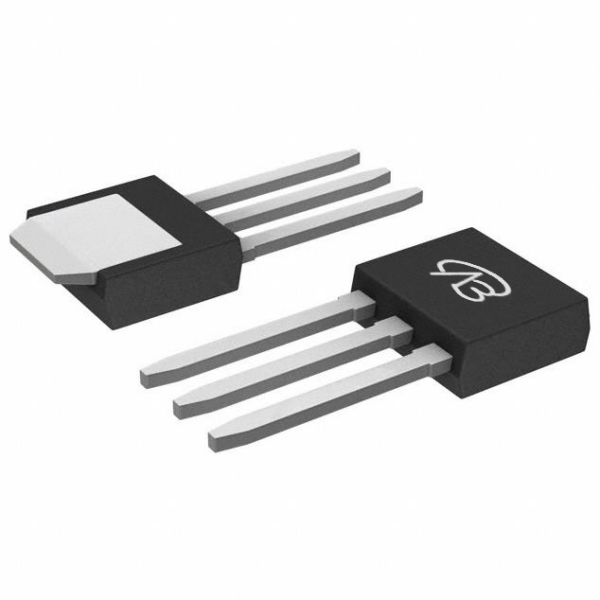
Comparative Analysis: STU2N62K3 (High-Voltage N-channel) vs. VBFB165R04
Analysis of the Original Model (STU2N62K3) Core:
This is a 620V N-channel MOSFET from ST in a TO-251 package. Its design core is to provide robust high-voltage switching capability for cost-sensitive applications. Key features are a high drain-source voltage (Vdss) of 620V and a continuous drain current (Id) of 2.2A. Its on-resistance (RDS(on)) is 3.6Ω at 10V gate drive and 1.1A, indicating its use in lower-current, high-voltage scenarios.
Compatibility and Differences of the Domestic Alternative (VBFB165R04):
VBsemi's VBFB165R04 is offered in a compatible TO-251 package. The key differences are in electrical parameters: VBFB165R04 features a slightly higher voltage rating (650V vs. 620V) and a significantly lower on-resistance of 2200 mΩ (2.2Ω) at 10V. Its continuous current rating is also higher at 4A compared to 2.2A. This represents a performance upgrade in conduction loss and current handling for similar high-voltage applications.
Key Application Areas:
Original Model STU2N62K3: Suitable for basic high-voltage switching where cost is critical and current demands are modest (around 2A). Typical applications include offline switch-mode power supply (SMPS) startup circuits, auxiliary power supplies, or low-power AC-DC converters.
Alternative Model VBFB165R04: Better suited for applications requiring a higher voltage margin (650V), lower conduction loss (2.2Ω RDS(on)), and higher current capability (up to 4A). It is a strong alternative for upgraded SMPS designs, power factor correction (PFC) stages in low-power systems, or other high-voltage switching needs where improved efficiency is desired.
Comparative Analysis: STL100N10F7 (Low-Voltage N-channel) vs. VBGQA1101N
This comparison shifts focus to low-voltage, high-current applications where minimizing conduction loss is paramount.
Analysis of the Original Model (STL100N10F7) Core:
This is a 100V N-channel MOSFET from ST in a compact PDFN-8 (5.2x6.2) package. Its design pursues an excellent balance of low on-resistance and good current capability in a space-saving PowerFLAT package. Its core advantages are a very low RDS(on) of 6.2 mΩ at 10V gate drive and a continuous current rating of 19A, making it efficient for power conversion and switching.
Compatibility and Differences of the Domestic Alternative (VBGQA1101N):
VBsemi's VBGQA1101N comes in a compatible DFN8(5x6) package. It represents a significant "performance-enhanced" alternative. While the voltage rating is the same (100V), VBGQA1101N boasts a dramatically lower RDS(on) of 9.5 mΩ at 10V (and 11.5 mΩ at 4.5V) and a much higher continuous drain current rating of 55A. This indicates superior conduction performance and higher power handling capability.
Key Application Areas:
Original Model STL100N10F7: Its low RDS(on) (6.2mΩ) and 19A current rating make it an ideal choice for high-efficiency, medium-power DC-DC conversion. Typical applications include synchronous rectification in 12V/24V/48V intermediate bus converters, motor drives for small appliances or tools, and load switches in computing or telecom boards.
Alternative Model VBGQA1101N: With its ultra-low RDS(on) (9.5mΩ) and high current capability (55A), it is perfectly suited for next-generation designs demanding higher power density and lower losses. It is an excellent upgrade for high-current point-of-load (POL) converters, high-performance motor drives, and power management in servers, storage, or communication equipment where thermal performance and efficiency are critical.
Conclusion
In summary, this analysis reveals two distinct selection paths based on voltage and performance needs:
For high-voltage (600V+) applications, the original STU2N62K3 offers a cost-effective 620V/2.2A solution. Its domestic alternative VBFB165R04 provides a compelling upgrade with higher voltage (650V), lower RDS(on) (2.2Ω), and higher current (4A) in the same package, enabling more efficient designs.
For low-voltage, high-current applications (100V class), the original STL100N10F7 delivers excellent performance with 6.2mΩ and 19A in a compact package. Its domestic alternative VBGQA1101N achieves a remarkable performance leap, offering similar low RDS(on) (9.5mΩ) paired with a vastly higher current rating of 55A, making it a superior choice for pushing power density and efficiency limits.
The core conclusion is that selection depends on precise requirement matching. In the context of supply chain diversification, these domestic alternatives not only provide reliable backup options but also offer significant performance enhancements in key parameters. This gives engineers greater flexibility and resilience in design trade-offs and cost optimization. Understanding the design philosophy and parameter implications of each device is essential to maximize its value in the circuit.

Download PDF document
 Download now


