 中文
中文 English
Comparative Analysis: STU150N3LLH6 vs. VBFB1303
Number of views:9999
 Back to previous page
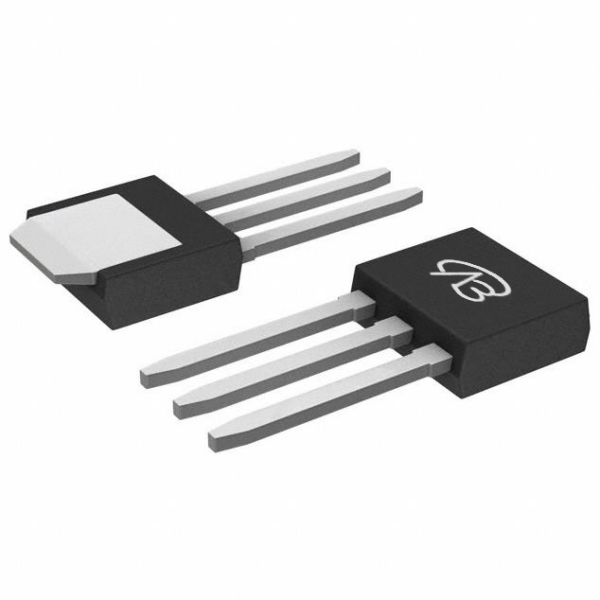
This is a 30V N-channel MOSFET from STMicroelectronics in a TO-251 (IPAK) package. Its design core is to deliver high-current handling and robust power dissipation in a compact through-hole format. Key advantages are a high continuous drain current rating of 80A and a power dissipation capability of 110W, making it suitable for demanding linear or switching applications requiring high current in a small footprint.
Compatibility and Differences of the Domestic Alternative (VBFB1303):
VBsemi's VBFB1303 is a direct pin-to-pin compatible alternative in the same TO-251 package. It offers significant performance enhancements in key parameters: while maintaining the same 30V voltage rating, it features a lower on-resistance (3.5mΩ @10V vs. the original's typical performance) and a higher continuous current rating of 100A. This translates to potentially lower conduction losses and higher current capacity in similar applications.
Key Application Areas:
Original Model STU150N3LLH6: Ideal for high-current, medium-voltage switching applications where component height and through-hole mounting are required. Typical uses include:
High-current DC-DC converters and voltage regulators.
Motor drives for power tools, e-bikes, or small electric vehicles.
Power switches in automotive and industrial systems.
Alternative Model VBFB1303: Suited for the same application spaces but offers an upgraded path for designs demanding even lower on-resistance, higher efficiency, and greater current headroom, potentially enabling more compact or cooler-running designs.
Comparative Analysis: STF3LN80K5 vs. VBMB18R05S
Analysis of the Original Model (STF3LN80K5) Core:
This is an 800V N-channel MOSFET from STMicroelectronics in a TO-220FP package, utilizing MDmesh K5 technology. Its design pursuit is high-voltage switching with optimized dynamic performance and reliability. Core advantages are its high 800V drain-source voltage rating, making it suitable for off-line applications, and a specified on-resistance of 3.25Ω (typical) at 10V gate drive for a 2A device.
Compatibility and Differences of the Domestic Alternative (VBMB18R05S):
VBsemi's VBMB18R05S is a functionally compatible alternative in the TO-220F package. The main differences are in the electrical parameters: while both are 800V rated, the VBMB18R05S offers a significantly higher continuous current rating (5A vs. 2A) and a substantially lower on-resistance (1100mΩ @10V vs. 3250mΩ typical). This indicates a potential for handling higher power or operating with lower conduction losses in comparable high-voltage circuits.
Key Application Areas:
Original Model STF3LN80K5: Tailored for high-voltage, lower-current switching applications. Typical scenarios include:
Auxiliary power supplies (SMPS) in industrial and home appliances.
Power factor correction (PFC) stages.
Lighting ballasts and low-power offline converters.
Alternative Model VBMB18R05S: Better suited for high-voltage applications where higher output current or improved efficiency (via lower RDS(on)) is required. It is a strong candidate for:
Higher-power offline SMPS designs.
PFC circuits needing greater current capability.
Motor drives or inverters operating from high voltage rails.
Conclusion:
This analysis reveals two distinct selection and upgrade paths:
For high-current, medium-voltage (30V) applications in a TO-251 package, the original STU150N3LLH6 provides robust 80A capability. Its domestic alternative VBFB1303 presents a performance-enhanced option with lower RDS(on) and a 100A current rating, ideal for pushing efficiency and power density limits in upgrades or new designs.
For high-voltage (800V) switching applications, the original STF3LN80K5 serves lower-current (2A) needs. The domestic alternative VBMB18R05S offers a significant parameter upgrade with higher current handling (5A) and much lower on-resistance, making it an excellent choice for designs requiring more power or higher efficiency from an 800V platform.
The core principle remains: selection is about precise requirement matching. These domestic alternatives provide not just supply chain resilience but also opportunities for performance gains, offering engineers greater flexibility in design optimization and cost-performance trade-offs.

Download PDF document
 Download now


