 中文
中文 English
MOSFET Selection for High-Voltage Power Applications: STP7NK40Z, STP2N105K5 vs. China Alternatives VBM15R13, VBM195R03
Number of views:9999
 Back to previous page
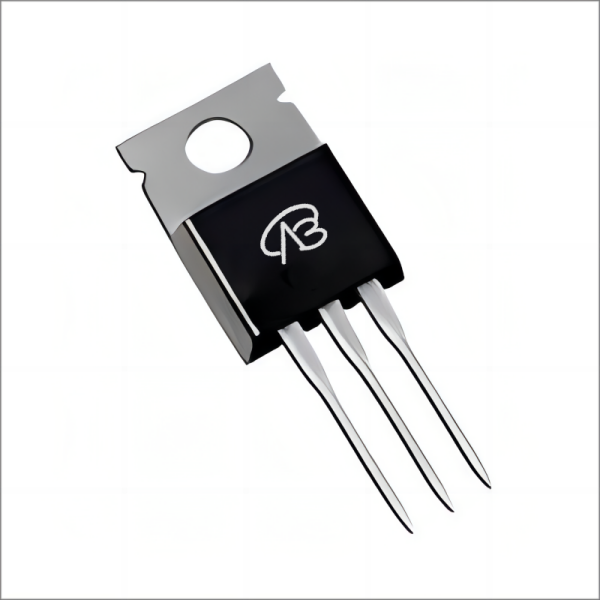
Comparative Analysis: STP7NK40Z (400V N-channel) vs. VBM15R13
Analysis of the Original Model (STP7NK40Z) Core:
This is a 400V N-channel MOSFET from STMicroelectronics, utilizing SuperMESH™ technology in a standard TO-220 package. Its design core focuses on providing a robust and cost-effective solution for medium-voltage applications. Key advantages include: a drain-source voltage (Vdss) of 400V, a continuous drain current (Id) of 5.4A, and an on-resistance (RDS(on)) of 1Ω at 10V gate drive. The integrated Zener protection enhances reliability against voltage transients.
Compatibility and Differences of the Domestic Alternative (VBM15R13):
VBsemi's VBM15R13 is a pin-to-pin compatible alternative in a TO-220 package. The main differences are in the electrical parameters: VBM15R13 offers a higher voltage rating (500V vs. 400V) and a significantly lower on-resistance (660mΩ @10V vs. 1Ω). It also supports a higher continuous drain current of 13A. This represents a substantial performance upgrade in terms of conduction loss and current handling.
Key Application Areas:
Original Model STP7NK40Z: Well-suited for standard 400V-class applications requiring proven reliability and cost-effectiveness.
SMPS (Switched-Mode Power Supplies): PFC (Power Factor Correction) stages, flyback converter primary-side switches.
Lighting: Electronic ballasts, LED driver circuits.
Industrial Controls: Relay replacements, solenoid drivers.
Alternative Model VBM15R13: An excellent upgrade choice for applications requiring higher voltage margin, lower conduction loss, or higher current capability within the 400V-500V range. It is ideal for designing more efficient or higher-power versions of the above applications.
Comparative Analysis: STP2N105K5 (1050V N-channel) vs. VBM195R03
This comparison shifts to the ultra-high-voltage domain, where the design pursuit is reliable blocking capability and manageable switching performance.
Analysis of the Original Model (STP2N105K5) Core:
This is a 1050V N-channel MOSFET from STMicroelectronics, built on MDmesh K5 technology in a TO-220 package. Its core advantage is its very high drain-source voltage (Vdss) of 1.05kV, making it suitable for harsh line-voltage environments. It features a continuous drain current of 1.5A and an on-resistance of 6Ω at 10V gate drive.
Compatibility and Differences of the Domestic Alternative (VBM195R03):
VBsemi's VBM195R03 is a direct pin-to-pin compatible alternative. The key differences are: a slightly lower voltage rating (950V vs. 1050V) and a significantly lower on-resistance (5.4Ω @10V vs. 6Ω). It also offers a higher continuous drain current of 3A. This translates to better conduction performance and higher current capacity in sub-1000V applications.
Key Application Areas:
Original Model STP2N105K5: Designed for applications demanding voltage blocking above 1000V.
Off-line SMPS: Primary-side switches in flyback or forward converters for industrial or appliance power supplies.
Power Metering: Circuits interfacing directly with high AC line voltages.
Alternative Model VBM195R03: A strong alternative for applications where the voltage requirement is around 950V or slightly below, but with a need for lower conduction loss or higher current (up to 3A) than the original part provides. It offers a performance-enhanced option for many 800V-950V designs.
Conclusion
In summary, this analysis reveals clear selection and upgrade paths for high-voltage applications:
For 400V-class applications, the original STP7NK40Z provides a reliable, standard-performance solution. Its domestic alternative, VBM15R13, stands out as a performance-enhanced upgrade, offering higher voltage rating (500V), much lower on-resistance (660mΩ), and double the current capability (13A). This makes it an excellent choice for next-generation designs prioritizing efficiency and power density.
For ~1000V-class applications, the original STP2N105K5 targets niche ultra-high-voltage needs (1050V). Its domestic alternative, VBM195R03, presents a highly competitive option for the common sub-1000V range (950V), delivering lower on-resistance (5.4Ω) and higher current (3A) for improved performance in many standard off-line power supply scenarios.
The core takeaway is that selection must be driven by precise requirement matching. In the context of supply chain diversification, domestic alternatives like VBM15R13 and VBM195R03 not only provide reliable backup options but also offer tangible performance gains in key parameters. This gives engineers greater flexibility and resilience in design trade-offs and cost optimization for high-voltage power stages.

Download PDF document
 Download now


