 中文
中文 English
MOSFET Selection for High-Power Applications: STP76NF75, STWA30N65DM6AG vs. China Alternatives VBM1808, VBP16R26S
Number of views:9999
 Back to previous page
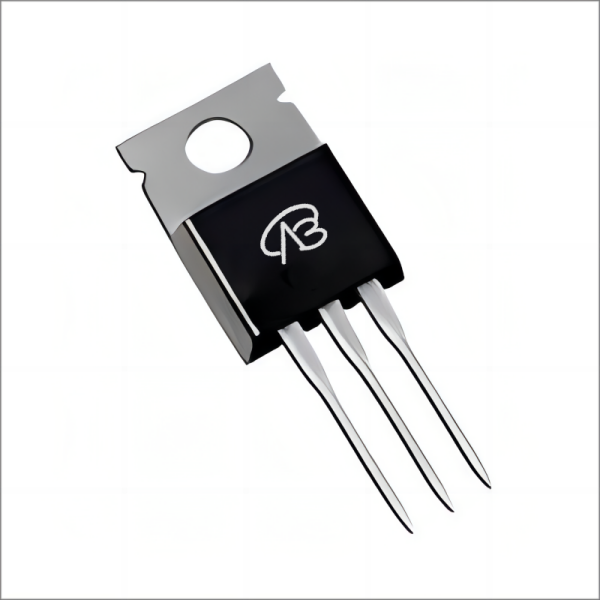
Comparative Analysis: STP76NF75 (N-channel) vs. VBM1808
Analysis of the Original Model (STP76NF75) Core:
This is a 75V N-channel MOSFET from STMicroelectronics in a standard TO-220 package. Its design core is to deliver very high current with minimal conduction loss in applications like motor drives and power supplies. Key advantages are: an exceptionally low typical on-resistance (RDS(on)) of 9.5mΩ, a high continuous drain current (Id) of 80A, and a 4V gate threshold. It leverages ST's STripFET II technology for good switching performance and ruggedness.
Compatibility and Differences of the Domestic Alternative (VBM1808):
VBsemi's VBM1808 is a direct form-fit alternative in a TO-220 package. The parameters show a highly competitive profile: a similar voltage rating (80V vs 75V), an identical high continuous current rating of 80A/100A, and a remarkably low on-resistance of 7mΩ at 10V gate drive (even lower than the original's typical 9.5mΩ). The threshold voltage is slightly lower at 3V.
Key Application Areas:
Original Model STP76NF75: Ideal for high-current, low-voltage switching applications where minimizing conduction loss is paramount. Typical uses include:
High-current DC motor drives and controllers.
Low-voltage synchronous rectification in high-power DC-DC converters (e.g., for server/telecom power).
Uninterruptible Power Supplies (UPS) and inverter circuits.
Alternative Model VBM1808: Serves as a powerful, potentially performance-enhanced drop-in replacement for the STP76NF75. Its lower RDS(on) can translate to higher efficiency and lower heat generation in the same applications, making it suitable for upgrades or new designs demanding maximum current capability and minimal loss.
Comparative Analysis: STWA30N65DM6AG (N-channel) vs. VBP16R26S
This comparison shifts to high-voltage, automotive-grade MOSFETs, where the design pursuit is a balance of high voltage withstand capability, switching efficiency, and reliability.
Analysis of the Original Model (STWA30N65DM6AG) Core:
This is an automotive-grade N-channel MOSFET from ST in a TO-247 package. Its core advantages are:
High Voltage & Ruggedness: Rated for 650V drain-source voltage, designed for automotive environments (AEC-Q101 qualified).
Advanced Technology: Utilizes ST's MDmesh DM6 technology, offering a good balance between low on-resistance (110mΩ @10V typical) and low gate charge for efficient high-voltage switching.
Current Capability: Handles a continuous current of 28A, suitable for medium-power off-line applications.
Compatibility and Differences of the Domestic Alternative (VBP16R26S):
VBsemi's VBP16R26S is a package-compatible alternative in TO-247. The key parameters show a close match with slight variations: a slightly lower voltage rating (600V vs 650V), a comparable continuous current (26A vs 28A), and a nearly identical on-resistance (115mΩ @10V vs 110mΩ typical). It uses a Super Junction Multi-EPI process.
Key Application Areas:
Original Model STWA30N65DM6AG: Tailored for demanding, high-voltage applications requiring automotive-grade reliability. Typical uses include:
Automotive systems: Electric power steering (EPS), on-board chargers (OBC), DC-DC converters.
Industrial switch-mode power supplies (SMPS) and PFC (Power Factor Correction) stages.
Solar inverters and energy storage systems.
Alternative Model VBP16R26S: Presents a viable domestic alternative for high-voltage applications where the 600V rating is sufficient, such as in many industrial SMPS, PFC circuits, and certain renewable energy applications. Its closely matched electrical characteristics make it a strong candidate for diversification or cost-optimization without significant performance compromise.
Conclusion
In summary, this analysis reveals two distinct substitution strategies:
For high-current, low-voltage (75-80V) applications, the original STP76NF75 sets a high standard with its 80A current and very low RDS(on). Its domestic alternative, VBM1808, not only serves as a direct replacement but offers potential performance gains with an even lower on-resistance (7mΩ), making it an excellent choice for efficiency-critical upgrades or new designs in motor drives and high-power converters.
For high-voltage, automotive/industrial applications, the original STWA30N65DM6AG offers proven 650V automotive-grade performance. Its domestic alternative, VBP16R26S, provides a closely matched, package-compatible solution for scenarios where a 600V rating is adequate, offering a reliable path for supply chain diversification in industrial power supplies, PFC, and related fields.
The core takeaway is that selection is driven by precise application requirements. In the current landscape, domestic alternatives like VBM1808 and VBP16R26S provide not just backup options but also competitive, sometimes enhanced, performance parameters. This gives engineers greater flexibility and resilience in balancing performance, cost, and supply chain security for their power designs.

Download PDF document
 Download now


