 中文
中文 English
MOSFET Selection for High-Voltage Power Applications: STP6NK90Z, STW15NK50Z vs. China Alternatives VBM19R05S, VBP15R50S
Number of views:9999
 Back to previous page
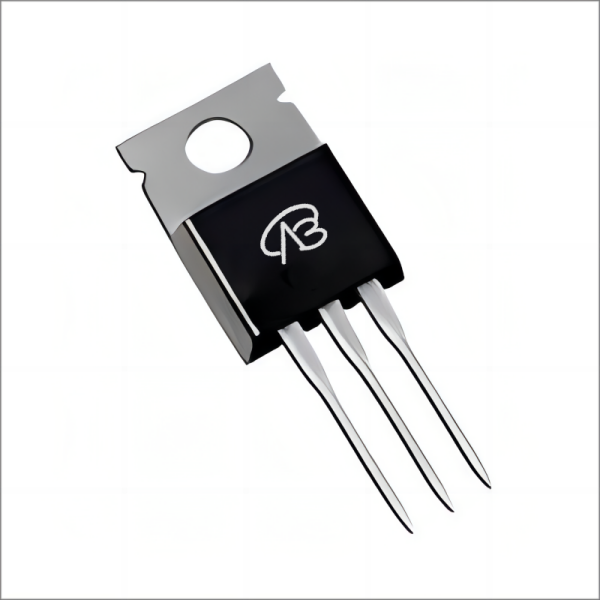
Comparative Analysis: STP6NK90Z (900V N-channel) vs. VBM19R05S
Analysis of the Original Model (STP6NK90Z) Core:
This is a 900V N-channel MOSFET from STMicroelectronics, utilizing SuperMESH™ technology in a TO-220 package. Its design core is to deliver robust high-voltage switching with enhanced dv/dt capability. Key advantages include a high drain-source voltage (Vdss) of 900V, a continuous drain current (Id) of 5.8A, and an on-resistance (RDS(on)) of 2Ω at 10V gate drive. The integrated Zener protection adds reliability.
Compatibility and Differences of the Domestic Alternative (VBM19R05S):
VBsemi's VBM19R05S is a pin-to-pin compatible alternative in a TO-220 package. The main differences are in electrical parameters: VBM19R05S offers the same 900V voltage rating but features a significantly lower on-resistance of 1500mΩ (1.5Ω) at 10V. Its continuous current rating is 5A. It employs SJ_Multi-EPI technology for performance.
Key Application Areas:
Original Model STP6NK90Z: Ideal for applications requiring very high voltage blocking (900V) with moderate current, such as:
Off-line switch-mode power supplies (SMPS) like flyback converters.
Power factor correction (PFC) stages.
Lighting ballasts and electronic transformers.
Alternative Model VBM19R05S: Suited as a high-performance alternative in similar 900V applications where lower conduction loss (due to lower RDS(on)) is beneficial, potentially improving efficiency in SMPS and PFC circuits.
Comparative Analysis: STW15NK50Z (500V N-channel) vs. VBP15R50S
This comparison focuses on higher-current capability within the medium-high voltage range.
Analysis of the Original Model (STW15NK50Z) Core:
This 500V N-channel MOSFET from ST, in a TO-247 package, is part of the SuperMESH series optimized for low on-resistance and high dv/dt capability. Its core advantages are a balanced specification: Vdss of 500V, a continuous current (Id) of 14A, and an on-resistance of 340mΩ at 10V.
Compatibility and Differences of the Domestic Alternative (VBP15R50S):
VBsemi's VBP15R50S is a direct pin-to-pin compatible alternative in a TO-247 package. It represents a substantial "performance-enhanced" option: while maintaining a 500V voltage rating, it offers a dramatically lower on-resistance of 80mΩ at 10V and a much higher continuous current rating of 50A.
Key Application Areas:
Original Model STW15NK50Z: Well-suited for medium-power applications requiring 500V blocking, such as:
Higher-power SMPS (e.g., forward, half-bridge converters).
Motor drives and inverters for appliances or industrial controls.
Uninterruptible power supplies (UPS).
Alternative Model VBP15R50S: Ideal for upgraded or new designs where significantly higher current capability and much lower conduction loss are critical. This makes it suitable for high-efficiency, high-power-density SMPS, high-current motor drives, and high-power inverters.
Conclusion:
This analysis reveals two distinct selection paths for high-voltage applications:
For ultra-high voltage (900V) applications like off-line SMPS, the original STP6NK90Z provides proven reliability with Zener protection. Its domestic alternative VBM19R05S offers a compelling advantage with its lower on-resistance (1.5Ω vs. 2Ω), which can translate directly into reduced conduction losses and improved efficiency in compatible designs.
For medium-high voltage (500V) and higher current applications, the original STW15NK50Z offers a solid balance. However, the domestic alternative VBP15R50S delivers a remarkable performance leap with its ultra-low 80mΩ on-resistance and high 50A current rating, enabling higher efficiency and power density in demanding applications like advanced motor drives and high-power converters.
The core takeaway is that selection hinges on precise requirement matching. In the context of supply chain diversification, domestic alternatives like VBM19R05S and VBP15R50S not only provide viable backups but also offer parameter advantages—lower RDS(on) and higher current in some cases—giving engineers greater flexibility in design optimization and cost management. Understanding the design philosophy and parameter implications of each device is key to unlocking its full potential in the circuit.

Download PDF document
 Download now


