 中文
中文 English
MOSFET Selection for Industrial and Power Applications: STP36NF06L, STU65N3LLH5 vs. China Alternatives VBM1638, VBFB1303
Number of views:9999
 Back to previous page
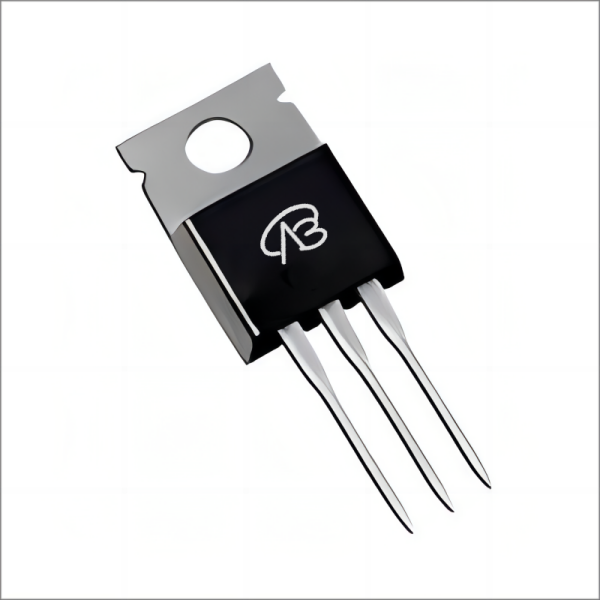
Comparative Analysis: STP36NF06L (N-channel, TO-220) vs. VBM1638
Analysis of the Original Model (STP36NF06L) Core:
This is a 60V N-channel MOSFET from STMicroelectronics, housed in the classic TO-220 package. Its design core is to provide a reliable and cost-effective solution for medium-power applications requiring good thermal performance. Key advantages include: a drain current rating of 30A, an on-resistance (RDS(on)) of 32mΩ at 10V gate drive, and the robustness of the TO-220 package which facilitates heat sinking for higher power dissipation.
Compatibility and Differences of the Domestic Alternative (VBM1638):
VBsemi's VBM1638 is also offered in a TO-220 package, providing direct pin-to-pin compatibility. The main differences are in enhanced electrical parameters: VBM1638 features a significantly lower on-resistance of 24mΩ at 10V gate drive and a higher continuous drain current rating of 50A, while maintaining the same 60V voltage rating.
Key Application Areas:
Original Model STP36NF06L: Well-suited for various 48V or lower systems requiring dependable switching and easy mounting.
Industrial DC Motor Drives: For controlling brushed DC motors in tools, actuators, or conveyor systems.
Power Supply Units (PSUs): Used as the main switch or synchronous rectifier in AC-DC or DC-DC converters.
Automotive Auxiliary Systems: Suitable for relay replacement, lamp driving, or solenoid control in 12V/24V automotive environments.
Alternative Model VBM1638: An excellent performance-enhanced drop-in replacement. Its lower RDS(on) and higher current capability make it ideal for applications demanding higher efficiency, lower conduction losses, or an upgrade path within the same footprint, such as in more demanding motor drives or high-current DC-DC converters.
Comparative Analysis: STU65N3LLH5 (N-channel, IPAK) vs. VBFB1303
This comparison focuses on solutions for applications requiring very high current in a compact, low-profile package.
Analysis of the Original Model (STU65N3LLH5) Core:
This is a 30V N-channel MOSFET from ST in an IPAK (TO-251) package. Its design pursues a balance of high current density, low on-resistance, and compact size. Core advantages include: a very high continuous drain current of 65A, a low on-resistance (typically in the single-digit mΩ range), and a package that offers a good thermal footprint for its size, supporting up to 50W of power dissipation.
Compatibility and Differences of the Domestic Alternative (VBFB1303):
VBsemi's VBFB1303 comes in a TO-251 (IPAK compatible) package, ensuring form-factor compatibility. It represents a substantial performance upgrade: it boasts an ultra-low on-resistance of 3.5mΩ at 10V gate drive and an impressive continuous drain current rating of 100A, while maintaining a 30V voltage rating.
Key Application Areas:
Original Model STU65N3LLH5: Ideal for space-constrained applications needing high current handling, commonly found in low-voltage, high-current scenarios.
Low-Voltage DC-DC Conversion: Synchronous rectification or high-side switching in high-current point-of-load (POL) converters for servers, telecom, or computing.
Battery Management Systems (BMS): Used as a discharge control switch in high-current lithium battery packs for power tools or light electric vehicles.
High-Current Load Switching: For controlling power distribution in compact modules.
Alternative Model VBFB1303: A superior "performance-plus" alternative. Its exceptionally low RDS(on) and 100A current rating make it perfect for next-generation designs pushing the limits of power density and efficiency, such as in ultra-high-current POL converters, advanced BMS, or high-performance motor drives where minimizing loss is paramount.
Summary and Selection Paths:
This analysis reveals two distinct upgrade paths using domestic alternatives:
1. For classic TO-220 applications, the original STP36NF06L offers proven reliability and good performance. Its domestic alternative VBM1638 provides a direct, performance-enhanced replacement with lower RDS(on) (24mΩ vs. 32mΩ) and higher current (50A vs. 30A), enabling efficiency gains and potential power headroom in existing designs.
2. For high-current, compact IPAK/TO-251 applications, the original STU65N3LLH5 delivers high current density. Its domestic alternative VBFB1303 offers a dramatic performance leap with significantly lower RDS(on) (3.5mΩ) and much higher current (100A vs. 65A), making it an outstanding choice for demanding new designs focused on maximizing efficiency and current capability.
Core Conclusion: Selection is not about absolute superiority but precise requirement matching. In the context of supply chain diversification, domestic alternatives like VBM1638 and VBFB1303 not only provide reliable backup options but also deliver significant performance enhancements in key parameters. This offers engineers greater flexibility, resilience, and value in their design trade-offs and cost-control strategies. Understanding the design philosophy and parameter implications of each device is essential to unlocking its full potential in your circuit.

Download PDF document
 Download now


