 中文
中文 English
MOSFET Selection for High-Voltage Power Applications: STP20N90K5, STQ2HNK60ZR-AP vs. China Alternatives VBM19R20S and VBR165R01
Number of views:9999
 Back to previous page
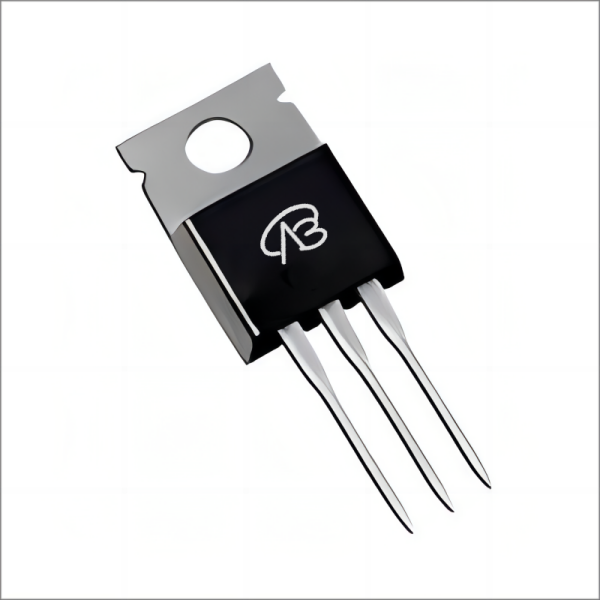
Comparative Analysis: STP20N90K5 (N-channel, TO-220) vs. VBM19R20S
Analysis of the Original Model (STP20N90K5) Core:
This is a 900V N-channel MOSFET from STMicroelectronics, utilizing the advanced MDmesh K5 technology in a standard TO-220 package. Its design core is to achieve an optimal balance between high voltage blocking capability and low conduction loss in robust, medium-power applications. Key advantages include: a high drain-source voltage (Vdss) of 900V, a continuous drain current (Id) of 20A, and a relatively low typical on-resistance (RDS(on)) of 0.21Ω (250mΩ @10V per datasheet). The MDmesh K5 technology ensures high dv/dt capability and good switching performance for demanding applications.
Compatibility and Differences of the Domestic Alternative (VBM19R20S):
VBsemi's VBM19R20S is a direct form-fit and function-compatible alternative in the TO-220 package. The key parameters are highly comparable: both are 900V, 20A N-channel MOSFETs. The main difference lies in the specified on-resistance: VBM19R20S has an RDS(on) of 270mΩ @10V, which is slightly higher than the typical 0.21Ω (210mΩ) of the STP20N90K5 but remains in a very competitive range. It utilizes a Super Junction Multi-EPI process.
Key Application Areas:
Original Model STP20N90K5: Its high voltage rating and good current handling make it ideal for offline power supplies, PFC (Power Factor Correction) stages, motor drives, and lighting ballasts operating from high-voltage mains (e.g., 110VAC/220VAC).
Alternative Model VBM19R20S: Perfectly suited as a reliable drop-in replacement for the STP20N90K5 in the same high-voltage applications, offering a viable alternative for supply chain diversification without significant performance compromise.
Comparative Analysis: STQ2HNK60ZR-AP (N-channel, TO-92) vs. VBR165R01
This comparison focuses on high-voltage, low-current MOSFETs in compact through-hole packages, where the design pursuit is "high voltage isolation in a minimal footprint."
Analysis of the Original Model (STQ2HNK60ZR-AP) Core:
This is a 600V, 2A N-channel MOSFET from STMicroelectronics in a TO-92 package. It features integrated Zener diode protection for the gate and is built with SuperMESH technology, an evolution of PowerMESH. Its core advantages are:
High Voltage in Small Package: It delivers a 600V blocking capability in the tiny TO-92 package.
Enhanced Robustness: The SuperMESH technology ensures high dv/dt capability and the integrated Zener diode protects against gate overvoltage.
Targeted Performance: With an on-resistance of 4.8Ω @10V, it is optimized for low-current switching and signal-level isolation in high-voltage environments.
Compatibility and Differences of the Domestic Alternative (VBR165R01):
VBsemi's VBR165R01 serves as a functional alternative in the TO-92 package. The parameters show some differences in optimization: VBR165R01 has a slightly lower voltage rating (650V vs. 600V) and a significantly lower current rating (1A vs. 2A). Its on-resistance is also higher at 6667mΩ (6.667Ω @10V). It uses a standard planar process.
Key Application Areas:
Original Model STQ2HNK60ZR-AP: Ideal for space-constrained, high-voltage signal switching, auxiliary power startup circuits, snubber circuits, and low-power offline switch-mode power supplies (SMPS) where its 2A current and integrated protection are beneficial.
Alternative Model VBR165R01: More suitable for applications where the primary requirement is high-voltage blocking (up to 650V) at very low current levels (≤1A), such as in certain sensing circuits, solid-state relay replacements, or as a high-side switch in low-power auxiliary supplies, where its cost-effectiveness can be leveraged.
Conclusion
In summary, this analysis reveals two distinct substitution strategies:
For high-power, 900V applications in the robust TO-220 package, the original STP20N90K5 sets a high standard with its MDmesh K5 technology, offering excellent performance for PFC and motor drives. Its domestic alternative, VBM19R20S, provides a highly competitive, pin-to-pin compatible solution with nearly identical voltage and current ratings (900V/20A), making it an excellent direct replacement choice for enhancing supply chain resilience.
For compact, high-voltage, low-current applications in the TO-92 package, the original STQ2HNK60ZR-AP offers a compelling combination of 600V/2A capability, integrated protection, and advanced SuperMESH technology. The domestic alternative VBR165R01 presents a different parameter set (650V/1A) and is best viewed as a functional alternative for specific use cases where the lower current rating is acceptable and the primary need is high-voltage isolation in a minimal footprint.
The core takeaway is that selection is driven by precise application requirements. In the landscape of supply chain diversification, domestic alternatives like VBM19R20S and VBR165R01 provide valuable options, offering engineers greater flexibility in design trade-offs, cost control, and sourcing strategies. Understanding the specific parameter implications of each device is key to unlocking its full value in your circuit.

Download PDF document
 Download now


