 中文
中文 English
MOSFET Selection for Medium to High Voltage Power Applications: STP14NF10, STD10N60M6 vs. China Alternatives VBM1101M and VBE16R07S
Number of views:9999
 Back to previous page
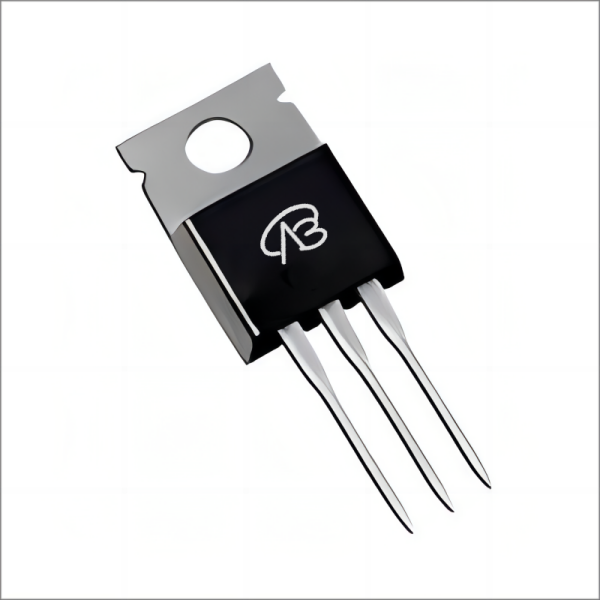
Comparative Analysis: STP14NF10 (N-channel) vs. VBM1101M
Analysis of the Original Model (STP14NF10) Core:
This is a 100V N-channel MOSFET from STMicroelectronics in a TO-220 package. Its design core is to provide robust power handling and good thermal performance in a standard through-hole package. Key advantages are: a low on-resistance of 0.13Ω at a 10V gate drive, a continuous drain current of 15A, and a high power dissipation of 60W. It belongs to the STripFET series, offering a reliable balance for medium-voltage switching.
Compatibility and Differences of the Domestic Alternative (VBM1101M):
VBsemi's VBM1101M is a direct pin-to-pin compatible alternative in the same TO-220 package. The main differences lie in the electrical parameters: VBM1101M has a similar voltage rating (100V) and a slightly higher continuous current rating (18A vs. 15A). However, its on-resistance is higher at 127mΩ (@10V) compared to the original's 130mΩ, making conduction losses marginally greater. It features a Trench technology structure.
Key Application Areas:
Original Model STP14NF10: Its 100V rating and 15A current capability make it suitable for various medium-power AC-DC and DC-DC applications.
Switching Power Supplies (SMPS): Used in primary-side or secondary-side switching for adapters, LED drivers, and auxiliary power units.
Motor Drives and Controls: Suitable for driving brushed DC motors, small BLDC motors, or as a switch in relay/ solenoid drivers.
General-Purpose Power Switching: Acts as a load switch or in-line switch in industrial controls, automotive systems (non-critical 12V/24V/48V lines).
Alternative Model VBM1101M: More suitable for applications requiring a slightly higher current margin (up to 18A) at 100V but where a small increase in conduction loss is acceptable. It's a viable alternative for cost-sensitive designs or to diversify the supply chain.
Comparative Analysis: STD10N60M6 (N-channel) vs. VBE16R07S
This comparison focuses on higher voltage (600V) N-channel MOSFETs, where the design pursuit is a balance of high-voltage blocking capability, switching loss, and thermal performance in a surface-mount package.
Analysis of the Original Model (STD10N60M6) Core:
This is a 600V N-channel MOSFET from STMicroelectronics in a DPAK (TO-252) package. It utilizes the MDmesh M6 technology, which is designed for high efficiency and fast switching in offline power supplies. Its core advantages are:
High Voltage Rating: 600V Vdss suitable for mains-derived applications (85-265VAC).
Optimized Switching Performance: The MDmesh structure reduces gate charge and improves dv/dt capability.
Good Power Package: The DPAK package offers a solid balance between power handling (through PCB heatsinking) and board space.
Compatibility and Differences of the Domestic Alternative (VBE16R07S):
VBsemi's VBE16R07S is a direct pin-to-pin compatible alternative in the DPAK package. The key parameter comparison shows:
Voltage & Current: Both are rated for 600V. VBE16R07S offers a slightly higher continuous current (7A vs. 6.4A).
On-Resistance: VBE16R07S has a typical RDS(on) of 650mΩ (@10V), which is comparable to the original's 600mΩ (typical)/520mΩ (min) specification.
Technology: VBE16R07S uses a Super Junction Multi-EPI (SJ_Multi-EPI) process, aimed at similar high-efficiency targets.
Key Application Areas:
Original Model STD10N60M6: Its high voltage and optimized switching characteristics make it ideal for high-frequency, high-efficiency offline power converters.
PC & Server SMPS: Used in PFC (Power Factor Correction) stages or as the main switch in flyback/forward converters.
LED Lighting Drivers: Essential for high-power, constant-current LED drivers operating from universal AC input.
Industrial Power Systems: Found in UPS, inverter controls, and other equipment requiring robust 600V switching.
Alternative Model VBE16R07S: Serves as a strong domestic alternative for the same high-voltage application spaces. Its comparable on-resistance and slightly higher current rating make it suitable for direct replacement or new designs in PFC circuits, offline flyback converters, and high-voltage DC-DC stages, offering a resilient supply chain option.
Conclusion
In summary, this analysis reveals clear selection and alternative paths for two common voltage classes:
For 100V-class medium-power applications, the original STP14NF10 provides a well-established solution with 15A capability and 0.13Ω on-resistance in a TO-220 package. Its domestic alternative VBM1101M offers package compatibility, a slightly higher current rating (18A), and a viable path for cost or supply chain optimization, albeit with a modestly higher on-resistance.
For 600V-class offline power applications, the original STD10N60M6, with its MDmesh M6 technology in a DPAK package, is engineered for efficiency in mains-powered systems. The domestic alternative VBE16R07S demonstrates strong parity, featuring a Super Junction structure, similar on-resistance, and a slightly higher current rating (7A), positioning it as a competent alternative for PFC, SMPS, and LED driver designs.
The core conclusion is that selection hinges on precise requirement matching. In the context of supply chain diversification, domestic alternatives like VBM1101M and VBE16R07S not only provide feasible backup options but also offer competitive or enhanced parameters in specific areas, giving engineers greater flexibility in design trade-offs and cost control. Understanding the design philosophy and parameter implications of each device is essential to maximize its value in the circuit.

Download PDF document
 Download now


