 中文
中文 English
MOSFET Selection for High-Voltage Power Applications: STN3NF06, STW18NM60N vs. China Alternatives VBJ1638, VBP165R15S
Number of views:9999
 Back to previous page
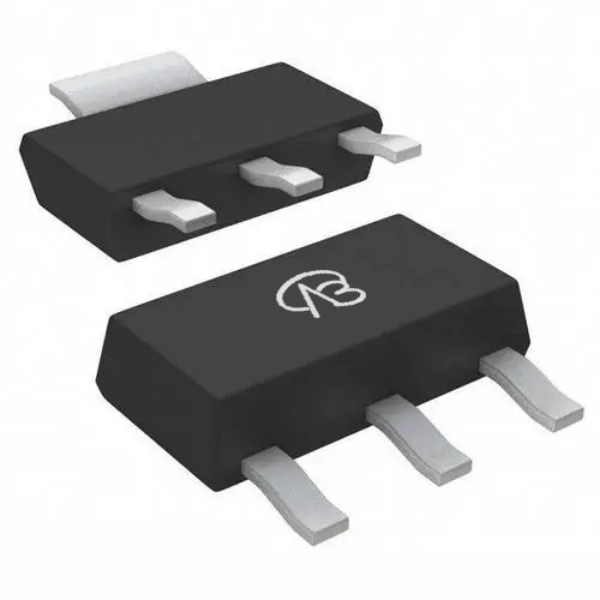
Comparative Analysis: STN3NF06 (60V N-Channel) vs. VBJ1638
Analysis of the Original Model (STN3NF06) Core:
This is a 60V N-channel MOSFET from STMicroelectronics in a compact SOT-223 package. It is built on ST's proprietary "Single Feature Size™" strip-based process, which achieves high cell density. The key advantages are a low on-resistance of 70mΩ (at 10V Vgs), a continuous drain current of 4A, and excellent avalanche ruggedness. This process also offers superior manufacturing repeatability. Its design core is to provide a reliable, cost-effective switching solution for medium-voltage, medium-current applications.
Compatibility and Differences of the Domestic Alternative (VBJ1638):
VBsemi's VBJ1638 is a direct pin-to-pin compatible alternative in the same SOT-223 package. The main differences are significantly improved electrical parameters: VBJ1638 features a much lower on-resistance of 28mΩ (at 10V Vgs) and a higher continuous current rating of 7A, while maintaining the same 60V voltage rating. This represents a major performance upgrade in the same footprint.
Key Application Areas:
Original Model STN3NF06: Ideal for cost-sensitive, space-constrained 48-60V systems requiring robust performance. Typical applications include:
Switching regulators and DC-DC converters in industrial controls.
Load and relay switching in automotive subsystems (non-critical).
Power management in low-power motor drives and solenoid control.
Alternative Model VBJ1638: Suited for the same application spaces but where higher efficiency (lower RDS(on)) and greater current headroom (7A vs. 4A) are desired. It enables potential design upgrades or more thermally relaxed operation in existing footprints.
Comparative Analysis: STW18NM60N (600V N-Channel) vs. VBP165R15S
This comparison shifts to the high-voltage domain, where the design pursuit is a balance of high blocking voltage, low conduction loss, and switching efficiency.
Analysis of the Original Model (STW18NM60N) Core:
This 600V N-channel MOSFET from ST uses the TO-247-3 package and is developed with the second-generation MDmesh™ technology. This innovative vertical structure combined with a strip layout achieves low specific on-resistance (260mΩ @10V) and low gate charge. Its core advantages are a 13A continuous current rating and suitability for demanding high-efficiency converters, offering a robust solution for off-line power applications.
Compatibility and Differences of the Domestic Alternative (VBP165R15S):
VBsemi's VBP165R15S is a form-factor compatible alternative in a TO-247 package. It presents a mixed parameter profile: it offers a higher voltage rating (650V vs. 600V) and a slightly higher continuous current (15A vs. 13A). However, its on-resistance is also slightly higher (300mΩ @10V vs. 260mΩ). It utilizes a Super Junction Multi-EPI technology, targeting high-voltage switching performance.
Key Application Areas:
Original Model STW18NM60N: An excellent choice for high-efficiency, high-voltage converters. Typical applications include:
Switch-Mode Power Supplies (SMPS) like PFC stages, flyback, and forward converters.
Inverters for motor drives, UPS systems, and solar applications.
Industrial lighting ballasts and electronic welding equipment.
Alternative Model VBP165R15S: Suitable for similar high-voltage applications where the higher 650V rating provides additional margin against voltage spikes, and the 15A current rating offers more headroom. The slightly higher RDS(on) may be a trade-off considered against the benefits of higher voltage/current ratings and supply chain diversification.
Conclusion
In summary, this analysis reveals two distinct selection narratives:
For medium-voltage (60V) applications, the domestic alternative VBJ1638 offers a compelling performance-enhanced drop-in replacement for the STN3NF06. It provides substantially lower on-resistance and higher current capability in the same SOT-223 package, enabling efficiency gains and potential power density improvements in designs like DC-DC converters and motor drives.
For high-voltage (600V+) applications, the comparison is more nuanced. The original STW18NM60N remains a strong, optimized solution with excellent RDS(on) for its class, ideal for efficient offline power converters. The domestic alternative VBP165R15S offers a specification-shifted option, trading slightly higher conduction loss for increased voltage and current margins. This makes it a viable alternative, particularly in designs where line voltage variability is a concern or where supply chain resilience is prioritized.
The core conclusion is that selection hinges on precise requirement matching. In the landscape of supply chain diversification, domestic alternatives like VBJ1638 and VBP165R15S provide not just backup options but also opportunities for performance upgrades or specification tailoring, giving engineers greater flexibility in design trade-offs and cost optimization. Understanding the specific parameter implications of each device is key to unlocking its full value in the circuit.

Download PDF document
 Download now


