 中文
中文 English
MOSFET Selection for High-Voltage Power Applications: STI22NM60N, STF40NF20 vs. China Alternatives VBN165R20S and VBMB1204N
Number of views:9999
 Back to previous page
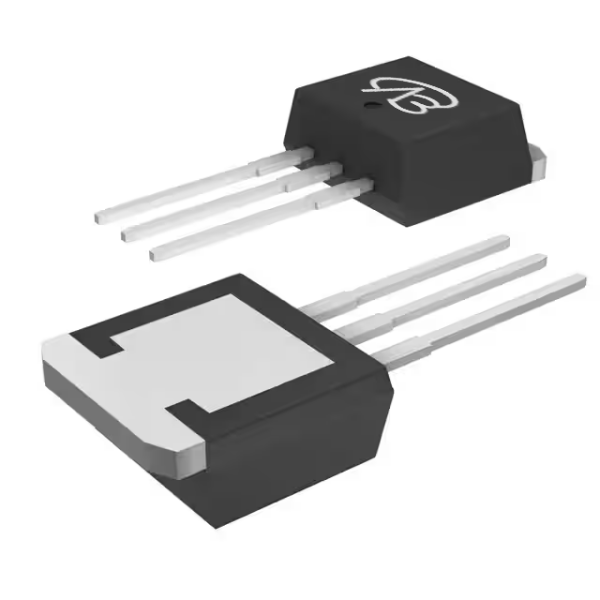
Comparative Analysis: STI22NM60N (600V N-channel) vs. VBN165R20S
Analysis of the Original Model (STI22NM60N) Core:
This is a 600V N-channel MOSFET from STMicroelectronics in an I2PAK package. Its design core is to provide robust performance in high-voltage applications. Key advantages include a high drain-source voltage (Vdss) of 600V, a continuous drain current (Id) of 16A, and an on-resistance (RDS(on)) of 220mΩ at 10V gate drive. It is engineered for reliability and stability in demanding environments.
Compatibility and Differences of the Domestic Alternative (VBN165R20S):
VBsemi's VBN165R20S, in a TO-262 package, serves as a potential alternative. The key differences are in electrical parameters: VBN165R20S offers a higher voltage rating (650V vs. 600V) and a higher continuous current rating (20A vs. 16A). Crucially, it features a significantly lower on-resistance of 160mΩ at 10V, which promises reduced conduction losses. Its gate threshold voltage is compatible at 3.5V.
Key Application Areas:
Original Model STI22NM60N: Well-suited for 600V-class applications requiring proven reliability, such as:
SMPS (Switched-Mode Power Supplies) PFC stages.
Motor drives for industrial appliances.
UPS and inverter systems.
Alternative Model VBN165R20S: With its superior 650V/20A rating and lower 160mΩ RDS(on), it is an excellent choice for performance-upgraded or new designs in similar high-voltage fields where higher efficiency and current margin are desired, such as in more advanced SMPS or solar inverter topologies.
Comparative Analysis: STF40NF20 (200V N-channel) vs. VBMB1204N
This comparison focuses on MOSFETs optimized for high-efficiency switching in medium-high voltage applications.
Analysis of the Original Model (STF40NF20) Core:
This STMicroelectronics 200V N-channel MOSFET in a TO-220FP package utilizes the unique STripFET process. Its design core is to minimize input capacitance and gate charge, making it particularly suitable for high-frequency switching. Key advantages include a 200V Vdss, a high continuous current of 40A, and a low on-resistance of 45mΩ at 10V gate drive. The low gate charge enables fast switching and reduces driver losses.
Compatibility and Differences of the Domestic Alternative (VBMB1204N):
VBsemi's VBMB1204N, in a TO-220F package, presents itself as a strong, pin-to-pin compatible alternative with enhanced specifications. It matches the 200V Vdss but offers a higher continuous current rating (45A vs. 40A). Its most notable advantage is an even lower on-resistance of 38mΩ at 10V, which translates to potentially lower conduction losses and improved thermal performance.
Key Application Areas:
Original Model STF40NF20: Its low gate charge and 45mΩ RDS(on) make it ideal for high-efficiency, isolated DC-DC converters, particularly as the primary-side switch. It is also suitable for:
Telecom and server power supplies.
High-frequency welding equipment.
Low-voltage motor drives.
Alternative Model VBMB1204N: With its higher 45A current rating and lower 38mΩ RDS(on), it is perfectly suited for applications demanding higher power density and maximum efficiency. It can serve as a direct upgrade in existing STF40NF20 applications or be the preferred choice for new designs in advanced DC-DC converters and high-current motor controls.
Conclusion
In summary, this analysis reveals two clear upgrade paths through domestic alternatives:
For 600V-class high-voltage applications, the original STI22NM60N provides reliable 600V/16A performance. Its domestic alternative, VBN165R20S, offers a compelling upgrade with a higher 650V rating, increased 20A current capability, and a significantly lower 160mΩ on-resistance, enabling designs with higher efficiency and power margins.
For 200V-class high-frequency switching applications, the original STF40NF20 excels with its low-gate-charge design and 45mΩ RDS(on). Its domestic alternative, VBMB1204N, delivers a performance-enhanced solution with a higher 45A current rating and a further reduced 38mΩ on-resistance, making it ideal for pushing the limits of power density and thermal performance.
The core takeaway is that selection is about precise requirement matching. In the context of supply chain diversification, domestic alternatives like VBN165R20S and VBMB1204N not only provide reliable backup options but also offer tangible performance improvements in key parameters. This gives engineers greater flexibility and resilience in design trade-offs and cost optimization. Understanding the design philosophy and parameter implications of each device is essential to unlocking its full potential in your circuit.

Download PDF document
 Download now


