 中文
中文 English
MOSFET Selection for High-Voltage Power Applications: STF21NM60ND, STU11N65M2 vs. China Alternatives VBMB165R20S, VBFB165R07S
Number of views:9999
 Back to previous page
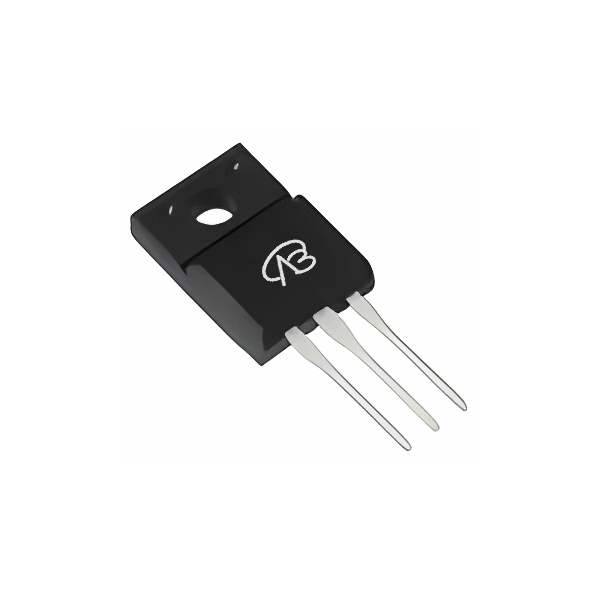
Comparative Analysis: STF21NM60ND (N-channel) vs. VBMB165R20S
Analysis of the Original Model (STF21NM60ND) Core:
This is a 600V N-channel MOSFET from STMicroelectronics in a TO-220FP package. Its design core is to provide robust performance in high-voltage applications with good thermal dissipation. Key advantages include: a high drain-source voltage (Vdss) of 600V, a continuous drain current (Id) of 17A, and an on-resistance (RDS(on)) of 220mΩ at 10V gate drive. This combination makes it suitable for circuits requiring reliable high-voltage blocking and moderate current handling.
Compatibility and Differences of the Domestic Alternative (VBMB165R20S):
VBsemi's VBMB165R20S is offered in a TO-220F package and serves as a potential alternative. The main differences are in electrical parameters: VBMB165R20S features a higher voltage rating (650V vs 600V) and a slightly higher continuous current rating (20A vs 17A). Crucially, it offers a significantly lower on-resistance of 160mΩ at 10V, which promises lower conduction losses.
Key Application Areas:
Original Model STF21NM60ND: Well-suited for 600V-class applications demanding proven reliability and thermal performance, such as:
Switch Mode Power Supplies (SMPS): PFC stages, flyback converters.
Motor Drives: Inverters for appliances and industrial controls.
Lighting: High-voltage ballasts and LED drivers.
Alternative Model VBMB165R20S: With its higher voltage rating, higher current, and lower RDS(on), it is suitable for upgraded or new designs where enhanced efficiency, higher power density, or a greater voltage margin is desired in similar 600V+ applications.
Comparative Analysis: STU11N65M2 (N-channel) vs. VBFB165R07S
This comparison focuses on a lower-current, high-voltage MOSFET in a compact IPAK/TO-251 package, where the design pursuit is a balance of voltage withstand, cost, and space-saving.
Analysis of the Original Model (STU11N65M2) Core:
This STMicroelectronics part is a 650V, 7A N-channel MOSFET using MDmesh M2 technology in an IPAK package. Its core advantages are:
High Voltage Rating: 650V Vdss suitable for offline power applications.
Optimized Technology: MDmesh M2 offers good switching performance and low gate charge for its class.
Compact Package: IPAK provides a smaller footprint than standard TO-220, useful for space-constrained designs.
Compatibility and Differences of the Domestic Alternative (VBFB165R07S):
VBsemi's VBFB165R07S comes in a TO-251 package and is a closely matched alternative. The parameters are highly comparable: both are 650V, 7A rated. The on-resistance is also very similar (700mΩ for VBFB165R07S vs. 680mΩ typical for STU11N65M2 at 10V). This makes it a near drop-in alternative focusing on supply chain diversification.
Key Application Areas:
Original Model STU11N65M2: Ideal for compact, cost-sensitive high-voltage applications with moderate current needs, such as:
Low-to-mid power SMPS: Auxiliary power supplies, flyback converters.
Consumer electronics power adapters.
Industrial controls requiring a compact footprint.
Alternative Model VBFB165R07S: Serves as a direct functional alternative for the above applications, providing a viable second source with equivalent electrical characteristics and package.
Conclusion
In summary, this analysis reveals two distinct selection scenarios:
For higher-power 600V applications where the original choice is STF21NM60ND, the domestic alternative VBMB165R20S presents a compelling "performance-enhanced" option. It offers a higher voltage rating (650V), higher current (20A), and significantly lower on-resistance (160mΩ), which can lead to improved efficiency and thermal performance in new designs or upgrades.
For compact 650V applications around 7A where the original choice is STU11N65M2, the domestic alternative VBFB165R07S serves as a highly pin-to-pin and parameter-compatible alternative. It provides a reliable second-source solution with nearly identical key specifications, aiding in supply chain resilience for existing designs.
The core takeaway is that selection hinges on precise requirement matching. In the context of supply chain diversification, domestic alternatives not only provide feasible backup options but can also offer superior parameters in specific cases, giving engineers greater flexibility and choice in design trade-offs and cost optimization. Understanding the design philosophy and parameter implications of each device is essential to maximize its value in the circuit.

Download PDF document
 Download now


