 中文
中文 English
MOSFET Selection for High-Voltage Power Applications: STF10LN80K5, STF23N80K5 vs. China Alternatives VBMB18R09S, VBMB18R15S
Number of views:9999
 Back to previous page
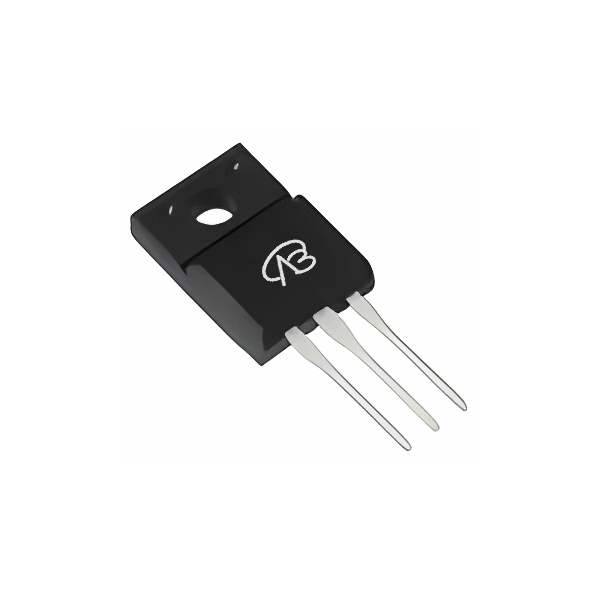
Comparative Analysis: STF10LN80K5 (N-channel) vs. VBMB18R09S
Analysis of the Original Model (STF10LN80K5) Core:
This is an 800V N-channel MOSFET from STMicroelectronics, utilizing the MDmesh K5 technology in a TO-220FP package. Its design core is to provide a robust and efficient solution for medium-power, high-voltage applications. Key advantages include a high drain-source voltage (Vdss) of 800V, a continuous drain current (Id) of 8A, and a typical on-resistance (RDS(on)) of 550mΩ at 10V gate drive. This combination makes it suitable for applications requiring good voltage blocking capability with moderate current handling.
Compatibility and Differences of the Domestic Alternative (VBMB18R09S):
VBsemi's VBMB18R09S is offered in a TO-220F package and serves as a functional pin-to-pin compatible alternative. The key electrical parameters show a close match: both are 800V N-channel devices. The VBMB18R09S specifies a slightly lower RDS(on) of 540mΩ (at 10V) and a marginally higher continuous current rating of 9A compared to the original's 8A. This indicates potentially lower conduction losses and a slight current margin improvement.
Key Application Areas:
Original Model STF10LN80K5: Its characteristics suit medium-power offline switch-mode power supplies (SMPS), power factor correction (PFC) stages, and motor drives operating from high-voltage rails (e.g., 400V DC bus).
Alternative Model VBMB18R09S: Well-suited as a direct replacement in the same applications, offering comparable performance with potential efficiency benefits due to its slightly lower on-resistance.
Comparative Analysis: STF23N80K5 (N-channel) vs. VBMB18R15S
This comparison focuses on higher-current capability within the same 800V voltage class.
Analysis of the Original Model (STF23N80K5) Core:
This MOSFET represents a higher-current tier within the same MDmesh K5 family and TO-220F package. Its core advantage is delivering higher power handling: a continuous drain current of 16A and a significantly lower typical RDS(on) of 280mΩ at 10V. This translates to substantially reduced conduction losses, making it ideal for higher-power density designs.
Compatibility and Differences of the Domestic Alternative (VBMB18R15S):
VBsemi's VBMB18R15S is a pin-to-pin compatible alternative in a TO-220F package. While both are 800V N-channel devices, the parameters reveal a nuanced difference: the VBMB18R15S specifies an RDS(on) of 370mΩ (at 10V) and a continuous current rating of 15A. This means the alternative has a moderately higher on-resistance and a slightly lower current rating compared to the original STF23N80K5 (280mΩ, 16A).
Key Application Areas:
Original Model STF23N80K5: Its lower RDS(on) and high current rating make it an excellent choice for higher-output power supplies, industrial motor drives, and inverters where minimizing conduction loss is critical for efficiency and thermal management.
Alternative Model VBMB18R15S: Serves as a viable alternative for applications where the original's peak current capability is not fully utilized. It offers a cost-effective solution with robust 800V/15A performance, suitable for many high-voltage power stages.
Summary and Selection Paths:
This analysis outlines two distinct selection paths based on current requirements:
1. For Medium-Current (8-9A) 800V Applications: The original STF10LN80K5 provides reliable performance. Its domestic alternative, VBMB18R09S, offers a very close parametric match with potential slight advantages in RDS(on) and current rating, making it a strong direct replacement candidate.
2. For Higher-Current (15-16A) 800V Applications: The original STF23N80K5 stands out with its lower 280mΩ RDS(on) for superior efficiency in high-power designs. The domestic alternative VBMB18R15S, while having a higher on-resistance (370mΩ) and slightly lower current (15A), remains a competent and cost-effective alternative for designs that can accommodate its specific performance profile.
Core Conclusion: Selection is not about absolute superiority but precise requirement matching. In the context of supply chain diversification, domestic alternatives like VBMB18R09S and VBMB18R15S provide viable backup options and competitive performance. They offer engineers greater flexibility in design trade-offs and cost control. Understanding the specific parameter implications of each device is key to leveraging its full value in the circuit.

Download PDF document
 Download now


