 中文
中文 English
MOSFET Selection for Medium-Voltage Power Applications: STD7N60M2, STD6NF10T4 vs. China Alternatives VBE165R07S, VBE1101M
Number of views:9999
 Back to previous page
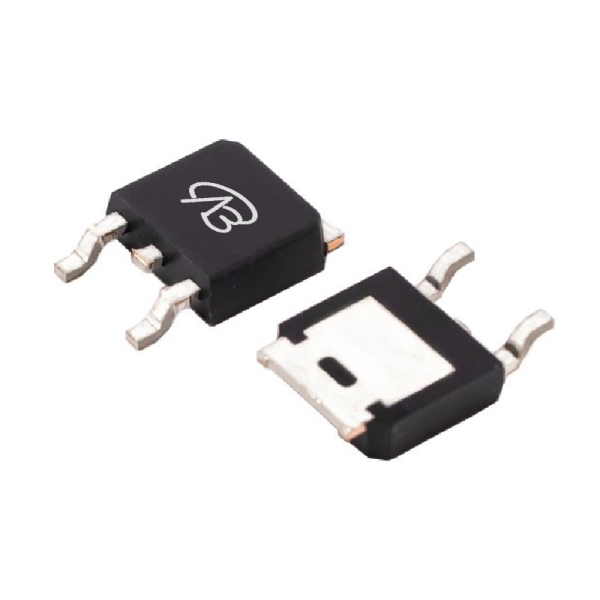
Comparative Analysis: STD7N60M2 (600V N-channel) vs. VBE165R07S
Analysis of the Original Model (STD7N60M2) Core:
This is a 600V N-channel MOSFET from STMicroelectronics, utilizing the MDmesh M2 technology in a TO-252 (DPAK) package. Its design core is to provide a robust and efficient solution for medium-voltage off-line applications. Key advantages include: a high drain-source voltage rating of 600V, a continuous drain current of 5A, and a typical on-resistance (RDS(on)) of 0.86Ω (950mΩ @10V). This combination makes it suitable for switching applications where high voltage blocking is critical.
Compatibility and Differences of the Domestic Alternative (VBE165R07S):
VBsemi's VBE165R07S is also offered in a TO-252 package and serves as a pin-to-pin compatible alternative. The main differences lie in the electrical parameters: VBE165R07S features a higher voltage rating (650V) and a significantly lower on-resistance of 700mΩ @10V. While its continuous current rating (7A) is higher, the gate threshold voltage is lower (3.5V vs. typical for STD7N60M2), which may influence drive circuit design.
Key Application Areas:
Original Model STD7N60M2: Its 600V rating and MDmesh M2 technology make it well-suited for primary-side switching in offline power supplies, such as:
SMPS (Switched-Mode Power Supplies) for industrial controls and appliances.
Power Factor Correction (PFC) stages.
Lighting ballasts and low-power motor drives.
Alternative Model VBE165R07S: With its higher 650V rating and lower 700mΩ RDS(on), it is an excellent upgrade or alternative for applications requiring enhanced voltage margin and reduced conduction loss, particularly in 600-650V range switch-mode power supplies.
Comparative Analysis: STD6NF10T4 (100V N-channel) vs. VBE1101M
This comparison focuses on lower-voltage, high-frequency switching applications where efficiency and speed are paramount.
Analysis of the Original Model (STD6NF10T4) Core:
This 100V N-channel MOSFET from ST uses the unique STripFET process in a DPAK package. Its design pursuit is to minimize input capacitance and gate charge for high-frequency operation. Core advantages include:
Optimized Switching Performance: The STripFET technology significantly reduces gate charge (Qg) and input capacitance (Ciss), enabling high-frequency switching with lower drive loss.
Good Conduction: An on-resistance of 250mΩ @10V supports a continuous current of 6A.
Application-Targeted: It is specifically designed for the primary switch in high-frequency, isolated DC-DC converters for telecom and computing.
The domestic alternative VBE1101M represents a "performance-enhanced" choice: It achieves substantial improvement in key parameters: the same 100V rating, but a much higher continuous current of 15A, and the on-resistance is dramatically reduced to 114mΩ @10V. This translates to significantly lower conduction loss and higher current-handling capability.
Key Application Areas:
Original Model STD6NF10T4: Its low gate charge and capacitance make it an ideal choice for high-frequency DC-DC conversion. Typical applications include:
Primary-side switches in isolated 48V/24V to low-voltage DC-DC converters for telecom and servers.
High-frequency power supplies where switching loss is a major concern.
Alternative Model VBE1101M: With its ultra-low 114mΩ RDS(on) and high 15A current rating, it is perfectly suited for upgraded scenarios demanding higher efficiency, higher power density, or higher output current. This includes synchronous rectification, motor drives, and high-current DC-DC converters within 100V systems.
Conclusion
In summary, this comparative analysis reveals two distinct selection paths:
For 600V-class primary-side switching, the original model STD7N60M2 offers a reliable, industry-proven solution with its MDmesh M2 technology for offline power applications. Its domestic alternative VBE165R07S provides a compelling upgrade with a higher 650V rating and lower 700mΩ on-resistance, offering improved voltage margin and efficiency for next-generation designs.
For 100V-class high-frequency switching, the original model STD6NF10T4, with its STripFET low-charge technology, remains an excellent choice for high-frequency DC-DC primary switches where driving loss is critical. The domestic alternative VBE1101M delivers remarkable "performance enhancement," featuring an ultra-low 114mΩ on-resistance and high 15A current capability, making it a superior choice for applications prioritizing minimal conduction loss and high current capacity.
The core conclusion is: Selection is about precise requirement matching. In the context of supply chain diversification, domestic alternatives like VBE165R07S and VBE1101M not only provide viable backup options but also offer significant parameter advantages in many cases, giving engineers greater flexibility and resilience in design trade-offs and cost optimization. Understanding the design philosophy and parameter implications of each device is essential to unlocking its full potential in your circuit.

Download PDF document
 Download now


