 中文
中文 English
MOSFET Selection for High-Voltage and Low-Voltage Switching: STD18N60M6, STD20NF06LAG vs. China Alternatives VBE16R15S, VBE1638
Number of views:9999
 Back to previous page
Comparative Analysis: STD18N60M6 (600V N-channel) vs. VBE16R15S
Analysis of the Original Model (STD18N60M6) Core:
This is a 600V N-channel MOSFET from STMicroelectronics, utilizing the MDmesh M6 technology in a DPAK package. Its design core is to provide robust high-voltage switching with good efficiency. Key advantages include: a high drain-source voltage rating of 600V, a continuous drain current of 13A, and a typical on-resistance (RDS(on)) of 230mΩ (280mΩ max @10V). It is engineered for applications requiring high voltage blocking capability and reliable performance in harsh conditions.
Compatibility and Differences of the Domestic Alternative (VBE16R15S):
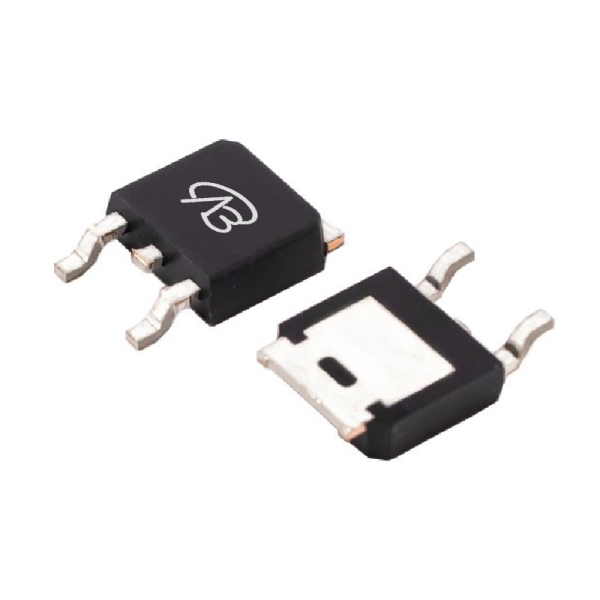
VBsemi's VBE16R15S is also housed in a TO-252 (DPAK) package and serves as a pin-to-pin compatible alternative. The main differences are in electrical parameters: VBE16R15S offers a similar 600V voltage rating but features a lower maximum on-resistance of 240mΩ (@10V) and a higher continuous current rating of 15A. This indicates a potential improvement in conduction loss and current-handling capability compared to the original.
Key Application Areas:
Original Model STD18N60M6: Ideal for high-voltage, medium-power applications requiring 600V breakdown. Typical uses include:
Switch-Mode Power Supplies (SMPS): Primary-side switching in offline flyback or forward converters.
Power Factor Correction (PFC) stages.
Industrial motor drives and inverters.
Alternative Model VBE16R15S: Suitable for similar high-voltage applications where slightly lower on-resistance and higher current capability (15A) are beneficial, potentially offering efficiency gains or margin in designs originally using the STD18N60M6.
Comparative Analysis: STD20NF06LAG (60V N-channel) vs. VBE1638
Analysis of the Original Model (STD20NF06LAG) Core:
This 60V N-channel MOSFET from STMicroelectronics uses the STripFET process in a TO-252 package. Its design pursuit is minimizing input capacitance and gate charge for high-frequency, efficient switching. Core advantages include:
Optimized Switching Performance: Low gate charge and input capacitance make it suitable for high-frequency operation.
Good Conduction: On-resistance of 40mΩ (@10V) with a continuous current of 24A.
Application-Targeted: Designed for efficient isolated DC-DC conversion in telecom and computing.
Compatibility and Differences of the Domestic Alternative (VBE1638):
VBsemi's VBE1638 is a performance-enhanced alternative in the same TO-252 package. It achieves significant parameter improvements: the same 60V voltage rating, but a much higher continuous current of 45A and a drastically lower on-resistance of 25mΩ (@10V). This represents a major leap in current capability and conduction loss reduction.
Key Application Areas:
Original Model STD20NF06LAG: Excellent for low-voltage, high-frequency switching where low gate drive requirements are key. Typical applications:
Isolated DC-DC Converters: Primary switch in telecom/datacom power modules.
Synchronous Rectification in low-voltage SMPS.
Low-voltage motor drives and load switches.
Alternative Model VBE1638: Ideal for upgrade scenarios demanding much higher current (45A) and lower conduction loss (25mΩ). Suitable for:
High-current DC-DC converters.
Motor drives requiring higher power handling.
Applications where reducing RDS(on) is critical for efficiency and thermal performance.
Conclusion
This analysis reveals two distinct selection paths based on voltage domain:
For high-voltage (600V) switching, the original STD18N60M6 provides reliable performance with its MDmesh M6 technology. Its domestic alternative VBE16R15S offers a compatible solution with competitive on-resistance and a higher current rating, presenting a viable option for efficiency-focused designs or supply chain diversification.
For low-voltage (60V) high-frequency switching, the original STD20NF06LAG excels with its low-gate-charge STripFET design. The domestic alternative VBE1638 stands out as a performance-enhanced choice, offering substantially higher current capacity and lower on-resistance, making it a powerful upgrade for applications requiring higher power density and efficiency.
The core takeaway is that selection depends on precise requirement matching. Domestic alternatives like VBE16R15S and VBE1638 not only provide qualified replacements but also offer parameter advantages in key areas, giving engineers greater flexibility in design trade-offs and cost control within a diversified supply chain. Understanding each device's design philosophy and parameter implications is essential to leverage its full value in your circuit.

Download PDF document
 Download now


