 中文
中文 English
MOSFET Selection for High-Voltage Power Applications: STD16NF25, STW40N95DK5 vs. China Alternatives VBGE1252M, VBP19R47S
Number of views:9999
 Back to previous page
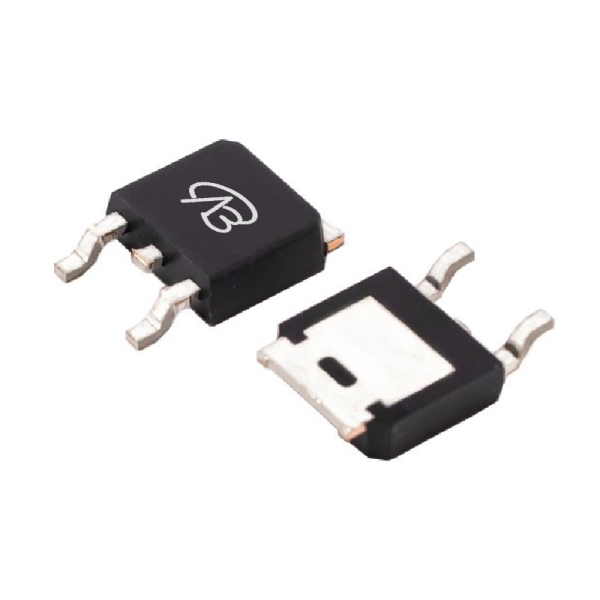
Comparative Analysis: STD16NF25 (N-channel) vs. VBGE1252M
Analysis of the Original Model (STD16NF25) Core:
This is a 250V N-channel MOSFET from STMicroelectronics in a TO-252 (DPAK) package. Its design focuses on providing reliable switching in medium-voltage applications. Key advantages include a high drain-source voltage (Vdss) of 250V, a continuous drain current (Id) of 14A, and an on-resistance (RDS(on)) of 235mΩ at 10V gate drive. It offers a robust and cost-effective solution for various offline power and motor control circuits.
Compatibility and Differences of the Domestic Alternative (VBGE1252M):
VBsemi's VBGE1252M is a direct pin-to-pin compatible alternative in the same TO-252 package. The main differences are in electrical parameters: it matches the 250V voltage rating but offers improved performance with a lower on-resistance of 200mΩ at 10V and a higher continuous current rating of 15A.
Key Application Areas:
Original Model STD16NF25: Well-suited for medium-power, medium-voltage applications such as:
Switch Mode Power Supplies (SMPS): For 220V AC input auxiliary power, PFC stages, or inverter circuits.
Motor Drives: Controlling motors in appliances, fans, or pumps.
Lighting: Electronic ballasts or LED driver circuits.
Alternative Model VBGE1252M: An excellent drop-in replacement offering lower conduction loss and slightly higher current handling. Ideal for upgrading existing designs based on STD16NF25 for improved efficiency or for new designs requiring better performance in the same form factor.
Comparative Analysis: STW40N95DK5 (N-channel) vs. VBP19R47S
This comparison shifts to very high-voltage, high-power applications where efficiency and ruggedness are paramount.
Analysis of the Original Model (STW40N95DK5) Core:
This is a 950V N-channel MOSFET from ST's MDmesh DK5 series in a TO-247 package. It is engineered for high-efficiency operation in demanding circuits. Its core advantages are:
High Voltage & Current: A 950V drain-source voltage and 38A continuous current rating make it suitable for harsh environments.
Low Conduction Loss: Features a low typical on-resistance of 0.120 Ohm (130mΩ @10V per datasheet), minimizing power loss.
Advanced Technology: The MDmesh DK5 structure offers good switching performance and dv/dt capability.
Compatibility and Differences of the Domestic Alternative (VBP19R47S):
VBsemi's VBP19R47S is a formidable alternative in the same TO-247 package. It presents a significant "performance-enhanced" option:
It offers a slightly lower voltage rating of 900V, which is sufficient for many 800V bus applications.
It dramatically improves key parameters: a much lower on-resistance of 100mΩ at 10V and a substantially higher continuous current rating of 47A.
Key Application Areas:
Original Model STW40N95DK5: Ideal for high-power, high-voltage applications demanding robustness, such as:
Industrial SMPS & UPS: For high-power server, telecom, or industrial power supplies.
Solar Inverters: Power switching stages in photovoltaic systems.
High-Power Motor Drives & Welding Equipment.
Alternative Model VBP19R47S: An outstanding choice for applications requiring maximized current capability and minimized conduction loss. Its superior 47A/100mΩ specs make it suitable for:
Next-generation high-power-density converters.
Upgraded motor drives and inverter designs where lower losses and higher output power are critical.
Conclusion
This analysis reveals two distinct selection pathways for high-voltage designs:
For medium-voltage (250V) applications where the STD16NF25 is specified, the domestic alternative VBGE1252M provides a compelling direct replacement with lower on-resistance (200mΩ vs. 235mΩ) and higher current rating (15A vs. 14A), enabling potential efficiency gains and design margin in the same footprint.
For very high-voltage (~950V) and high-power applications dominated by the STW40N95DK5, the domestic alternative VBP19R47S offers a substantial performance boost with a much lower on-resistance (100mΩ vs. 130mΩ) and a significantly higher current rating (47A vs. 38A). While its voltage rating is 900V vs. 950V, it is a powerful candidate for designs where current capability and conduction loss are primary constraints, often allowing for a performance upgrade or more thermally relaxed operation.
The core takeaway is that selection is about precise requirement matching. In the context of supply chain diversification, domestic alternatives like VBGE1252M and VBP19R47S not only provide reliable backup options but also deliver enhanced performance in key parameters, giving engineers greater flexibility and resilience in design trade-offs and cost optimization. Understanding the design philosophy and parameter implications of each device is essential to unlock its full potential in your circuit.

Download PDF document
 Download now


